
Latest data from Eurostat incorporating a 2022 survey suggest reading remains a powerful marker of cultural engagement, and Luxembourg tops the list. The data shows that Luxembourg (75.2%), Denmark (72.1%), and Estonia (70.7%) lead the EU in the share of people who reported reading at least one book in the 12 months prior to the survey.
At the same time, young people aged 16–29 emerge as the most active readers, with 60.1% reporting that they had read a book in the previous year. This compares to 53.5% among those aged 30–54, 52.6% for individuals aged 55–64, and just 47.2% among those aged 65 and over, highlighting a clear generational decline in reading participation.
While many adults today argue that the younger generation are "constantly on their phones”, this data suggests a different narrative, as young people appear to be driving a renewed interest in reading.
After exploring the interests and habits of teens and young adults, it becomes clear that this resurgence in reading can be attributed to several factors.

Gaining popularity in early 2020, BookTok has become a key factor behind the surge in reading among younger audiences. Emerging first on TikTok and later spreading to platforms such as Instagram Reels, the trend quickly resonated with teens and young adults, which is a demographic that is mostly active on these social media platforms.
This surge can be explained through COVID-19 and the imposed lockdowns, when many turned to TikTok for entertainment and caused the hashtag #BookTok to go viral as a space to discuss books.
This popular community reviews book online, recommends books in the type of “if you like this, you might like that”, and explores new releases that they want to go viral.
In today’s influencer-driven society, people are constantly exposed to recommendations, and books are no exception. Social media trends shape tastes and spark curiosity, often motivating users to pick up a title simply because a favourite content creator has praised it. Whether influencers are promoting makeup, fashion, or literature, their impact on consumer choices, and that includes reading habits, is undeniable.
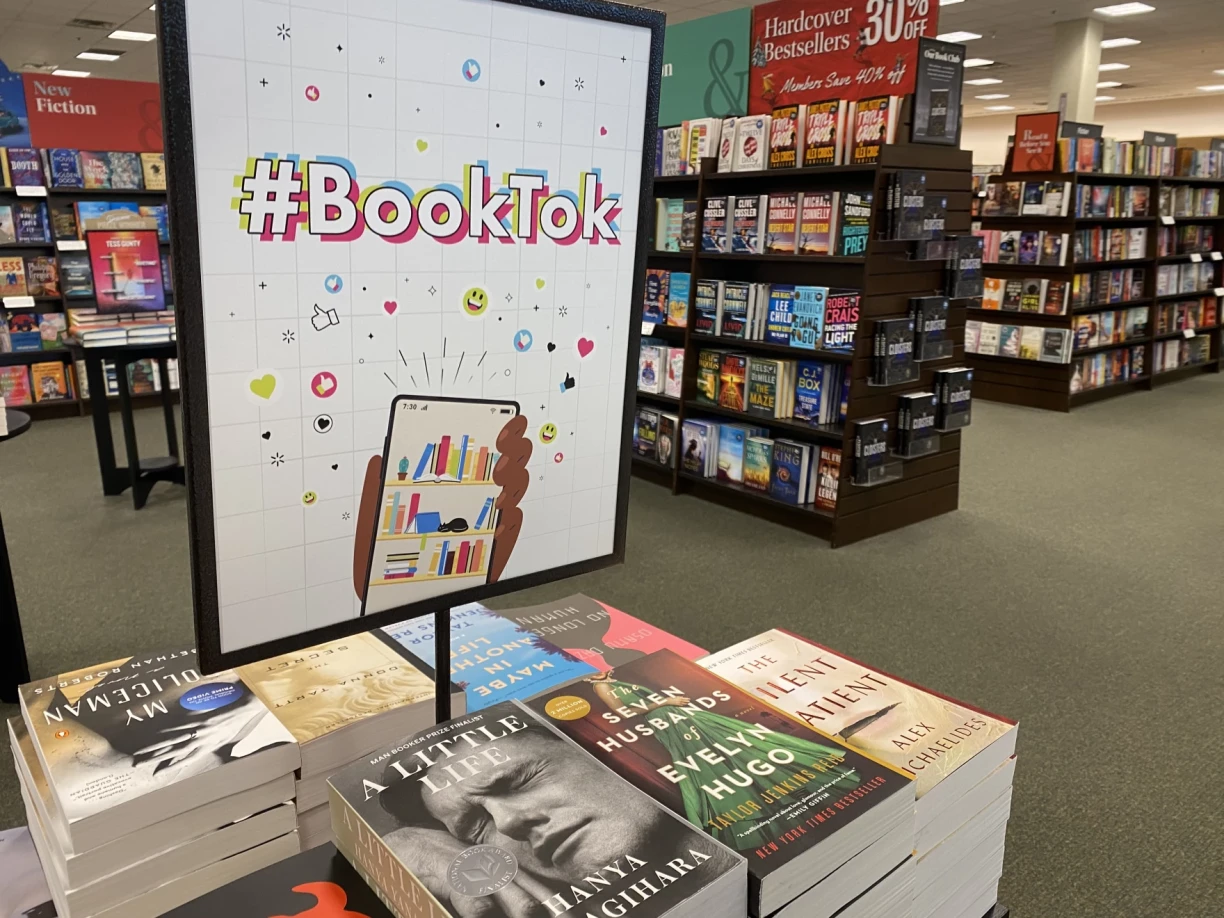
Ellie Nixon, a 21-year-old politics student passionate about reading, affirms that she is on BookTok a lot: “social media helped me to get back into reading in 2020/2021 … after I stopped reading for a while”, and states that “it is easier to read a higher volume of books because I can always find a recommendation”.
Not only do the videos themselves shape readers’ choices, but the comment sections also play an important role in influencing avid readers.¨
A young woman we shall call Helen, who wanted to stay anonymous, reads to unwind after a long day at university and states that she often turns to BookTok for inspiration. “I often find my next read on TikTok, and very often when I see different comments where people say a certain book is very good, I look it up and check if I should read it,” she explains.
Targeted to a younger audience, this interactive community creates a feeling of connection and encouragement that motivates people to read more, which explains the “comeback” in reading in the younger generation, and with billions of views millions of tags, it is safe to say that BookTok shapes and reshapes the reader in many ways.
Goodreads is another platform that motivates and encourages young readers to discover new books through a community that reviews, rates, and discusses books.
For both Ellie and Helen, this platform is even more effective for finding books than any other social media platform.
"I love Goodreads for its way to track what I've read and want to read. I've tried to use book diaries before but never stuck with them, whereas Goodreads is on my phone and always accessible.", says Ellie.
The ability to add friends and see what they’re reading also contributes to this, tapping into a social aspect that resonates strongly with the younger generation.
"I like seeing what my friends are reading and how they rate a book, because a lot of the times we have a similar type of books we like, which we like to talk about. I like Goodreads because I like seeing what they're up to, and it's also amazing that I can get personnalised recommendations. I can also see new books that are coming out," Helen says.
The system of rating books seems to be very successful and inspiring for many readers as well. "I look at what my friends have read, and how they rate books. If they rate it above 4 stars and above, I tend to put them into my 'want to read' section," she continues. This explains the 'hype' around the platform, why it attracts readers to read a lot more.

The tracking opportunity adds to people being more aware about their reading, and being more motivated to read more in the first place, as you can see how much you have read.
Especially with the Goodreads Year Challenge, one might be a lot more inclined to read more, adding to the motivation.
Looking at a user-generated statistic, 63.7% of users range from 15 to 25, closely mirroring the Eurostat data. From this, one can deduce that platforms like Goodreads play a significant role in inspiring and motivating the younger generation to read a lot more.
While social media platforms greatly contribute to the growth of the reading community, the content of the books themselves also plays a crucial role in motivating people to read more.
Nowadays, many readers tend to prioritise entertainment and relaxation in their book choices, resulting in books becoming less dense, more fast-paced, and more accessible, which is designed to offer a quick yet engaging reading experience.

In 2024, the Global Book Market saw an interesting trend that proves the point: "the fiction segment saw increased revenues in 14 of the 16 territories surveyed, and children’s and young adult books also showed growth in nine regions, non-fiction struggled," writes NielsenBook.
This shows that much of the publishing industry’s current growth is driven by genres typically favored by younger readers. The expansion of children’s and young adult literature further reinforces the idea that younger generations play a central role in shaping today’s reading trends and sustaining the book market.
The growing popularity of the “one-sitting read” reflects this shift. Finishing a book in a short amount of time enhances a reader’s sense of accomplishment; it can feel far more productive than simply scrolling on a phone. Because these books are intentionally designed to be read quickly, readers progress through them at a faster pace, which boosts motivation and frequently encourages them to start another book soon after.
In contrast, classical literature is often perceived as “heavier and slower to read.” Ellie, for example, says she saves classics for holidays when she has more time, while Helen finds them “not as fast-paced and entertaining.” Their perspectives highlight how important engaging and dynamic storytelling has become for the younger generation.
Authors notice this trend, and give readers what they desire: From twisty thrillers to 'slowburn', 'enemies to lovers' tropes, every reader finds whatever they need. Genres such as romantasy, in particular, are typically more fast-paced and immediately engaging than traditional classics like War and Peace, which can make them more motivating and appealing to modern readers.

Because these books are quicker to read and more appealing to younger audiences, they help explain the statistics showing that the younger generation reads more. Their accessibility and fast pace make reading feel easier and more enjoyable, which encourages young people to pick up books more frequently.
Ultimately, Eurostat data challenges the idea that young people are disengaged, showing that they are the most active readers in Europe. Platforms like TikTok through BookTok and Goodreads have reshaped reading and made book discovery interactive and social. These tools, combined with fast-paced, accessible genres, have transformed reading into a shared experience that engages younger audiences, which the other generations are not that used to.
However, this resurgence may not capture the full spectrum of literary engagement. Many young readers favor popular or 'quick-read' genres, meaning classics and more challenging works may be explored less often. Algorithm-driven recommendations, while encouraging, can create echo chambers that limit exposure to diverse perspectives. Whether this trend will persist as readers age remains uncertain.
Overall, today’s young readers are not reading less – they are reading differently. In a digital world often blamed for shortening attention spans, social media and new platforms may, in fact, be fostering a dynamic, evolving reading culture that balances entertainment, community, and discovery.
While social media platforms have helped spark a renewed interest in reading among younger audiences, they have also, in some cases, turned reading into a marketing-driven activity.
Platforms like BookTok, Instagram, and Goodreads have made reading highly trend-driven, where viral hype and visually aesthetic 'instagrammable' books often overshadow literary quality or originality.
This trend is evident in the high numbers of likes and views on social media, as well as in the 'shelved' books or Books of the Year lists on Goodreads, which are often dominated by titles featuring popular tropes such as Young Adult (YA), fantasy, or romantasy (romance and fantasy as a portmanteau).
In this environment, people may choose books not for personal engagement with its ideas or storytelling, but to participate in online trends and gain social validation. Over time, this emphasis on popularity can encourage superficial reading habits, where people rather focus on quick consumption of plots or their favourite tropes than on sustained, reflective engagement. This trend may limit exposure to less mainstream genres or complex narratives and narrow the diversity of literature available to readers.

Another downside of the social-media-driven reading is the prevalence of misleading book packaging. Publishers often use brightly colored, 'childish,' or overly stylised covers to grab attention and appeal to younger audiences, even when the content inside is mature or deals with complex themes.
This mismatch between appearance and content can confuse readers and sometimes lead to awkward or inappropriate situations, particularly for parents or younger readers who judge a book by its cover.
However, as many publishing houses have realised that this packaging attracts readers, they increasingly apply similar designs across multiple books, which diminishes individuality and makes many titles appear visually indistinguishable.
These tools, combined with fast-paced, accessible genres, have transformed reading into a shared experience that engages younger audiences, which the other generations are not that used to.
However, this resurgence may not capture the full spectrum of literary engagement. Many young readers favor popular or 'quick-read' genres, meaning classics and more challenging works may be explored less often.
Algorithm-driven recommendations, while encouraging, can create echo chambers that limit exposure to diverse perspectives. Whether this trend will persist as readers age remains uncertain.
Overall, today’s young readers are not reading less – they are reading differently. In a digital world often blamed for shortening attention spans, social media, and new platforms may, in fact, be fostering an evolving reading culture that balances entertainment and discovery, as well as enforces a feeling of community.





