This is an opinion article. The views expressed belong to the author.
The recent US-Iran confrontation made headlines after footage of drones penetrating sophisticated air defences became public. Images of inexpensive unmanned systems striking high-value military targets reinforced a reality that military planners have quietly recognised for decades: even the most powerful conventional armies can be strategically constrained when confronted with effective asymmetric warfare. Vietnam, Afghanistan and more recently, Iran all demonstrate how weaker adversaries can impose disproportionate costs on militarily superior powers.
A similar sequence is unfolding in Ukraine too.
When Russia launched its full-scale invasion in 2022, it sought both political and territorial gains. Moscow expected to force Kyiv into accepting a political order aligned with Russian interests while consolidating its hold over southern and eastern Ukraine. Instead, the conflict has evolved into a prolonged war of attrition in which Ukraine increasingly relies on asymmetric methods to offset Russia's conventional advantages.
Ukraine may not possess the resources to defeat Russia in a conventional contest of industrial capacity, manpower and artillery. But it does not have to.
Its strategy has shifted towards achieving something different: raising the cost of war until it becomes increasingly difficult for Russia to justify continuing it.
For much of the conflict, Russia enjoyed a significant logistical advantage. Supply routes into occupied Ukrainian territories remained comparatively secure. The Kerch Bridge connected Crimea to mainland Russia. The Black Sea enabled naval operations, while ammunition depots, fuel facilities and transport hubs behind the front remained relatively insulated from Ukrainian attacks.
That assumption no longer holds.
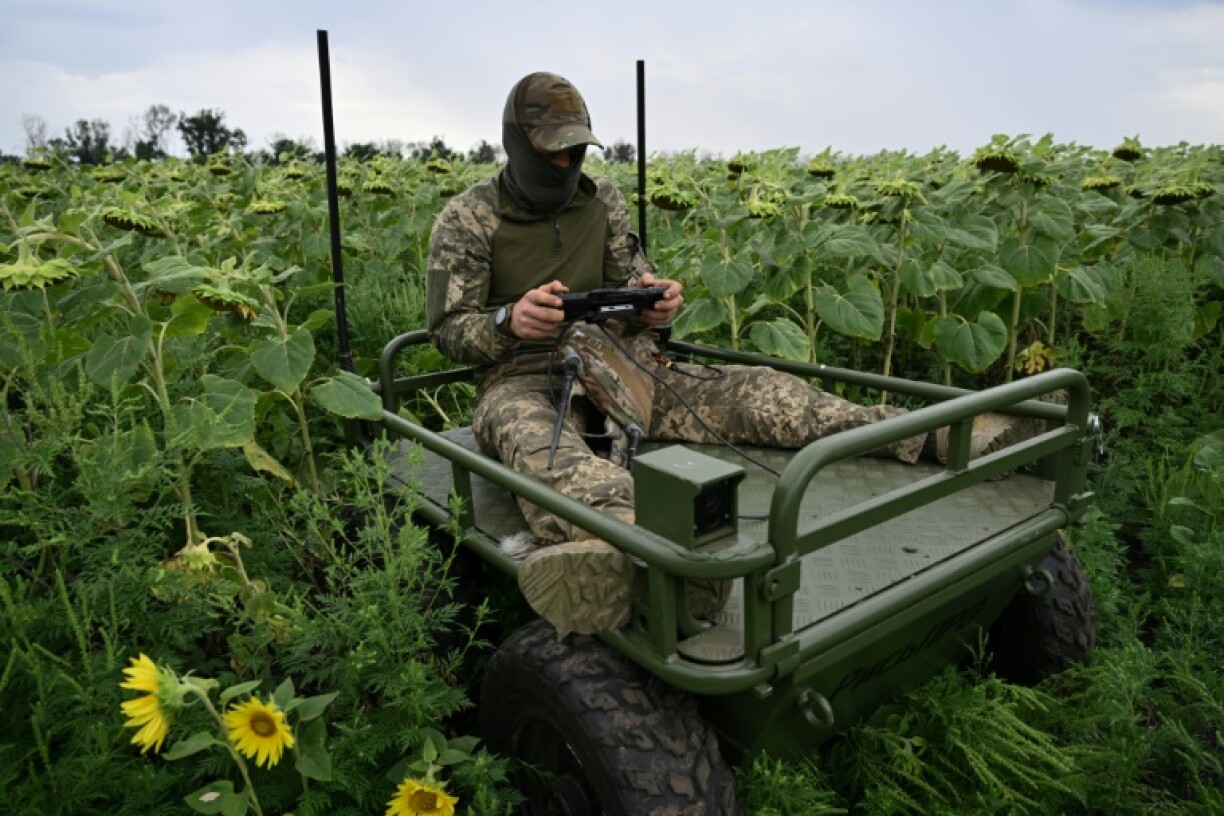
Long-range drones now strike military infrastructure hundreds of kilometres from the battlefield, sometimes deep inside Russian territory. Fuel depots burn, railway infrastructure is disrupted, logistics hubs are repeatedly targeted and military convoys increasingly operate under constant threat. Ukrainian naval drones have also forced Russia to alter the deployment of parts of its Black Sea Fleet, demonstrating that even maritime superiority can be challenged by inexpensive autonomous systems.
The videos circulating daily on social media are not merely isolated incidents. They illustrate a broader strategic shift. Every successful strike increases the operational cost of sustaining Russian military operations.
This is Ukraine's "Stinger moment."
The parallel is not about the weapon itself but about its strategic effect.
During the Soviet war in Afghanistan, Moscow controlled major cities and key logistics routes. Yet much of the countryside remained contested. Soviet air superiority compensated for these vulnerabilities until the arrival of the Stinger missile in 1986. The weapon did not defeat the Soviet Army. It simply made every air sortie more dangerous and every operation more expensive. The conflict gradually became less about battlefield victories and more about whether its mounting costs could still be justified.
Ukraine's drones are performing a similar function.
A drone costing only a few thousand euros can destroy equipment worth millions or compel Russia to invest vastly greater sums in air defence, electronic warfare and infrastructure protection. This is the essence of asymmetric warfare: not matching strength with strength, but exploiting cost asymmetry.
Ukraine appears to be applying that logic across the entire theatre. It has combined a variation of scorched-earth strategy with persistent drone warfare. If critical infrastructure cannot safely support Ukrainian operations, it should not safely sustain Russian military operations either. Bridges, railways, fuel depots and supply networks have all become legitimate military objectives. Logistics, rather than territory alone, is increasingly becoming the centre of gravity in this conflict.
This does not guarantee a Ukrainian victory. History offers analogies, not predictions. Russia is not the Soviet Union, and Ukraine is not Afghanistan.
Yet one lesson remains remarkably consistent. Great powers rarely abandon wars because they lose a decisive battle. They do so when the cumulative military, economic and political costs of continuing exceed the value of their strategic objectives.
Whether that ultimately leads to negotiations, territorial compromise, security guarantees or another political settlement remains uncertain.
What is becoming increasingly clear, however, is that drones have fundamentally altered the economics not only of this war but of all future wars as well.
The Stinger changed the Soviet war in Afghanistan by making Soviet military power prohibitively expensive to project. Ukraine's drones are attempting to achieve the same effect against Russia, not by winning the war outright, but by steadily increasing the price of continuing it.
About the Author: Waqas M Awan is a Luxembourg-based corporate professional and the author of Power of Sage: An Anti-thesis to Machiavellian Prince. He writes on economics, geopolitics and power systems at his Substack publication Perspectives (waqasperspective). He has held senior finance roles at Amazon, Kraft Heinz, and KPMG.





