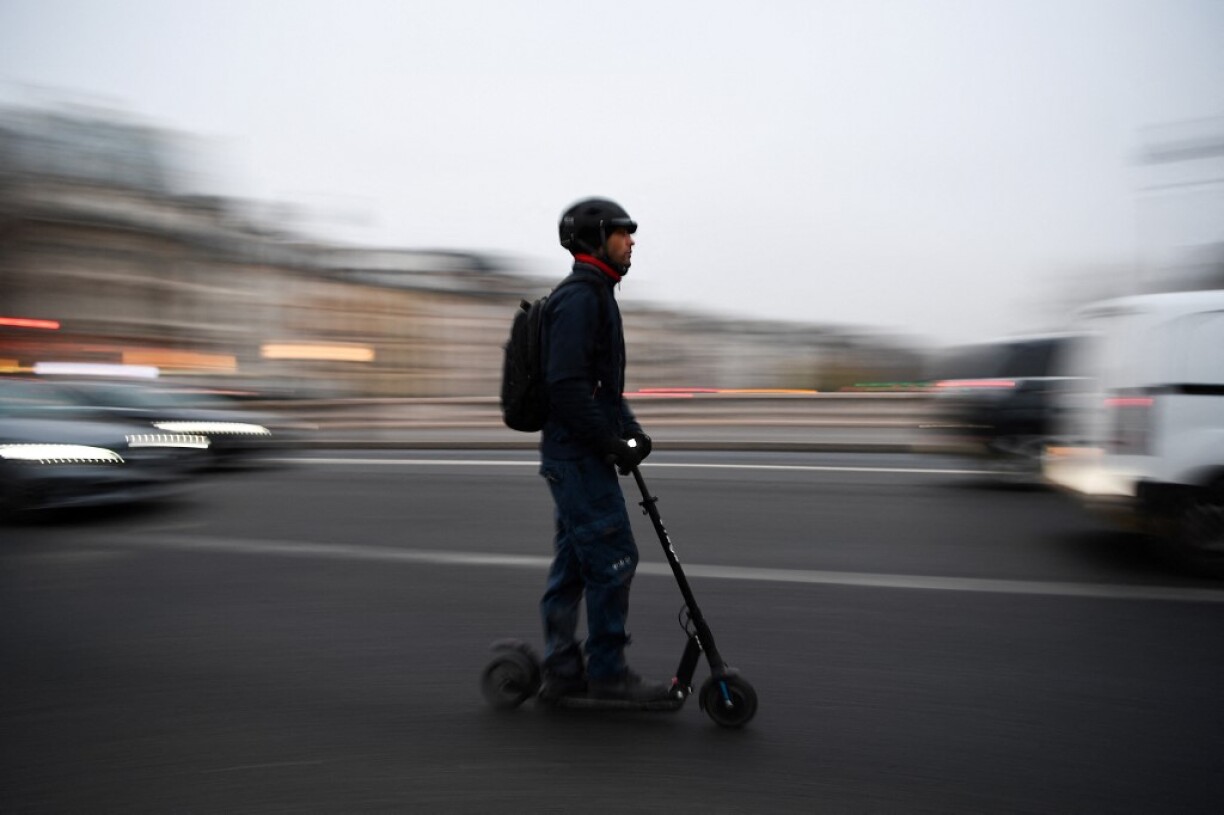
Unlike neighbouring European countries, where the minimum age for riding an electric scooter is often set between 14 and 16, Luxembourg allows children to use them from the age of 10. For children, this is, of course, welcome news.
Over recent years, an entire culture has developed around electric scooters especially among Gen Z and Gen Alpha. For them, a scooter is no longer merely a means of transport, but a way of expressing themselves, socialising, exploring technology, and experiencing a sense of independence.
Children and teenagers save their pocket money and invest it in their scooters. They invest not just money, but also time, effort, and emotion. They learn how the different parts work, how to repair and adjust them, and how to use screwdrivers and spanners. For many, the e-scooter becomes a source of personal pride and discipline: washing it, charging it, tightening parts, and repainting it.
This culture has already developed its own role models. Children and young people admire not only those who ride well, but also those who know how to dismantle, repair, tune, and understand the machinery. For them, this is not simply entertainment. It is their first experience of technical thinking, manual work, responsibility for a possession and respect for genuine skill.
Despite the noticeable increase in the number of electric scooters on the country’s streets, the publicly available data does not show that they have caused any deaths in Luxembourg, unlike other categories of motorised transport associated with more serious accidents, such as motorcycles.
There have, of course, been individual incidents resulting in injuries, including serious ones. But injuries, unfortunately, also occur on bicycles, roller skates, and skateboards, and even while people are simply walking.
There have been incidents involving e-scooters, including some resulting in serious injuries, just as injuries occur on bicycles, roller skates and skateboards, and even while people are simply walking. The answer should therefore begin with education, not prohibition alone. Young people’s desire for movement, speed and independence needs a clear culture of rules, explained in schools, on the streets and wherever they actually ride.
Few riders know, for example, that Luxembourg requires both front and rear lights to remain switched on even in daylight. Not one of the adult or underage e-scooter owners I spoke to knew this. If such a basic rule remains unknown, families must be told not only what is prohibited, but also what the consequences may be.
Alexander, aged 14 – not his real name – described riding along a cycle path and then using the carriageway for several metres to reach the next one, as Luxembourg's guidance requires where no continuous cycling infrastructure exists: "from the age of 13, it is compulsory to use areas intended for cycles, otherwise the carriageway".
"While I was riding there in accordance with that rule, I noticed the police following me. Later, on a day when temperatures exceeded 35°C, I stopped in a village to buy water. When I came out, I was drinking and pushing the scooter along the pavement, yet the police car started moving after me again. I now feel watched like a criminal even when I try to follow the rules. I cannot ride calmly any more. I have even started having nightmares in which a police car follows me everywhere."
Parents and children also report receiving different explanations from different officers. Some officers say that if a rider remains within the speed limit, does not obstruct traffic and creates no danger, there is no reason to follow or intervene. Others treat the mere sight of a young person on an e-scooter as grounds for suspicion and begin treating children as serious offenders.
This inevitably raises questions about priorities. Families see slow responses to theft, drug-related problems and unsafe public spaces, as well as insufficient support for vulnerable people during extreme heat and even situations involving missing children, while intervention against teenagers on scooters can be immediate and highly visible.
Even where a scooter is technically capable of exceeding the legal limit, proportionality still matters. The official wording is "saisie éventuelle du véhicule" – possible seizure, not automatic confiscation. The child's age, the location, the actual danger, any previous warning, the family's knowledge of the scooter's condition and the opportunity to bring it into compliance should all be considered. There must be a clear sequence of steps between an infringement and the seizure of the vehicle.
Education could reduce both violations and confiscations. Removing something into which a child has invested money, time, effort, and part of their identity can cause humiliation, anger, a painful sense of loss, depressive symptoms, and the impression that the police are acting against them rather than protecting them.
Police intervention is entirely justified when a minor rides a modified scooter at high speed among cars, carries a passenger, or endangers pedestrians. The concern begins when seizure appears to become an objective in itself; when young people feel pursued through the streets; when several police vehicles arrive at a teenager’s home; or when scooters, telephones and computers are taken. Even lawful procedures can become excessive and deeply destabilising.
In such circumstances, children no longer feel protected. They begin to see themselves as convenient targets for a demonstrative show of patrol activity – something to add to the day’s report – and ask whether the police truly have no greater priorities than pursuing teenagers on e-scooters.
This article does not excuse breaches of the rules or question the competence of the police. It calls for clear rules, education and proportionate intervention. Confiscation without warning or an opportunity to correct the behaviour or the scooter's technical condition leaves lasting bitterness. Punishment should not become the first language in which the state communicates with a child.
France shows another possibility: moving powerful e-scooters out of street conflict and into regulated sport. Luxembourg could create an e-scooter club using a karting track at designated times, with registered riders and scooters, technical inspections, separate sessions according to age and ability, compulsory protective equipment and clear rules on responsibility.
Rather than crushing this new interest among young people, such an approach would channel it into technical knowledge, discipline, sport and lawful regulation. Luxembourg could even become one of the first countries to take e-scooter sport seriously.
A silent rift is opening between young people who use e-scooters for independence and self-expression, and a system that increasingly responds to them with control rather than dialogue. That rift should be addressed now, before it becomes a rupture between the younger generation and law enforcement.





