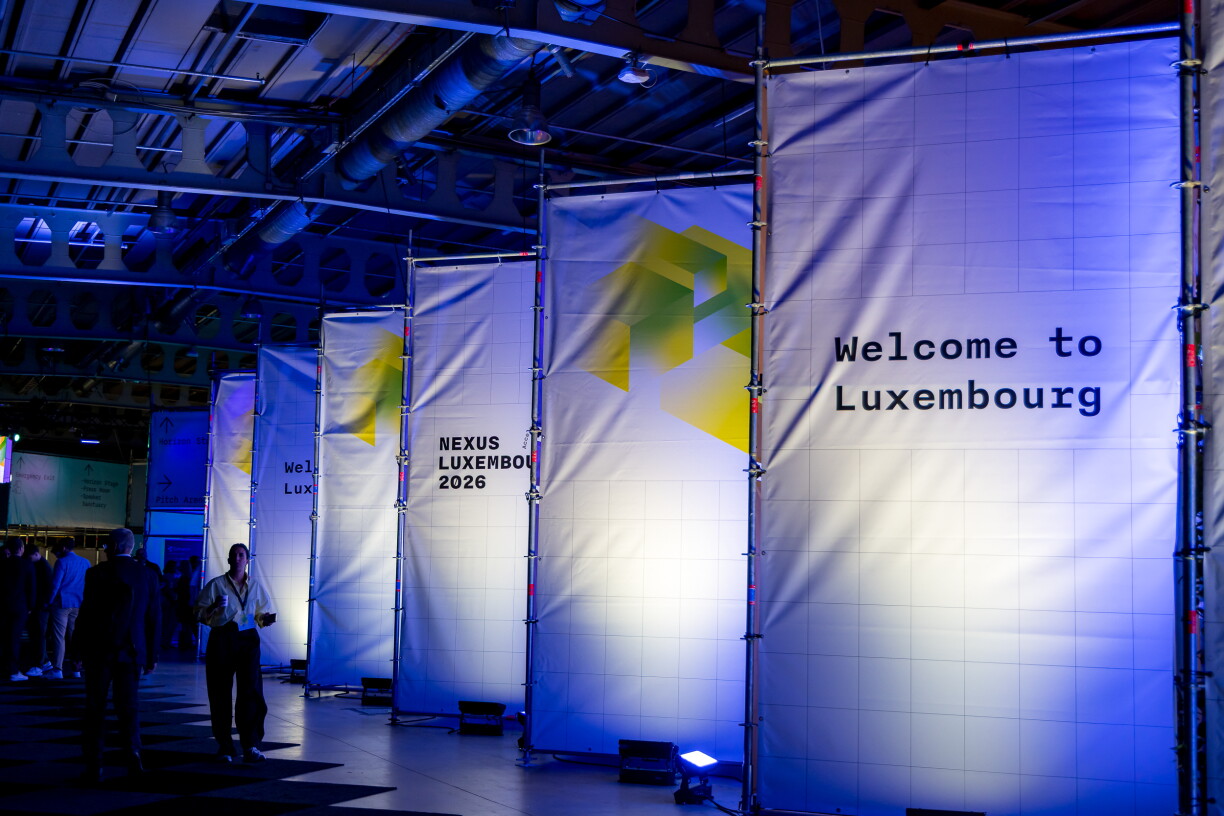
In a democracy, asking whether the government has fulfilled its legal obligations should never be controversial. Yet that is precisely what happened during Nexus Luxembourg 2026.
Foreign Minister Xavier Bettel was asked whether due diligence had been carried out regarding Israeli companies participating in the event. The question was not ideological. It arose from months of public debate, parliamentary scrutiny and independent legal analysis in Luxembourg and across the globe.
It also came in the context of recent international legal developments, including the International Court of Justice's provisional measures in the case concerning Gaza, its advisory opinion declaring Israel's occupation of the Palestinian territories unlawful, and arrest warrants issued by the International Criminal Court for Israeli Prime Minister Benjamin Netanyahu and former Defence Minister Yoav Gallant.
Against that backdrop, asking whether Luxembourg has exercised due diligence is entirely legitimate. Earlier this year, the Chambre des Députés published two independent legal studies examining Luxembourg's obligations under international law in relation to Israel's actions in the occupied Palestinian territories. While differing in emphasis, both concluded that Luxembourg has legal responsibilities that include preventing genocide and carefully assessing commercial relationships involving illegal settlements, arms and dual-use technologies.
These studies make clear that due diligence is not simply a political demand or an activist slogan. It forms part of the legal framework Luxembourg is expected to apply.
That is why Mr Bettel's response came as a surprise: Rather than explaining what due diligence had been carried out, he compared questions about Israeli companies to the boycott of Jewish businesses during the 1930s. Is that comparison appropriate?
Jewish Call for Peace has also published a statement arguing that such comparisons risk conflating legitimate scrutiny of a state's policies with antisemitism, a conflation that may ultimately weaken the fight against antisemitism itself. The Nazi boycott targeted people because they were Jewish. It was an act of discrimination that formed part of a broader system of persecution that culminated in the Holocaust. Remembering that history is essential.
Asking whether Luxembourg has assessed the human rights risks associated with companies participating in a publicly supported event is fundamentally different. It is not directed at individuals because of their religion or ethnicity. It concerns whether authorities are fulfilling their obligations under international law.
Mr Bettel also suggested that asking such questions could discourage support for Palestinians. That is difficult to reconcile with the principles of democratic debate and freedom of expression. In a democracy, the right to ask legitimate questions of public authorities should not depend on whether those questions are politically convenient, just as support for civilians facing immense suffering should not depend on individuals raising legit questions.
The question therefore remains: What due diligence was actually conducted?
According to reporting, Nexus Luxembourg relied on Luxembourg's Trade and Investment Office in Tel Aviv to assess participating companies. If so, what methodology was used? What criteria were applied? Were the Chamber's legal studies taken into account? Were settlement links, military partnerships and dual-use technologies assessed? How was the independence of the assessment ensured? These are questions that deserve factual answers.
Civil society researchers have already identified several participating companies whose publicly available activities merit closer examination. LetzActForPalestine has published a number of issues that, in its view, warrant clarification. Whether those concerns ultimately prove well-founded is precisely why transparency matters.
If the due diligence was thorough, publishing the methodology would strengthen public confidence. If shortcomings were identified, acknowledging them and improving future procedures would strengthen confidence as well. Either way, openness is preferable to dismissal.
As a Palestinian Luxembourger, I feel the suffering of civilians in Gaza deeply. But this article is not asking readers to adopt my identity or my political views. It asks something much simpler: When citizens raise questions grounded in international law, they deserve answers grounded in evidence.
Luxembourg has earned an international reputation for its commitment to the rule of law. Civil society would like to maintain that integrity. That reputation is sustained not only through speeches and declarations, but by demonstrating that legal principles are applied consistently, even when doing so is politically uncomfortable.
Democracy is not weakened by difficult questions. It is weakened when legitimate questions are treated as controversies instead of being answered. In the end, governments are not judged by whether difficult questions arise. They are judged by how they answer them.
This is an opinion article. The views expressed belong to the author.





