This is an opinion article. The views expressed belong to the author.
Luxembourg has spent years preparing for businesses that do things in space. It has laws for operating spacecraft, a national registry of space objects and, since 2017, rules covering resources extracted beyond Earth.
There is another question it may soon need to think about: what happens when data centres move there too?
Space-based data centres are moving closer to reality. The European Commission has already identified them as a possible part of Europe's future space economy, and companies are developing systems designed to put substantial computing capacity into orbit.
There are reasons for the interest. Data centres consume enormous amounts of electricity, while demand for computing power continues to grow with AI. Developers of orbital data centres point to the availability of solar power in space and other potential advantages. Getting the equipment into orbit, keeping it cool and maintaining it create their own serious engineering challenges, but the idea is now being taken seriously enough for Europe to consider it in its space strategy.
The timing is interesting because Brussels is also writing new rules for cloud infrastructure.
In June, the European Commission proposed the Cloud and AI Development Act, or CADA. Part of the proposal deals with "sovereign" cloud services used by EU institutions and public authorities. The criteria cover ownership, foreign legal exposure and something much more familiar: where the infrastructure and data are located.
For an ordinary data centre, location is easy to establish. A facility in Luxembourg has an address. Its servers are physically inside Luxembourg and therefore inside the European Union.
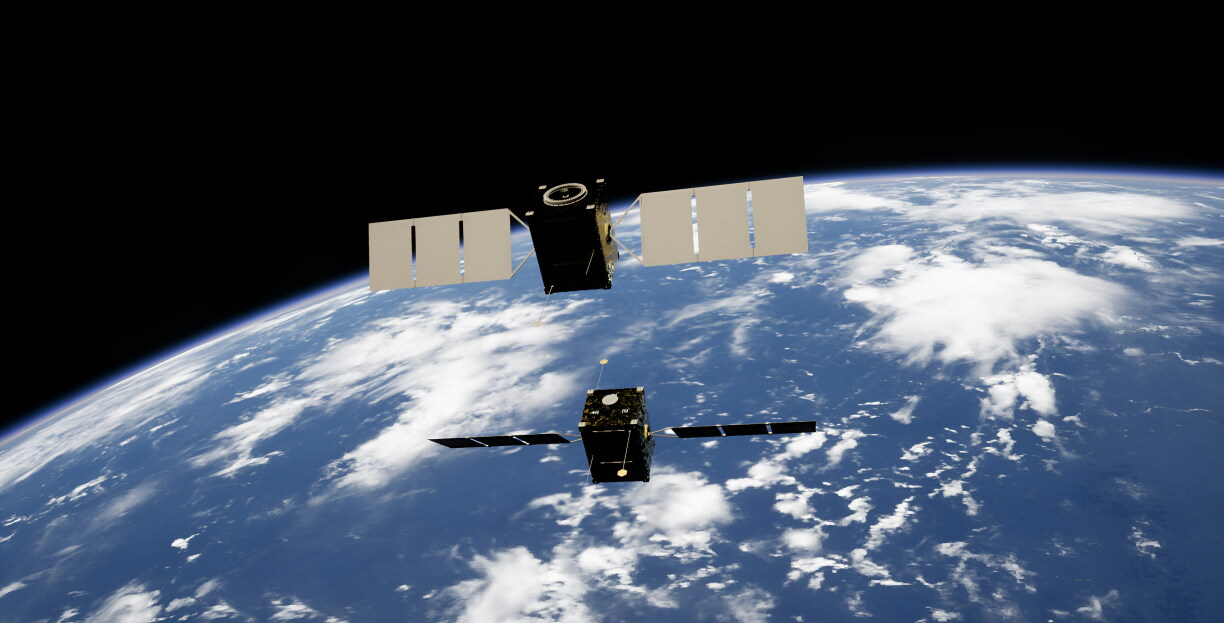
Imagine the same kind of computing infrastructure aboard spacecraft registered by Luxembourg. A Luxembourg company operates the service, mission control is in the EU, and European staff control the systems and encryption keys.
Some of CADA's proposed assurance criteria require infrastructure to be located in the Union and customer data to remain within the Union.
In this example, the data centre would be operating in outer space.
Registration in Luxembourg does not make the data centre physically part of Luxembourg. International space law gives the registering state jurisdiction and control over its registered space objects, while outer space itself is not subject to national sovereignty.
The current CADA proposal does not say how a data centre in that position should be treated. Its geographical requirements assume infrastructure that can be located within EU territory, an assumption that becomes difficult to apply once the facility is in outer space.
European public authorities are unlikely to be buying orbital cloud capacity anytime soon. CADA is intended to shape Europe's future cloud infrastructure, and the Commission has already identified space-based data centres as an emerging possibility. Raising the issue while the legislation is being negotiated would avoid leaving the question entirely to future interpretation.
Luxembourg has a particular reason to pay attention. It adopted its space resources legislation in 2017 and a broader law governing space activities in 2020. Space remains an important part of the country's economic strategy, and Luxembourg has spent years trying to create a legal environment in which new commercial space activities can develop.
One option would be an equivalence test for European-controlled space infrastructure. Ownership, operational control, security, encryption key management and exposure to foreign access laws could all be relevant. The exact test would be for legislators to decide.
The question is whether a data centre must actually be located in Europe to qualify as European-controlled infrastructure.





