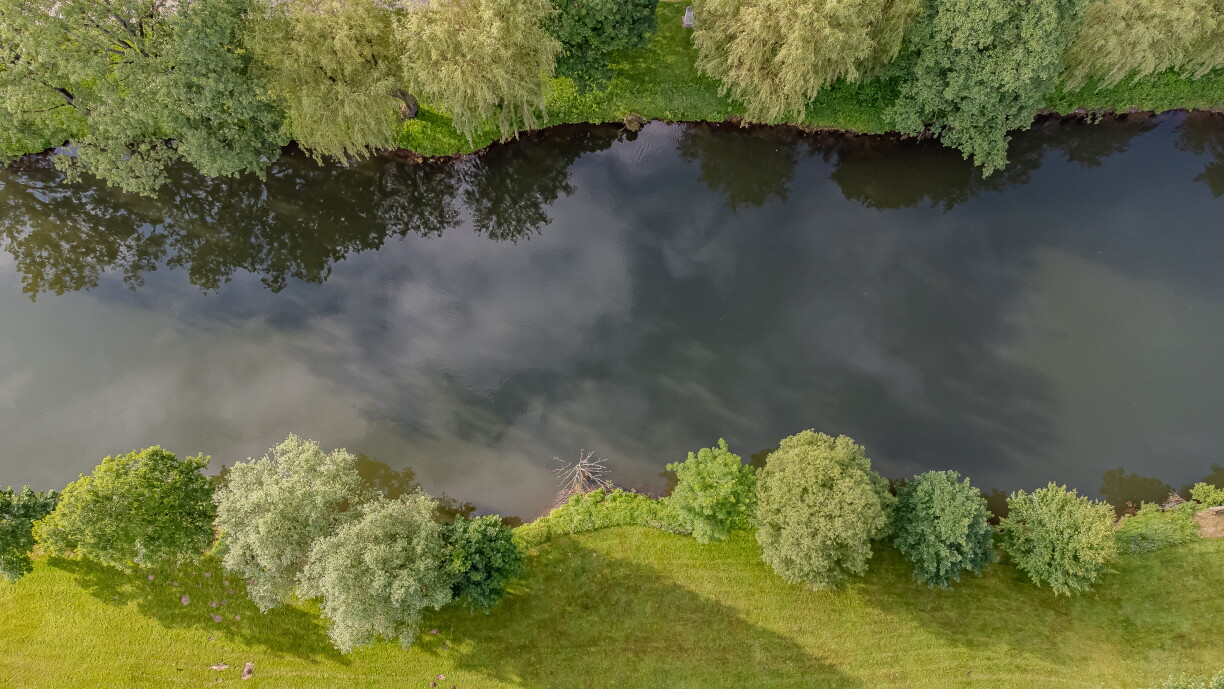
The prolonged period of heat and drought has left Luxembourg's rivers and streams in a precarious state, with low water levels, rising temperatures, and sharply reduced oxygen threatening aquatic life. Laurent Pfister, hydrologist at the Luxembourg Institute of Science and Technology (LIST), studies surface water conditions across the country. He explained that while the immediate impacts of the recent weather extremes were not always immediately visible, their full extent is now clear.
In an interview in June, Pfister had already cautioned that the true consequences of a heatwave for rivers would only become visible after several weeks – a prediction now borne out by recent developments.
"As an example, at our monitoring station on the Eisch river in Hagen, water levels were already concerning at the time, but have since dropped to critical levels, with the stream now being nearly dry", Pfister explained. "And it's not just about quantity: Water temperatures are rising, and oxygen levels are falling. For the few organisms that still survive, conditions are becoming harder with each passing day."
The hydrologist stresses that the crisis is driven not only by heat, but also by a severe lack of rainfall in some regions, ultimately affecting animals and plants alike.
Forests, usually able to withstand temporary drought, are under increasing stress as heatwaves and dry spells become more frequent and intense. "The problem is that these episodes come one after another, sometimes every year, sometimes every couple of years. But each episode puts major stress on vegetation and trees and makes them more vulnerable to disease and pests. Our soil moisture sensors, installed across the country, show that dryness now reaches 60, 80, or even 100 centimetres underground – with deep cracks as wide as a human arm. That is striking."
Luxembourg's sandstone bedrock does offer some natural buffering, as it absorbs water like a sponge and releases it slowly. But the expert warns that, if heat and droughts continue to intensify and become more frequent, even this natural advantage could be undermined.
"Depending on how deep the sandstone layer goes, water may take 10, 20, or 30 years to move from rain falling to reaching a spring or stream. So, there is some buffering, but if extreme events keep recurring, even these groundwater sources will eventually show symptoms, with stream flows dropping", he warned.
In July, Luxembourg's Water Administration launched a national vigilance phase to preserve drinking water, although more recently they have noted a slight easing of reserves. Pfister, too, concurs that isolated heatwaves or droughts do not amount to a crisis, but he emphasises that it is the growing regularity of such events that could make conditions critical in the future.
This situation is compounded by rainfall patterns that are increasingly erratic, such as periods of intense downpours followed by long dry spells, disrupting the delicate balance needed for groundwater replenishment. "All these elements together disturb the balance, making it harder for groundwater reserves to recover. It is a cocktail of many factors, leading to ever greater stress", Pfister warned.
Looking ahead, Pfister believes that Luxembourg must fundamentally change its attitude towards water if it is to adapt to climate extremes. He is surprised by how quickly people forget the risk as soon as wet, grey winter weather returns: "As soon as summer is over and the days are damp and grey, everyone assumes there will be no water shortages. But the problems repeat with the next drought. It's a bit like what happens with flooding."
The hydrologist therefore urges a wake-up call to encourage long-term planning, such as building reserves or decentralising water systems. He underlines that both collective and individual efforts, including sometimes uncomfortable compromises, are needed.
Ultimately, Pfister believes that adaptation is possible: "Western Europe is being confronted with ever more extreme events that we have not experienced before, and we need to adapt to these new circumstances. But it is absolutely manageable, there is no need for panic. There are solutions for managing these situations, but action is needed", he concluded.





