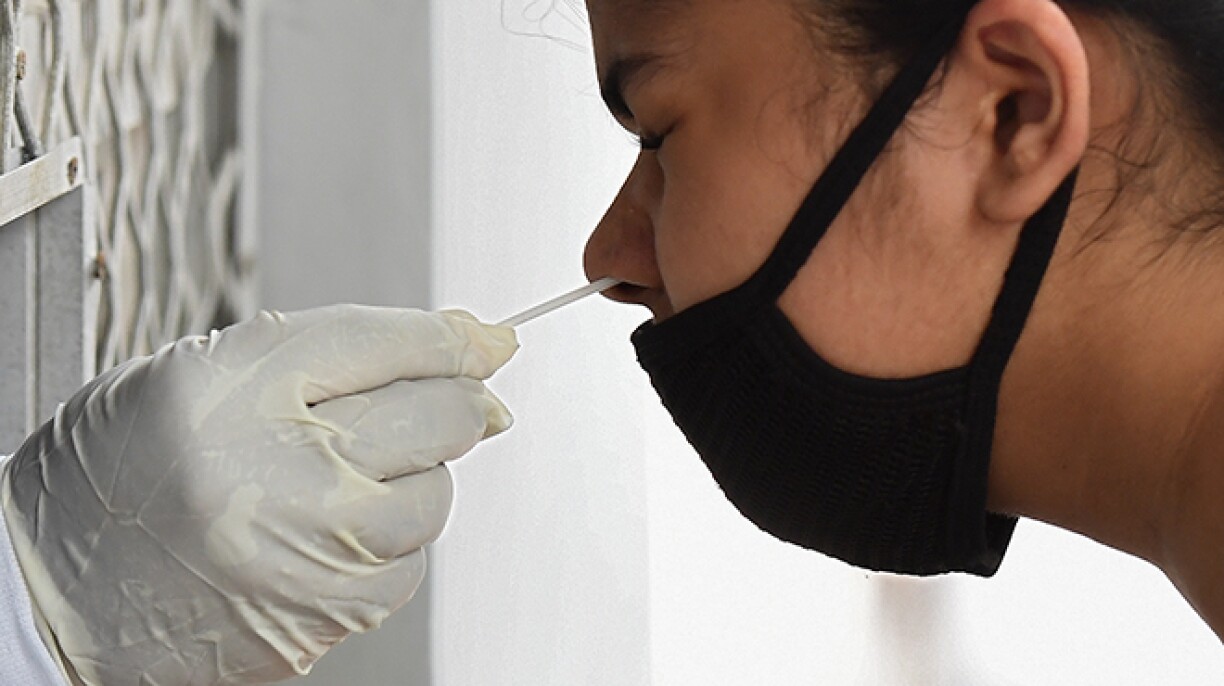
Sébastien Penninckx, who is heading up the project, explained that around 60% of the population had a deviated septum, which proved painful when using a rigid swab to perform the coronavirus test. To combat this, the team have developed a flexible swab which can be twisted in all directions, thus fitting into differently shaped nostrils without causing pain.
The flexible swab, which was digitally designed then created using a 3D printer, has been tested by doctors on 50 patients, with conclusive results.
Penninckx said the experiments revealed the swab was not only less painful for the patient, but just as efficient as the swabs currently in use for coronavirus screening.
Developed in Namur, the flexible swabs can be produced anywhere in the world, by a company or by a hospital equipped with a 3D printer.
Stéphane Lucas, professor of physics at the University of Namur, lauded the technology used to create the swabs, explaining the process of exporting them was as simple as sending out a USB stick or an email with the design file and information required to print the swabs locally.
This type of decentralised production could solve the shortage issue reported in several countries. The University plans to make the flexible swab available on the market by the end of the year.





