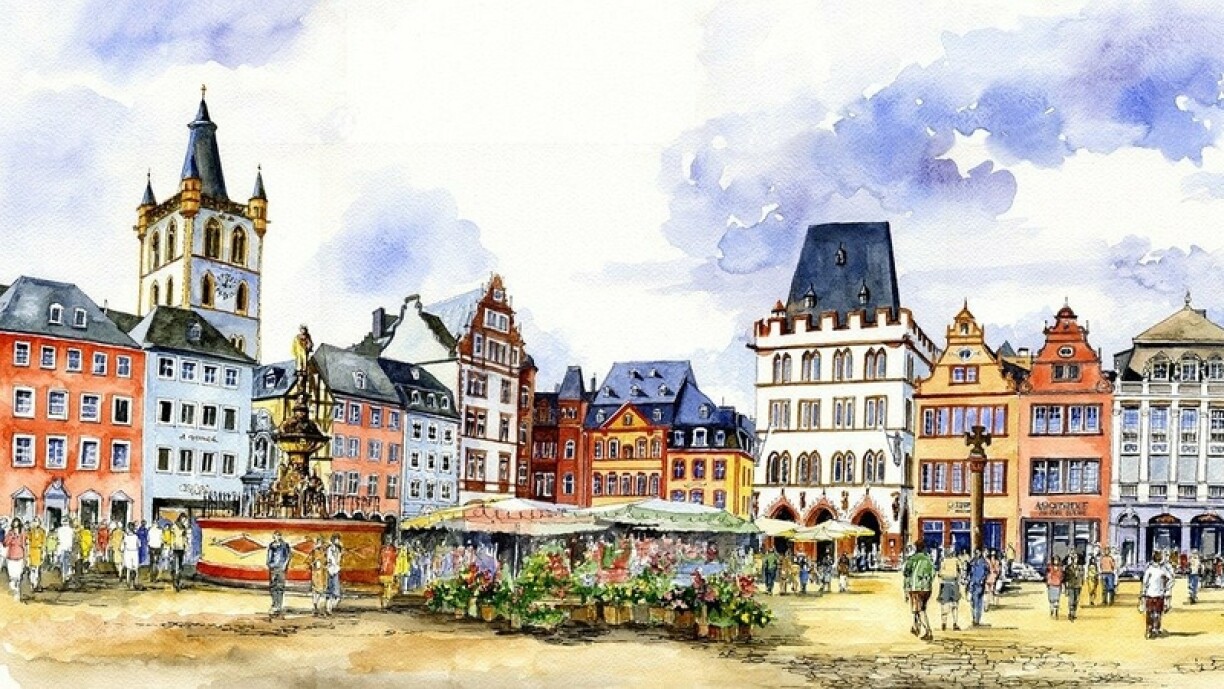
In the first half of the year, approximately 93,000 people visited Trier. That's some 55 percent fewer than in the same period for the previous year.
The number of overnight stays fell by 52 percent, (78,000 for accommodation establishments without campsites), the Gewerkschaft Nahrung-Genuss-Gaststätten (NGG_ announced in a recent report.
The NGG relies heavily on figures from the National Statistical Office.
"The pandemic has led to an unprecedented crisis in the domestic hospitality industry. First, hotels, guesthouses, pubs and restaurants had to close completely for many weeks. And after the lockdown, operations are only slowly starting again under conditions," says Klaus Schu, Managing Director of the NGG Trier region.
However, it is not only companies that are suffering as a result of the situation. "The consequences are also dramatic for chefs, waiters and hotel employees. As short-time workers, they have had to accept significant wage losses – in an industry that pays on the lower end of the wage scale anyway," Schu emphasizes.
Many employees are now looking with concern at the coming autumn and winter season. According to the employment agency, the hotel and catering industry in Trier employs around 4,700 people and no certainty has been given for job security.
However, short-time working has thus far been able to prevent a massive rise in unemployment. In a large part thanks to state aid, there has not been a wave of bankruptcies in the hospitality sector.
"Since the beginning of the pandemic, the trade unions in Berlin have been pushing for short-time working allowances and have also pushed for it to be extended until the end of next year. This way, employees and companies can get through this difficult time," says Schu.
Schu argues that it is also crucial that, after seven months, the benefit rises to 80 percent of net earnings (for parents 87 percent). "In the end, it is clear that every short-time worker is a possible unemployed person less."





