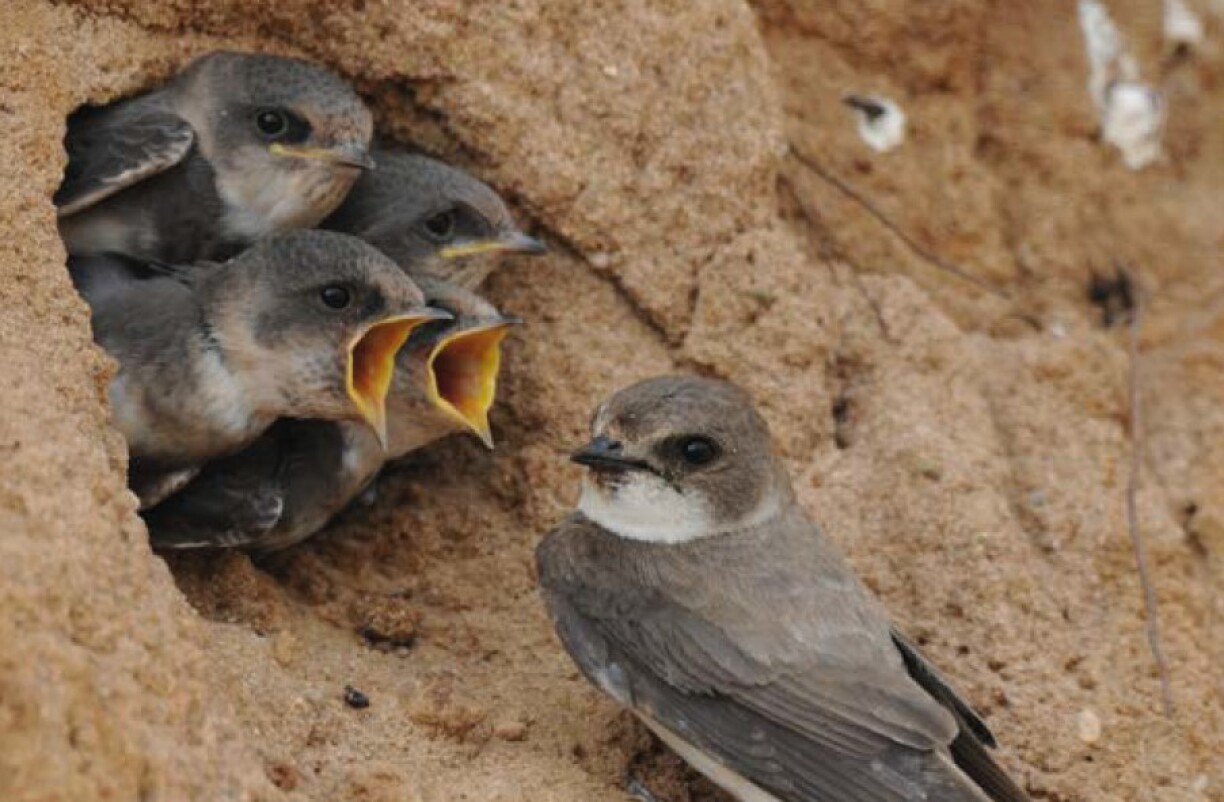
In a press release, natur&ëmwelt describe how this exceptionally agile swallow raises its young in sandy soil. To do so, it digs a horizontal tunnel up to 70 centimetres long into a steep sandy bank. At the end of the tunnel, a small nesting chamber is created and lined with grass, wool, and feathers. As sand martins breed in colonies, an occupied nesting wall can easily be recognised by the numerous tunnel entrances, according to the press release.
They explain further that naturally steep riverbanks along streams and rivers once provided ideal nesting sites. However, they state that river straightening and other water management measures have destroyed much of this habitat, leaving the smallest swallow species facing a severe shortage of nesting sites.
In Luxembourg, the 110 to 150 breeding pairs are now found mainly in the Moselle region, where sand and gravel extraction sites offer suitable conditions, according to the press release. They highlight that successful pilot projects have also been launched to support the species, including the installation of artificial nesting walls.
The sand martin's breeding strategy is particularly striking. According to the press release, the sand martin begins digging nesting tunnels and breeding after returning from its African wintering grounds. Within just six weeks, four to six chicks are raised. Even while still feeding these nearly fledged young, the birds often begin a second brood, a behaviour known as "brood overlapping", allowing them to maximise reproduction before departing again for southern Africa in September, they stated.
Natur&ëmwelt also state that migration remains the most dangerous phase of their lifecycle. Drought and increasing dryness in their African winter habitats, along with the shortage of nesting sites in Europe, continue to threaten populations, they explained.
Measuring just 12–13 centimetres, the sand martin is small and subtly coloured: matt brown on the head and back, white underneath with a brown-grey breast band, and dark legs. Unlike other swallow species, its tail is only slightly forked. Males and females look virtually identical and are difficult to distinguish, according to the press release.
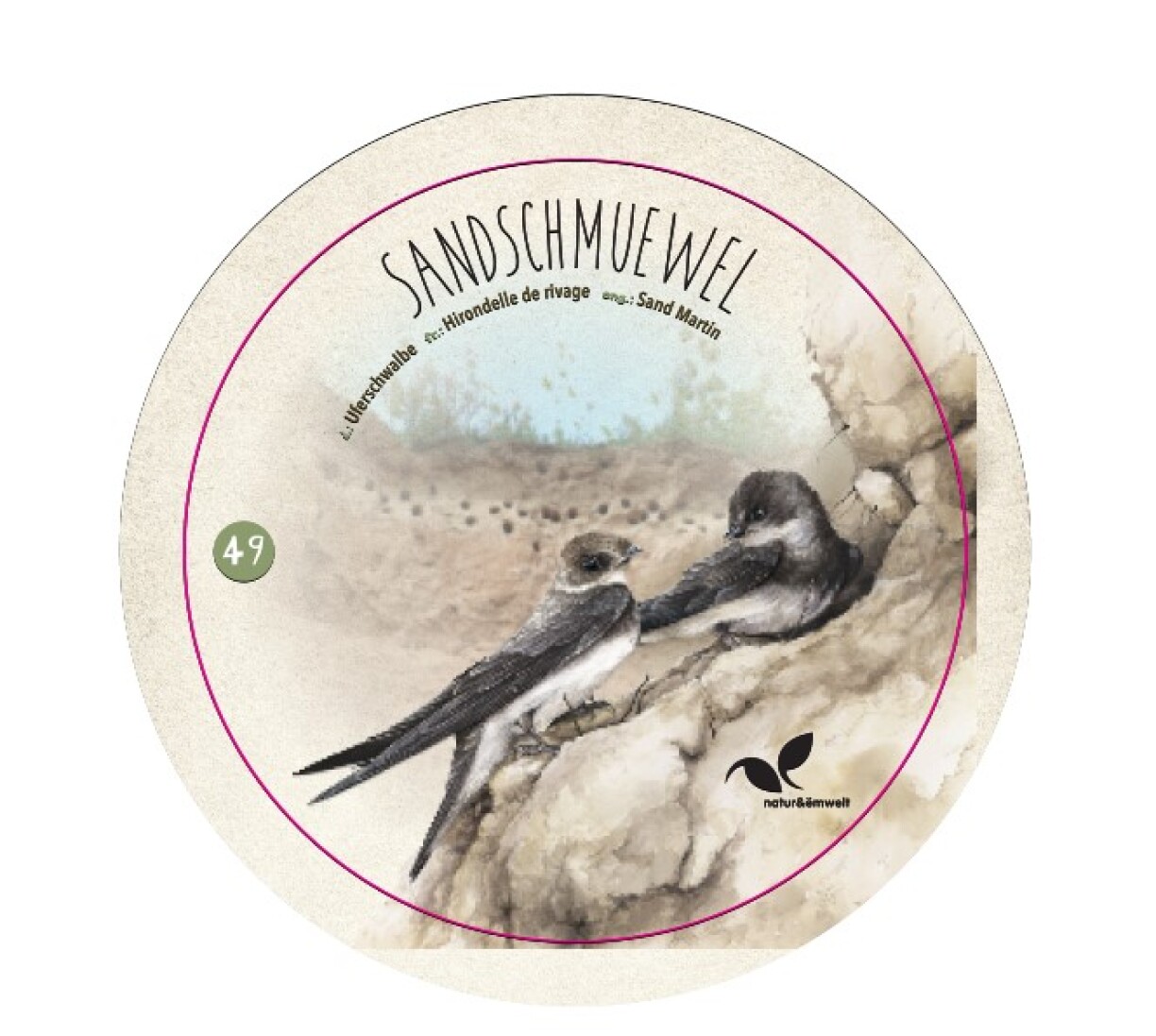
The species' name reflects its habitat in many languages. Its scientific name, Riparia, derives from the Latin ripa, meaning riverbank, a reference that appears in both its German (Uferschwalbe) and French (hirondelle de rivage) names. The Luxembourgish name Sandschmuewel and the English name sand martin likewise highlight its association with sandy riverbanks.
Luxembourg's Bird of the Year is regularly discussed in primary schools. Classes receive an educational brochure from natur&ëmwelt presenting the sand martin in a child-friendly way.





