The National Reception Office (ONA) is set for a change in leadership as the organisation prepares for reform. Yves Piron, the current director, has asked not to renew his mandate, which will expire at the end of 2026.
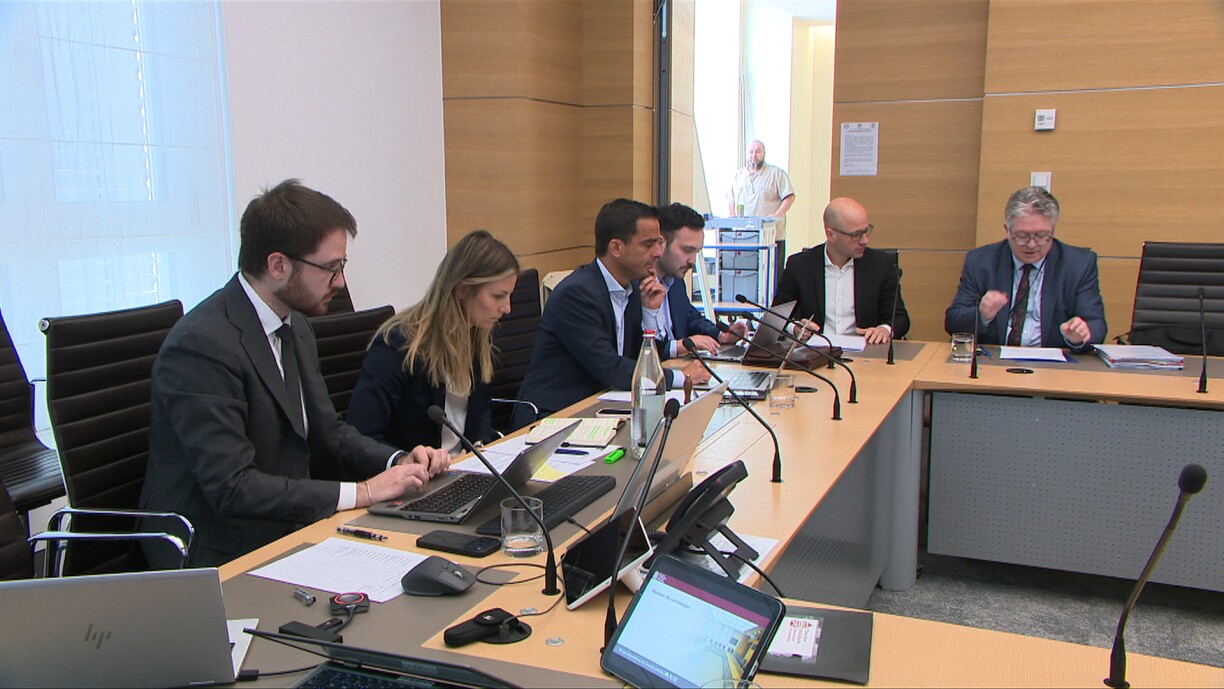
The announcement was made on Monday by Minister for Family Affairs Max Hahn, during a presentation of the Inspectorate of Finance (IGF) audit report on the ONA to the parliamentary Family Affairs Committee. The recruitment process for a new director will begin in the coming weeks, with the successful candidate expected to guide the office through the upcoming restructuring.
The ONA currently supports around 9,000 people who have fled to Luxembourg. According to the IGF, the next director will be expected to work with political leaders and, where necessary, external experts to implement broad changes to the office even though the report confirms that the ONA is largely fulfilling its mission today.
However, the IGF report identifies one major challenge, namely, chronic overcrowding in ONA facilities. Despite accommodation capacity almost doubling in the past six years to over 8,200 beds, the number of places remains insufficient. The audit notes that reception centres are concentrated in a small number of municipalities and are often leave plenty of room for improvement.
In addition, ONA partners, such as NGOs, do not always adhere to the same quality standards, indicating scope for improvement. The IGF recommends a more even geographical distribution of facilities throughout the country, but the administration is dependent on the cooperation of local councils. Outgoing director Yves Piron has called on municipalities to demonstrate solidarity by also providing reception structures for refugees
The report further states that the ONA’s legal framework needs to be updated to reflect new realities. The IGF urges a move from reactive to proactive management of migration crises, recommending the implementation of documented emergency procedures and long-term strategies.
The audit also suggests that ONA would benefit from a wider, less centralised management structure, with clearer lines of responsibility and decision-making. More than 70 of the approximately 300 ONA employees are on fixed-term contracts, which the IGF considers a risk due to the ongoing loss of expertise.
The rapporteur, Marc Vanolst, also highlighted the need for better integration between different IT systems. In terms of financial controls, the IGF found no evidence of double funding but noted that the risk remains. For minor expenses, the IGF recommends less stringent controls to enable faster operations. Administrative simplification is also suggested, such as considering direct payment of refugees' medical bills.
Minister Max Hahn described the IGF report as a user manual for improving the ONA’s operations in coming years. Director Yves Piron said the audit offers important guidance, but insisted that his teams had effectively managed recent crises.





