Around 6% of people infected with COVID-19 develop Long Covid. For some, the condition lasts well over a year, making a normal life almost impossible.
Four years ago, Dan Lukic was working as a sports educator. Today, he is simply glad that he can make himself useful for an hour in the morning and evening in his local community. On his own initiative and as a volunteer, he goes for walks and picks up litter.
For a long time, the father could barely even leave his home. His Long Covid developed after a second infection in September 2022. He now suffers from chronic fatigue, constant brain fog, and nerve pain.
Lukic, who is currently receiving an invalidity pension, explained that it feels like constantly touching an electric wire, which makes it difficult to concentrate, speak for long periods, or drive. He hopes to return to work one day, explaining that his social and family life have changed dramatically.
His wife, Geraldine Posing, details that their entire family life came to an abrupt halt, meaning they could no longer do anything together. She effectively took over all responsibilities related to their children, adding that their relationship as a couple effectively came to a halt.
Today, things have somewhat improved, but for a long time Dan was hypersensitive to sound and light. Which proved particularly tough for the children, Posing said. For two years, they could not make noise, play instruments, or even argue, she explained almost in tears.


While Lukic and his family received a great deal of support from relatives and friends, this is not always the case explains Psychotherapist Charles Benoy.
Benoy, who is also the coordinator of the Long Covid treatment programme at the rehabilitation centre of the Neuro-Psychiatric Hospital Centre (CHNP) in Ettelbruck, explains that Long Covid patients often experience a certain degree of stigma.
This is largely because some people confuse key symptoms, such as fatigue, with simple tiredness. Often assuming that a bit of rest will solve the problem, he adds.
Since 2021, around 1,650 patients have gone through the Long Covid programme in Luxembourg, with about 400 currently receiving care. Each month, roughly 15 new patients join. Patients can receive psychological support at CHNP, and depending on the case, treatment may also be provided either at the rehabilitation centre or in a facility in Mondorf.
In conversation with RTL, Minister of Health and Social Security Martine Deprez described Long Covid sufferers as chronic patients. She explained that while there is no cure, there are therapies that support patients, help them manage everyday life, and assist them in regaining stability on particularly difficult days.
She reassures that these therapies will remain in place and that no one will be left without support.
Deprez stressed that they are also monitoring developments abroad to assess what approaches could be adopted in Luxembourg and whether participation in research projects would be possible.
Last year, the rehabilitation centre and the University of Luxembourg launched their own pilot project. FastCov is a study designed to explore whether fasting therapy could benefit Long Covid patients and how it might affect the microbiome, particularly in the gut.
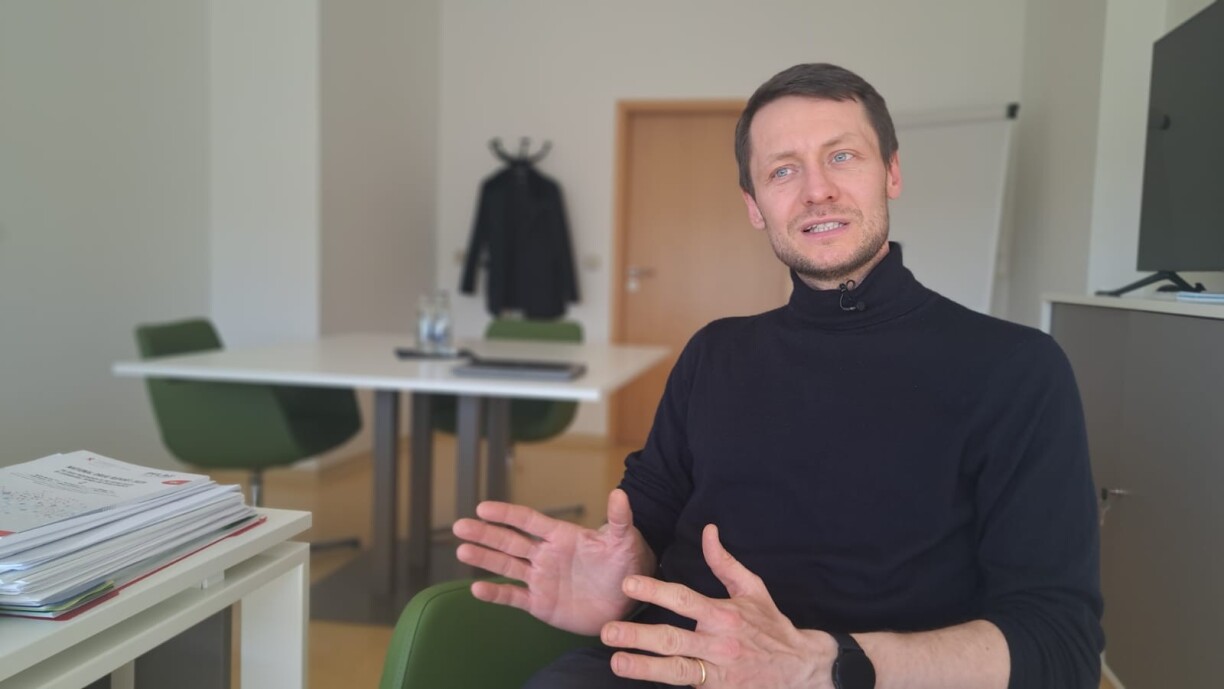
18 of the 20 participants completed the fasting therapy without complications. For the remaining two, the issues were likely not directly related to fasting, according to Benoy.
Lukic also took part in the FastCov pilot project and reported feeling better afterwards. Over the course of seven days, he noticed he could walk more easily and concentrate better. In the autumn, he even undertook another seven-day fast on his own initiative. However, individual experiences cannot be used to draw general conclusions.
Charles Benoy noted that while some people show improvement, others do not, and some even feel slightly worse during the fasting period. He explained that further, larger-scale studies are needed to determine whether fasting is ineffective overall or whether it may only benefit certain groups.
Lukic remains in the Long Covid programme and has since undergone numerous therapies, with psychological support proving particularly helpful.
He has also tried other treatments, which are not covered by Luxembourg's National Health Fund (CNS), like Acupuncture. Treatments he estimates have cost around €20,000 to date.
While there's been improvements to his condition, he is still unable to cook for himself and, when his wife is not at home, relies on meal deliveries by Repas sur roues, a home delivery service providing meals intended for older people, individuals with reduced mobility, or those recovering from illness.
Lukic has since dedicated his free time to cleaning up Merzig, asking for donations to help his treatments in return for a cleaner town. “Now I have a goal: Merzig needs to become cleaner!” Lukic states on the fundraiser site. "The funds raised allow me to pay for Acupuncture and my meals‑on‑wheels deliveries.”
It remains unclear how long Long Covid will continue to affect his life so significantly. Lukic has learned not to dwell too much on it or let it cause additional stress.
Posing said she has always held on to hope, adding that this mindset, sticking together and focusing on the positive, has helped them endure the situation.





