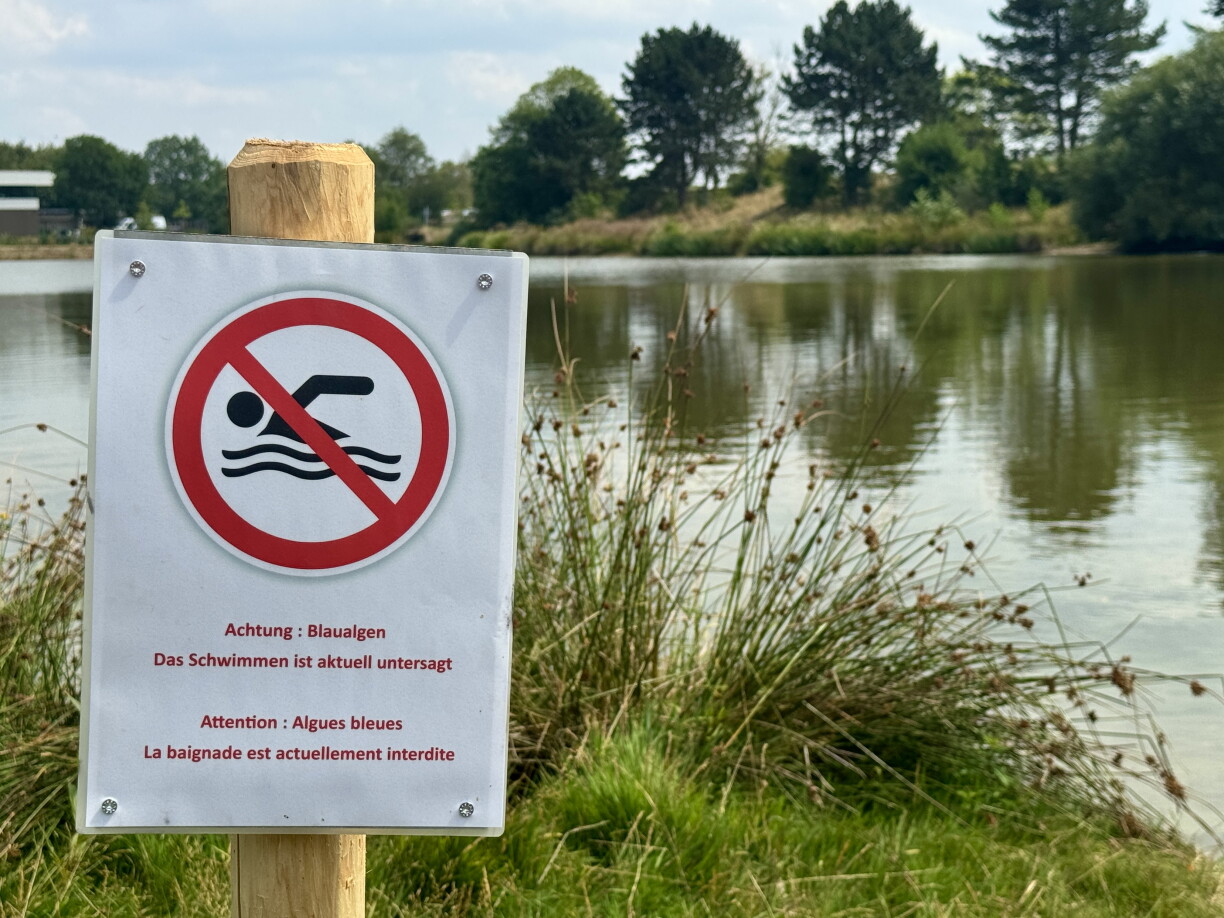
Weiswampach Mayor Néckel Polfer has assured residents and visitors that while the upper lake is currently off-limits, swimming and pedal boating are still allowed in the lower lake, which has maintained good water quality over the years.
The closure applies solely to the so-called 'fishing lake', that being the upper one, where swimming has only been permitted in recent years, and only when water conditions permit.
The two lakes differ mainly in the types of aquatic plants they contain, explains Mayor Polfer. The lower lake is naturally better at cleaning itself, while the upper lake requires more attention to maintain water quality.
In an effort to address this, the local council plans to improve the upper lake's condition using natural methods.
Based on recent analyses, they intend to plant reeds at stream inlets, which act like a natural filtration system. These reeds help remove nutrients, particularly phosphates, from the water.
The hope is that as water plants recover, the overall water quality will also improve.
Lakes are especially prone to heating up during warm weather because the water is still, explains Tom Bechet, deputy head of the Surface Water Department at the Water Management Agency (AGE). Lakes also tend to accumulate nutrients, which can be washed in from surrounding farmland or enter the water through partially treated wastewater.
Warm temperatures and sunlight then encourage the growth of blue-green algae.
Unfortunately, those cannot be removed simply. Agitating the water may disperse them temporarily, but it does not solve the underlying issue.
"Just because the algae are no longer visible does not mean the water is of good quality", Bechet warns.
During their growth, blue-green algae release cytotoxins. Even when the algae are not visible, these toxins may remain in the water, posing potential health risks to both humans and animals.
If the concentration of cytotoxins exceeds certain thresholds, swimmers may experience skin irritation or nausea, especially if they accidentally swallow the water. The same risks apply to animals that drink from the lake.
It is currently impossible to say when the upper lake will reopen, as this depends on several factors. Water samples are being taken and analysed every week.
Anyone interested in the latest water quality data can find updates on the websites cyanowatch.lu and www.waasser.lu.





