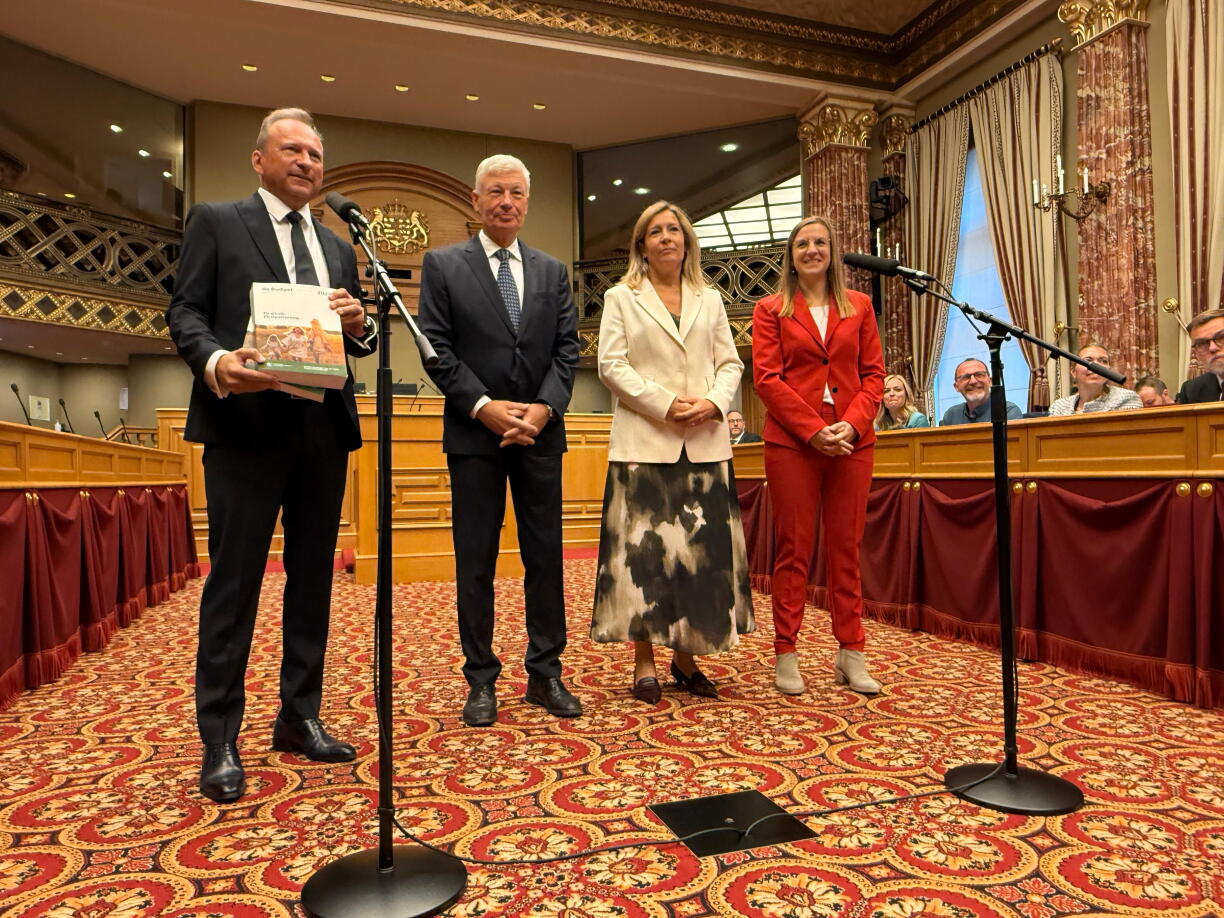
In a period marked by uncertainty, the Luxembourg government has chosen to invest and provide relief for households and businesses, Minister of Finance Gilles Roth told MPs on Wednesday as he introduced the 2027 state budget under the banner "For the people, for upswing".
The major tax reform, however, is set to take effect only in 2028, meaning it is not yet included in next year’s financial plans.
Likewise, a new pay agreement for state employees is not yet factored into the budget, as negotiations are still underway.
The budget allocates €212 million to fund the previously negotiated €200 increase in the minimum wage, as well as a range of tax incentives for property buyers and state investment in housing.
There will also be an increase in funding for the government’s purchase of off-plan housing (Vefa), while other measures previously agreed as part of tripartite negotiations to contain energy prices will expire at the end of the year.
Additional allocations include €152 million for an increase in child benefits and €119 million to fund reform of the Chèque Service Accueil childcare system.
Businesses will benefit from a reduction in corporate tax rates from 16% to 15% for large companies and from 14% to 13% for small companies as of 1 January, as previously announced.
The investment bonus for digital and energy transition projects is being raised from 18% to 21%.
The government is also set to modernise the expat tax regime, expand employee participation bonuses, and revise the carried interest scheme to attract talent to Luxembourg, though further details have yet to be specified.
To facilitate succession within family businesses, gifts made directly within families or between partners will now be exempt from tax.


Further business-oriented measures include the abolition of the 17-year cap on carrying forward tax losses. Minister Roth also announced a forthcoming new legal framework for stock options.
Meanwhile, to promote investment but discourage speculation, the holding period required for tax-free capital gains on share sales will be extended from six to twelve months.
The budget plans for €4.5 billion in public investment overall. Military expenditure will rise by €116 million, reaching €1.27 billion next year. Specific allocations include €825 million for the Rail Fund and €532 million for the Road Fund.
For both this year and next, the Ministry of Finance is projecting a central government deficit of around €1.9 billion. The Social Security system, however, is expected to post a surplus next year thanks to increased transfers from the state budget and higher social contributions.
After a deficit this year, municipalities should also return to surplus in 2025 due to a boost in state funding.
This means the overall public sector deficit is expected to amount to €570 million, which is significantly lower than feared when the current government took office three years ago.
By the end of this year, public debt is forecast to reach 29.3% of GDP, due in part to a new bond issue this month. Nevertheless, Minister Roth insisted that public finances remain under control.
Democratic Party (DP) MP Carole Hartmann has been appointed rapporteur for the budget bill, with a parliamentary vote on the final text scheduled for the end of the year.