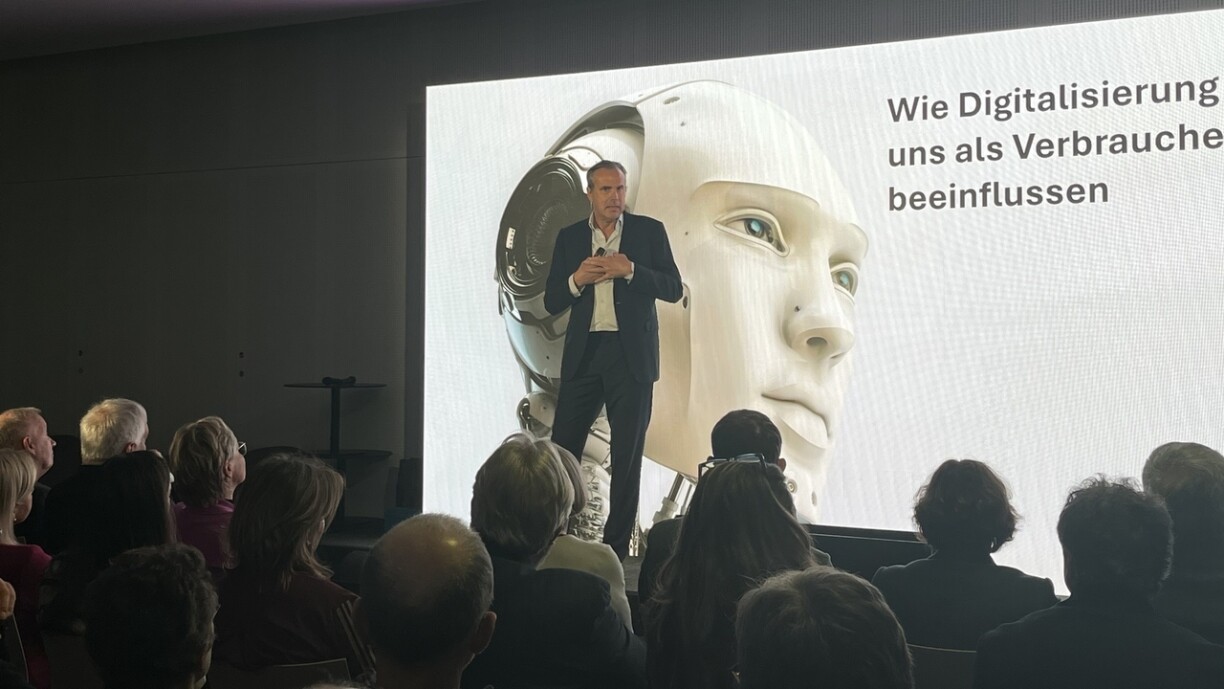
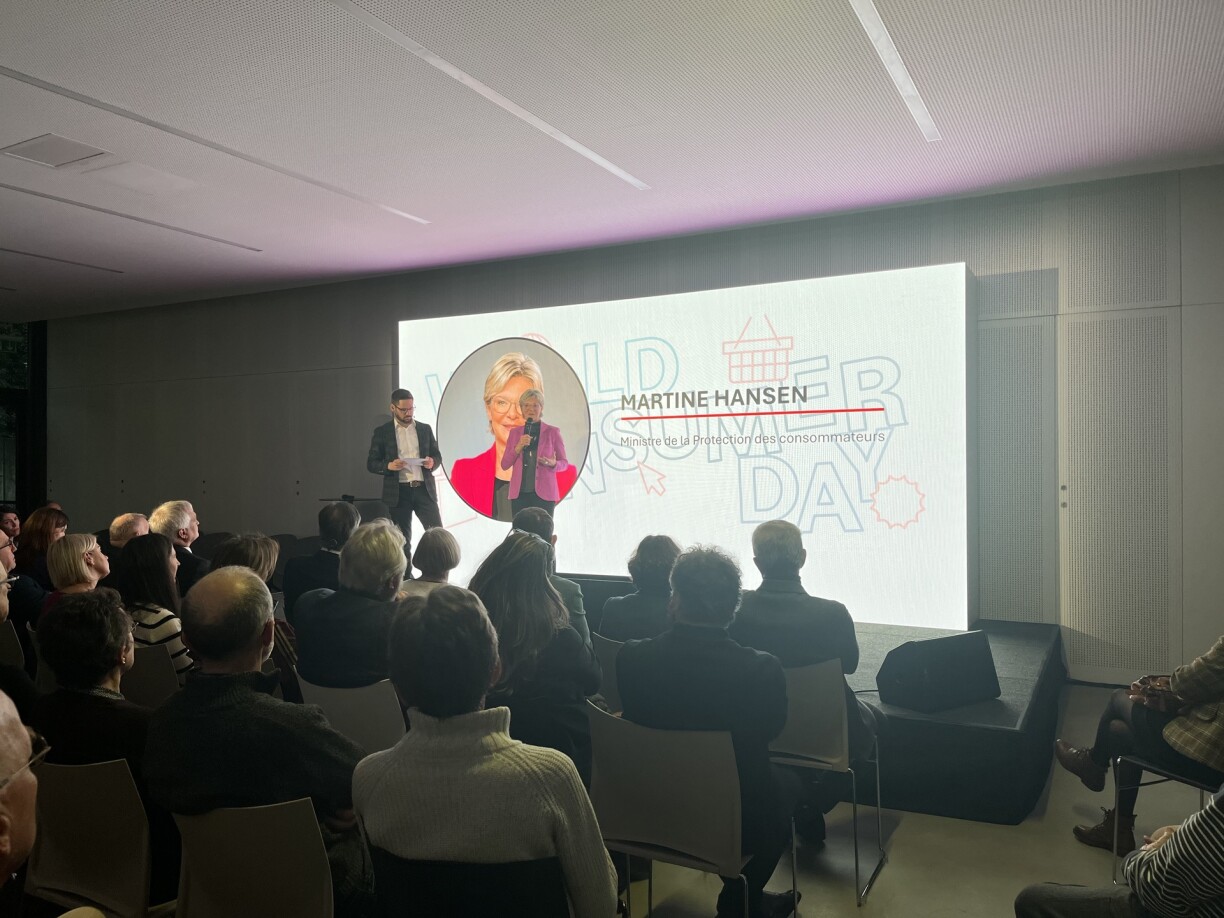
AI enables people to save time, though it also harbours risks as well. It all depends on how the technology is used, states the former general director of Google Germany and futurologist Christian Baudis. He attended the World Consumer Day event held by the directory of consumer protection, the union for consumer protection and the European centre for consumers in Luxembourg on Thursday evening.
The responsibility of deciding what AI is allowed to do lies with the person operating it, highlights Christian Baudis. He believes in the potential for AI in the field of agriculture, the health sector and research. Pharmaceutical research is becoming progressively more reliant on AI.
"I can produce better medication, I can produce cures for diseases which a pharmaceutical business usually cannot produce, due to the added expenses and the rarity of these diseases. Artificial intelligence makes that a possibility. All of a sudden I can produce medication for rare illnesses I was not able to do before."
These advantages need to be encouraged, says Christian Baudis. The critical aspects of AI need to be regulated as much as possible to ensure that they do not have negative effects on democracy.
However, AI is not without its risks:
"AI has radically improved in mimicking voices and videos, making it impossible to distinguish between what is real and what is not. Whether the president just spoke or not, I think it is a topic consumer protection needs to pay attention to. I would prioritise fake news as one of the first subjects legislators should look at, because the consumer cannot judge what is true or false."
This uncertainty can lead to a loss of trust: a person can start to believe nothing, whether true or false. That being said, AI is also a tool that can be used for fact checking.
"I should probably invest in programmes that refuse distributing certain content, that cannot be shown on Instagram or somewhere else. That is when the law needs to step in, since the differences between fake and real are so minimal, a consumer couldn't recognise it."
A regulation as suggested by the futurologist is a political decision, but it might not be politically charged everywhere.
Christian Baudis does not see data protection in connection to AI as a great danger. Europe is well-protected according to him. Nonetheless, every country has to experience it for themselves and see how they handle data online.





