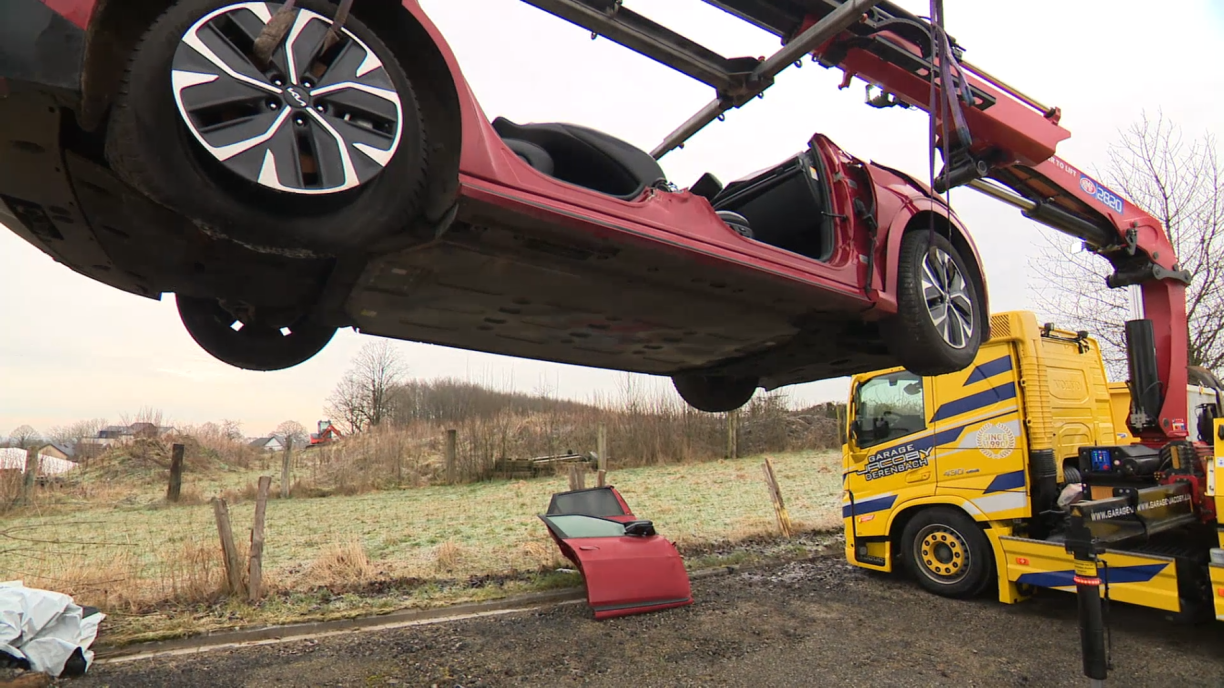
"Repairing an electric vehicle takes longer and costs more", says Luxembourg-based garage owner Sven Jacoby.
Our colleagues from RTL Infos spoke with mechanics, firefighters, police officers, automotive experts, and the Ministry of Transport to better understand the risks – and misconceptions – associated with electric cars.
Whether embraced or resisted, electric vehicles have firmly established themselves in the automotive industry, challenging the long-standing dominance of combustion engines. This shift has ignited a heated debate between proponents and critics, each armed with compelling arguments.
The report highlights five often-overlooked aspects of electric vehicles: breakdown assistance, fire risks, electrocution hazards, repair costs, and Europe's legislative delays in addressing these issues.
Sven Jacoby, co-owner of the Jacoby Frères garage in Wincrange, is one of the few garage owners in Luxembourg specialising in repairing electric vehicles involved in accidents. His assessment is clear: "An electric vehicle requires more work than a combustion engine vehicle. With a combustion engine car, we can usually load it directly onto our tow truck. But with an electric car, it can easily take an extra half hour: we have to perform checks, ensure the vehicle can't move, and confirm the high-voltage system is deactivated."
Additional requirements come with extra costs. "Repairing an electric vehicle is more expensive," Jacoby explains, adding, "There's also the issue of storage. The vehicle has to be placed in quarantine for several days to monitor for potential fires." In some cases, the car is placed in an immersion container, the only truly effective solution for containing an electric car fire (see image below). "The container is equipped with gas and temperature monitoring systems that alert the garage if an anomaly is detected. Storage costs €100 per day", Jacoby added.
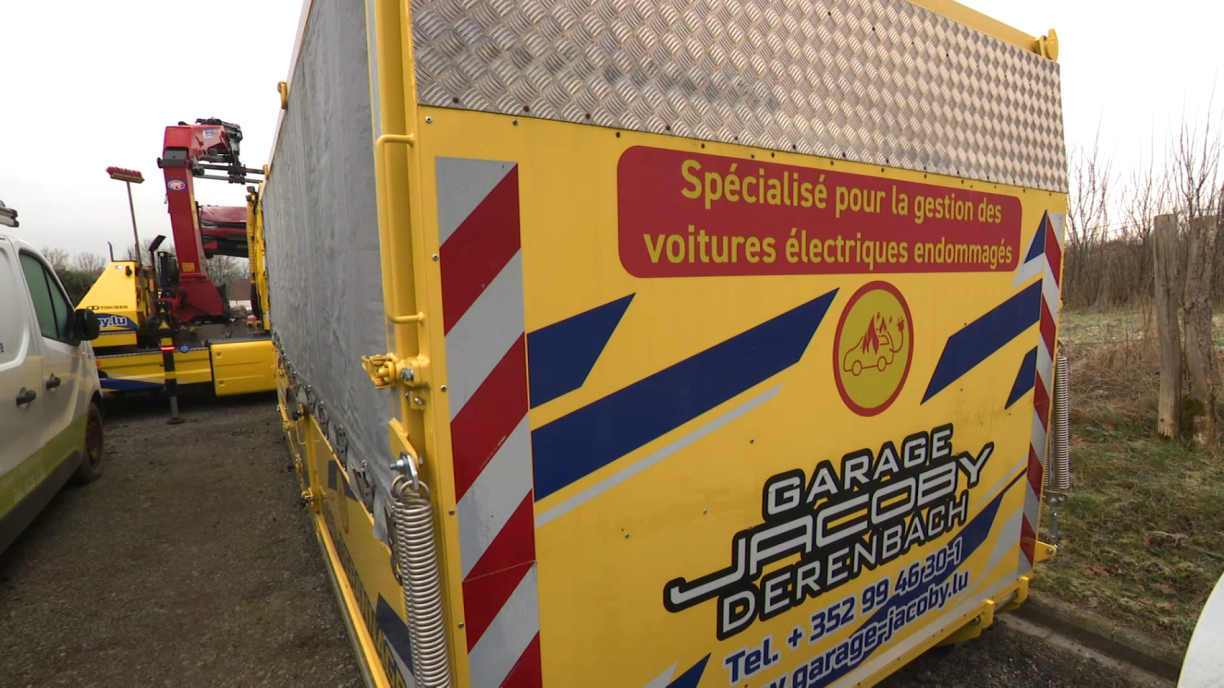
The immersion container has the advantage of saving space, as other vehicles can be parked nearby. Without it, garages or impound lots must leave two empty parking spaces on either side of an electric car to mitigate fire risks – a costly requirement for businesses.
Our colleagues also discussed the topic with the Luxembourg Motoring Association (ACL), the country's largest breakdown service. According to Frank Maas, an expert at the ACL, there are no significant differences in handling electric and combustion engine vehicles. "The most common issues for both types of vehicles are similar. The 12V battery remains the number one cause of breakdowns in our statistics", Maas explained. "It's important to note that electric vehicles also have a 12V battery, which powers the high-voltage battery relays. If the 12V battery is dead, the high-voltage battery relays won't function, and the car won't start" Maas added.
The internet is filled with dramatic videos of electric vehicle fires, but the reality is far less sensational.
The Luxembourg Ministry of Transport reassured our colleagues, stating that "very few incidents involving electric vehicles have been recorded...they are equipped with devices to prevent such occurrences."
The Grand-Ducal Fire and Rescue Corps (CGDIS) provided statistics that align with this perspective. In 2023, the CGDIS responded to 139 vehicle fires (including cars, lorries, and buses), with only eight involving electric or hybrid vehicles. In 2024, there were 123 vehicle fires, six of which involved electric or hybrid vehicles. While these numbers represent a small proportion of incidents, it's worth noting that electric and hybrid vehicles accounted for just 10.65% of Luxembourg's car fleet in 2024.
"International studies indicate that the likelihood of an electric car catching fire is much lower than that of conventional vehicles. This is partly due to the fact that the electric car fleet is generally newer", emphasised the CGDIS.
The ACL echoed this sentiment, confirming that fires caused by traction batteries are extremely rare. However, fires can still occur due to short circuits in the electrical system, such as in the dashboard or wiring – similar to combustion engine vehicles. Additionally, improper use of equipment, like a jack to lift the vehicle, can pose risks, as high-voltage batteries are often located under the chassis (though protected by a sturdy casing).
Despite their rarity, electric vehicle fires are particularly hazardous. "These fires start extremely quickly, a phenomenon known as thermal runaway", explained Lieutenant Colonel Franck Maillard of the National Federation of Firefighters of France (quoted in the French magazine Que Choisir). "They are also very intense: within seconds, flames shoot up like torches, and an explosion can occur, ejecting molten materials. Another issue is their duration. A battery consists of multiple modules, and if one overheats, the others may follow. An electric car fire can last for days", Maillard added.
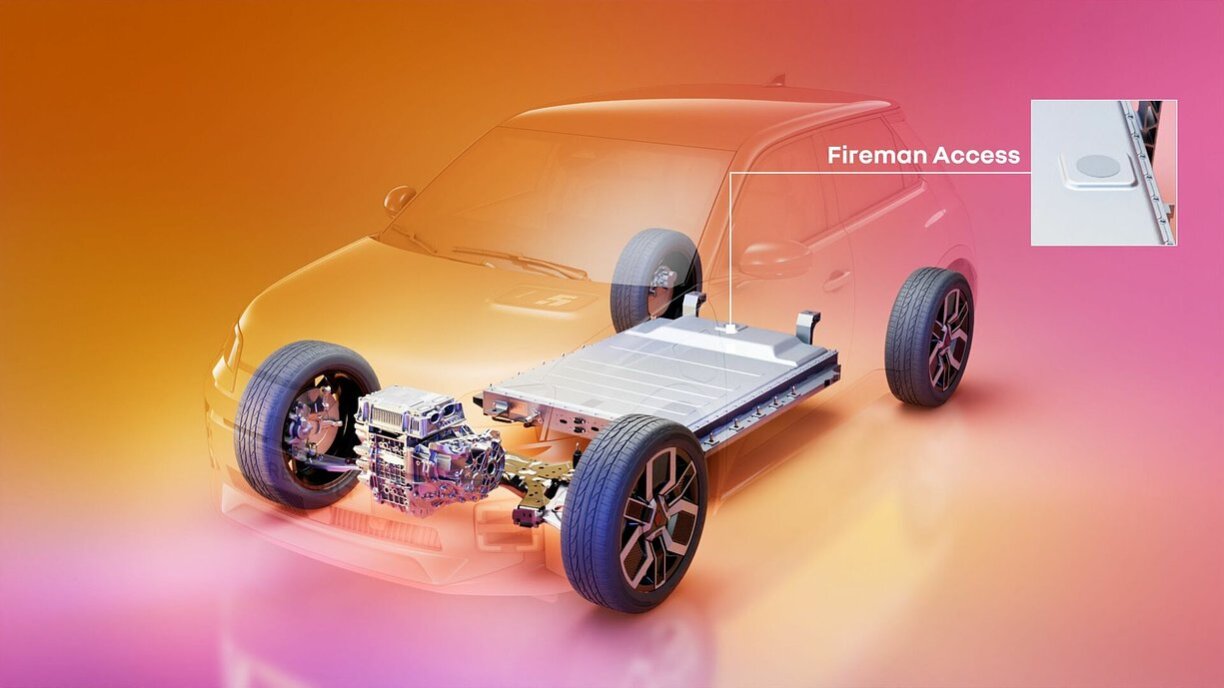
Electric vehicle fires also release highly toxic smoke, making it essential to evacuate immediately rather than attempting to extinguish the flames. An added challenge is the waterproof casing surrounding the batteries, which prevents firefighters from accessing the core of the fire. To address this, the Renault Group has introduced its Fireman Access solution, now available to other manufacturers. This innovation features a secure opening in the battery casing, allowing firefighters to inject water directly into the battery and control the fire more effectively.
Jacoby confirmed that thermal runaway can occur unexpectedly. "We've had two damaged cars whose temperatures exceeded 100°C, indicating internal battery damage. I also know of other mechanics who've faced issues, like an electric vehicle catching fire two weeks after an accident", he explained.
Currently, the most effective solution remains the immersion container, which the Jacoby garage showcased to our colleagues. The Luxembourg police have also acquired one, exclusively for their fleet of electric vehicles. The process is straightforward: the vehicle is placed inside the container, and firefighters pour thousands of litres of water into it until the battery is fully submerged. "It's the only way to contain an electric car fire, as using a conventional fire hose isn't sufficient", Jacoby stated. The CGDIS echoed this, noting, "A fire can spontaneously reignite if the chain reaction continues after extinguishing. Immersing the vehicle in water prevents this."
Another tool gaining traction among professionals is the fire blanket, which can be deployed in minutes, envelop the vehicle entirely, and cut off its oxygen supply – suffocating the flames. The ACL demonstrated this technology for our colleagues, highlighting its potential to become more widely adopted, especially in high-risk areas like underground car parks. In such locations, firefighter access can be challenging, and the risk of collateral damage is significant.
In Luxembourg, there have been no statistics done concerning electric shock incidents when using an electric car. In general, the risk is very low. Professionals who operate with electric cars are supposed to remain careful. "I don’t have knowledge about a single case of a fireman electrocuted by an electric car neither in Luxembourg nor in the Greater region", admits an expert from the Grand Ducal Fire and Rescue Corps.
Our colleagues from RTL Infos contacted the manager of a car valuation company in Luxembourg (specialists who inquire into what caused an accident and its consequences). The expert was reassuring: "I have never witnessed or heard of a mechanic who was electrocuted while working on an electric car." However, professionals are aware of the risks which accompany high voltage batteries (400 volts in general). That is why, the expert continues, there is "a whole procedure of powering down before anyone touches the vehicle...all mechanics and professionals should have specific kits, with equipment, such as electric rescue poles, which can be used to detach a victim of electrocution." In cases of electrical exposure, victims can often become stuck to the source of the electricity.
Electric vehicles are also equipped with security systems which are designed to cover all eventualities, such as watertight battery boxes and insulation for high-voltage batteries in the event of an accident. A fire brigade trainer demonstrated the various protective sheaths surrounding the high-voltage cables, ‘which even detect any rodent bites.’
But the safety rules still have to be observed. "Unfortunately, there are a lot of breakdown mechanics who don't see the risk with crashed electric cars, or who refuse to intervene for that reason", warns Sven Jacoby.
The risk is very real, confirms Pierre-Loïc Olympie, president of M&D France which sells a dedicated apparatus: the EV Safe Rescue. This tool, connected to the charging plug of the vehicle, is able to give an immediate diagnosis of the state of the damaged vehicle. "In less than four seconds, a red or green light appears: if it’s red, one has to be careful because it could either mean a risk of electrocution or an overheated battery. Our tool can directly measure the temperature of the car. If the light is red and the temperature indicated is 60°, I suspect that it’s linked to the battery. Lithium batteries risk to combust if they exceed 70°. If the temperature is 15°, there is no risk of electrocution."
Firefighters and professionals already use this utensil, because "they are the most affected by the dangers, they work on electric vehicles which have suffered a high amount of stress. That’s when it’s most common for an electric shock to happen, simply by touching the outside of the vehicle for example", explains Pierre-Loïc Olympie.
There is an added risk for paramedics, because the electric vehicle’s motor is silent: it can still move after an accident has happened. "When our tool is plugged in, the speedometer is blocked, so the tyres can still rotate but the vehicle cannot move on its own. Some paramedics have been struck by an electric car while trying to extract the driver from their vehicle. When the latter removes the foot from the brake, the vehicle advances all on its own", elaborates M&D France president.
When compared to combustion engine cars, electric vehicles are more expensive – as most people know. However, what is less known is that there are other expenses that outstrip their traditional counterparts: technicians can also be more expensive to hire when an electric car breaks down, or is involved in an accident. According to France Assureurs, "to repair an electric VW up! Costs 8% more than its combustion-powered version, 11% more expensive for an electric Peugeot II, and 14% for a MINI IV Golf."
"The prices for electric car repairs are becoming delusional", an expert has recently admitted, particularly due to the soaring cost of spare parts, which are often more high-tech – and therefore more expensive – for electric vehicles. According to the SRA (an association of insurance companies), the electrification of the vehicle fleet is now seen as "a source of rising repair costs in the coming years". Also according to the SRA, hybrids are the most expensive vehicles to repair, due to their dual engines.
Graphics in French:


Inevitably, the most expensive part to replace is the high voltage battery. "It’s a big problem", confirms Sven Jacoby who has an example at hand. "We repaired a Kia EV6, a limited edition which cost almost €80,000, it barely had 12,000km on the clock when it suffered a frontal collision. The airbag was set off, so there was a shock, and if it had been a combustion-powered vehicle we would have been able to fix it. Because it was an electric motor, the insurance company said they would not cover the costs due to the state the battery might be in. As soon as there is a doubt, most insurance companies don’t offer to cover the costs." The ensuing downgrading means that the damage is irreversible. The experts then decide to write the vehicle off on technical grounds because the cost of repairs is deemed to be higher than the value of the vehicle.
Another example is a Hyundai Kona Sven Jacoby has bought for very little money. "The vehicle was relatively new, 60,000km. It endured a frontal collision. All car dealers claimed it would be too expensive to repair the car due to the battery, yet if it had been a combustion car they would have paid €8,000 to recycle it. For an electric vehicle, they would only pay about €500 for the remaining parts, like the doors, the seats."
The specialist of a car valuation company confirmed the latter: "We have technical notes written by the manufacturer, and generally, if the battery has been damaged, the decision to write off the vehicle is taken relatively quickly. The assessment is due to the cost of the battery, which is enormous, it can amount to 50% of the total value of the car."
Given the high cost of repairs to electric vehicles, isn't there a risk that insurers will pass on the bill to their customers? We contacted several insurance companies in Luxembourg, but despite our inquiries, none were willing to answer our questions.
Yet the risk is very real. "Even though electric vehicles tend to cost less to maintain...their exceptionally high repair costs in the event of a claim are a factor that insurers must take into account when calculating their premiums. The cost of spare parts for electric vehicles is also higher than for internal combustion vehicles. A single part such as an electric motor or battery management system can cost several thousand euros, which adds considerably to the insurance bill in the event of an accident", writes a French mutual insurance company, for example.
A situation where drivers might experience a rapid rise in insurance premiums for electric vehicles is therefore a possibility.
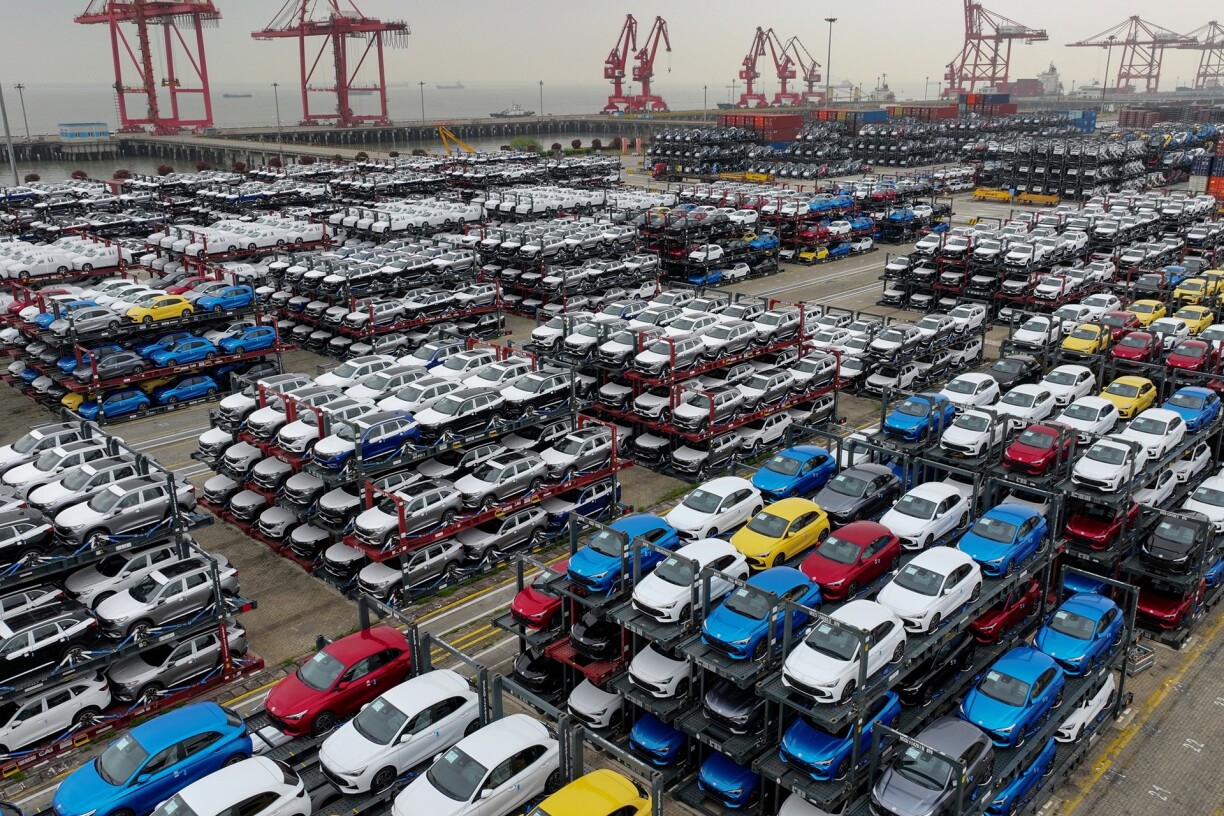
Although in Europe the trade of combustion-powered vehicles will only be prohibited in 2035, most merchants have transitioned to building electric vehicles.

As evidenced above, there are arguably areas that require regulation to navigate a range of challenges for professionals. Mechanics, paramedics, and firefighters, for example, will require specialist training and equipment when dealing with electric vehicles – especially as their prominence rises.However, European lawmakers may not be on the same page.
"We don’t have specific rules prescribing what to do in case of electric car accidents", laments mechanic Sven Jacoby. "These questions have been affected by a general delay throughout Europe. We have collaborated with other professionals and are discussing these issues with the government, to make them advance faster. We are rooting for Luxembourg to follow the example of Switzerland, whose system works 100%", adds Jacoby.
"In Switzerland, as soon as an electrical accident has taken place, only specialised breakdown service can intervene. At the scene, they determine the category of the accident, from step one which corresponds to a breakdown, to step four which is an accident with an unlocked airbag. In the case of stage 4, they have to put the vehicle in a bag, then transport it and quarantine it for 5 days without touching it. After the safety procedures have been fully undertaken, the battery is then recycled", continued Jacoby.
Pierre-Loïc Olympie explains: "In terms of legislation, there's been a delay in getting the ball rolling, because there's almost nothing to regulate professionals."
He continues, "In terms of political ecology, there has been anxiety in recent years about rapidly promoting electric vehicles. Nevertheless, the fire brigade, and the breakdown services, garages, body shops, etc., don't always have the expertise to make a correct assessment."
RTL Infos contacted the Ministry of Mobility in Luxembourg. At present, "a work group, which includes actors from the automotive industry, is discussing how to deal with an electric vehicle that has been damaged following an incident or accident likely to affect the high-voltage battery", the ministry explains. "The aim of this work group is to enhance safety and provide a better response to the challenges posed by the transition to electric mobility, and to develop ways of adapting regulatory frameworks and authorities to the specific characteristics of electric vehicles.
Regulatory frameworks and authorities "must constantly adapt to new developments in electric vehicle technology."
"Many breakdown mechanics show a great interest in this subject and proactively take part in ongoing training courses. As a result, it would be inaccurate to say that the basic rules are not being observed. However, it is true that the legislation concerning the transport of damaged electric batteries has changed a great deal recently, which justifies the usefulness of the working group mentioned above", adds the ministry.
The percentage of electric vehicles, i.e. 100% electric cars (BEVs) and rechargeable hybrids (PHEVs), in Luxembourg’s car trade has risen steadily over the past five years, reaching more than 49,000 cars at the end of 2024. Fully electric cars alone accounted for 6.95% of the Luxembourg car fleet at the end of 2024. If we add the 3.70% of rechargeable hybrid cars, this means that 10.65% of the Luxembourg car fleet is now electric at the beginning of 2025.
"The objective set by the government of electrifying 49% of the Luxembourg car trade by 2030 remains very ambitious", but the ministry insists that it is "maintaining this objective". 2030 is less than 5 years away. Electrifying half the car fleet in such a short space of time is a challenge, to say the least. Especially as electric car sales are slowing down in many European countries.
Read also –





