In Luxembourg, between 30,000 and 40,000 households rent out property owned by private landlords, accounting for around 13% of all households.
A Ministry of Housing report, drawing on the European Union Statistics on Income and Living Conditions (EU-SILC) survey and Household Finance and Consumption Survey (HFCS), shows that these private landlords display a "distinctly different profile" from households that do not rent out property.
They are more likely to be retirees (41%, compared to 24% in the general population), predominantly of Luxembourgish origin (60%), and in most cases (80%) also own the home they live in.
Rental income for this group averages €30,000 a year. On top of that, the average income of these landlords is around 60% higher than that of individuals who do not rent out property.
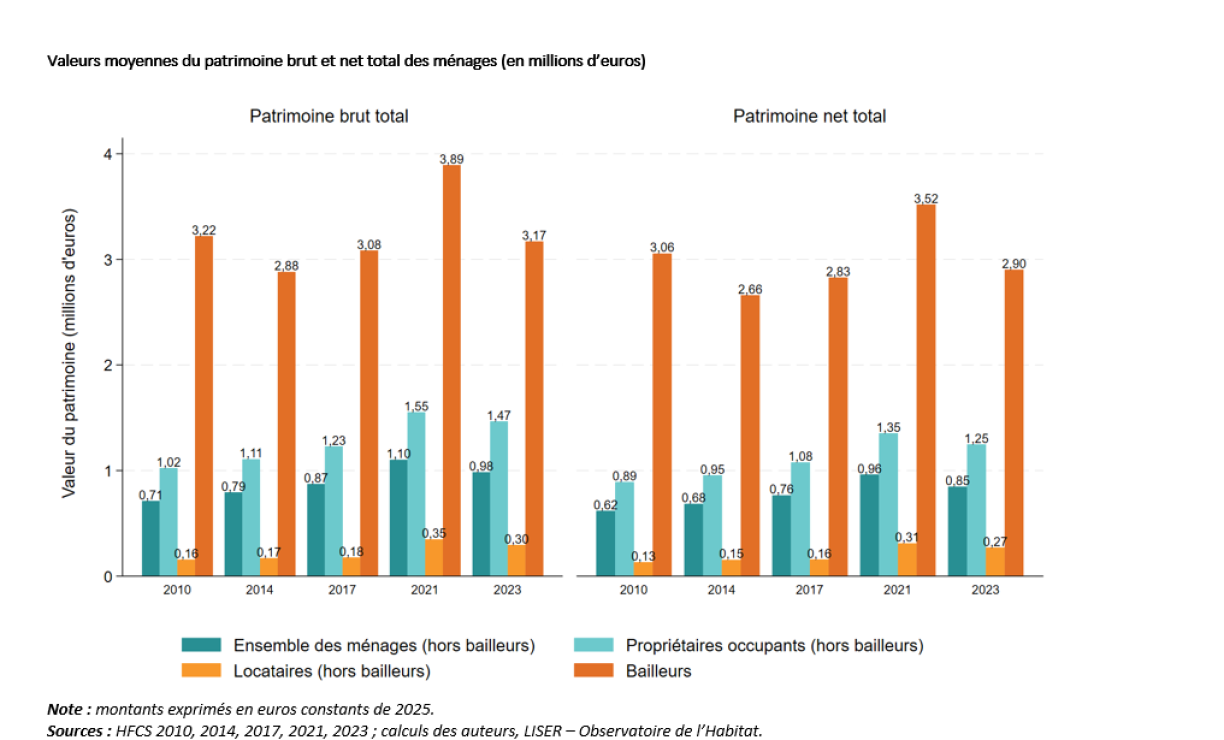
Landlords, in general, are considerably better off than the average non-landlord household. Their average gross wealth is 3.6 times higher than that of non-landlords.
Property holdings other than their primary residence often make up the largest slice of their assets, and landlords are overrepresented among the wealthiest households.
At the same time, one in two landlord households reported having received a substantial gift or inheritance, compared to only one in five among non-landlords.
The amounts received were also more than double those received by non-landlords. Inheritances and gifts, in short, have often played a major role in wealth accumulation.
The Housing Observatory's full report can be found here (in French).