
In Luxembourg, there is no issue with connectivity. According to a new report from Statec, all young people and 82% of the 65 to 74 year-olds have internet access.
In 2019, some 3% of Internet users aged 16 to 74 years-old remain offline; 7% of 55-64 year olds and 13% of those aged 65 to 74 years old are resistant to the 'Net.
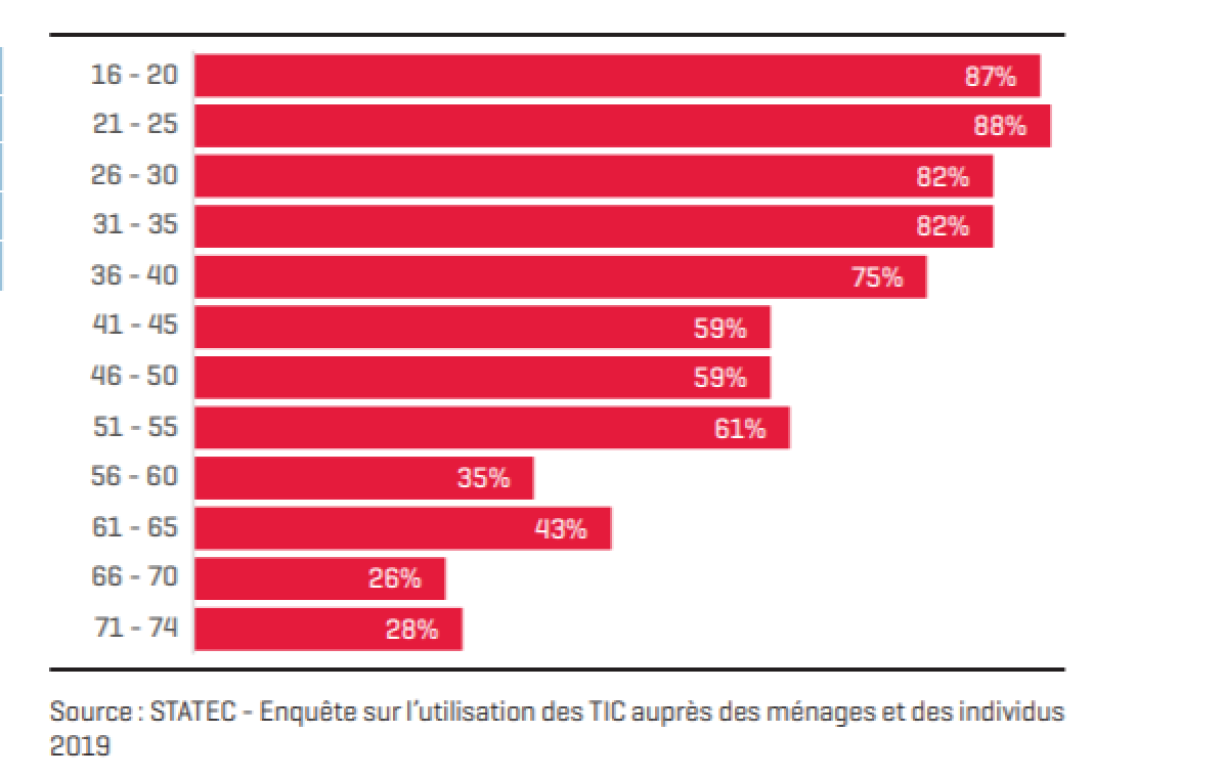
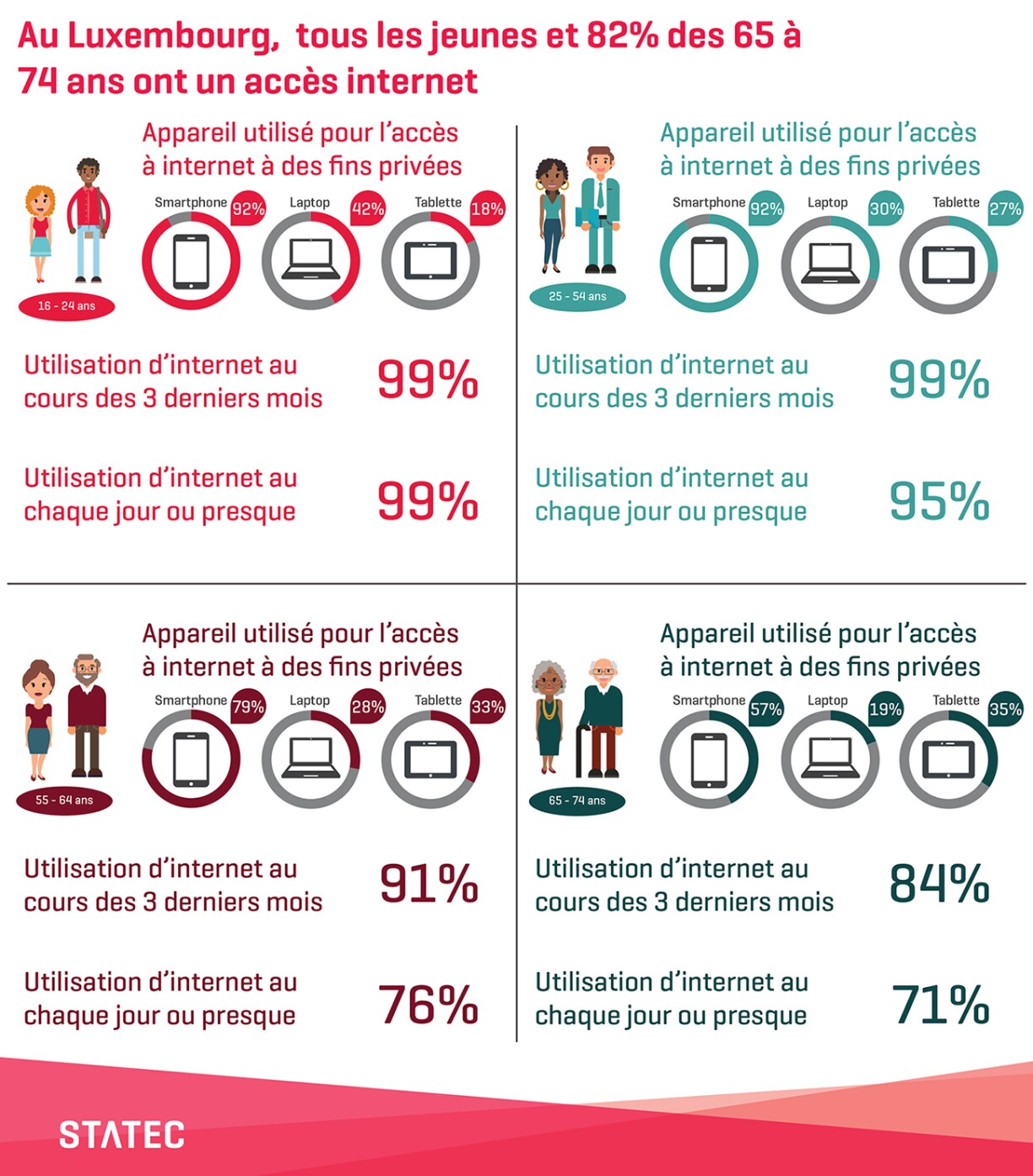
Even if the bracketed age band of 16 to 24 years of age connect every day, those in the older generation- 55-64 and 65-74 age groups 76% and 71% of them use the web on a daily basis.
AWFD / BRB
Overall, only 11% of respondents do not use the Internet outside their homes and workplaces.
Of those aged between 16 and 24, only 6% are not online when they are neither at home nor at work.
This corresponds to 7% of the 25 to 54 years old subsection; 16% among 55 to 64 year olds and 33% among 65 to 74 year olds.
Staying mobile
86% of the total canvased population connect to the Internet with their mobile phone, 30% with a laptop and 28% via a tablet. These figures are inflated slightly due to the use a number of devices used as a means of connection.
The tendency to connect via mobile phone and laptop decreases with age, while the tablet has more followers among the older generations than among young people.
What are we/they/you looking at?
As expected there is a huge variance on generational usage and also by gender.
The 16 to 24-year-olds most often listen to music online (90%), participate on social networks (87%) such as Facebook, Twitter, Instagram, Snapchat and use instant messaging (87%) such as WhatsApp, Viber, Messenger for example, send emails (82%) and general internet usage (69%).
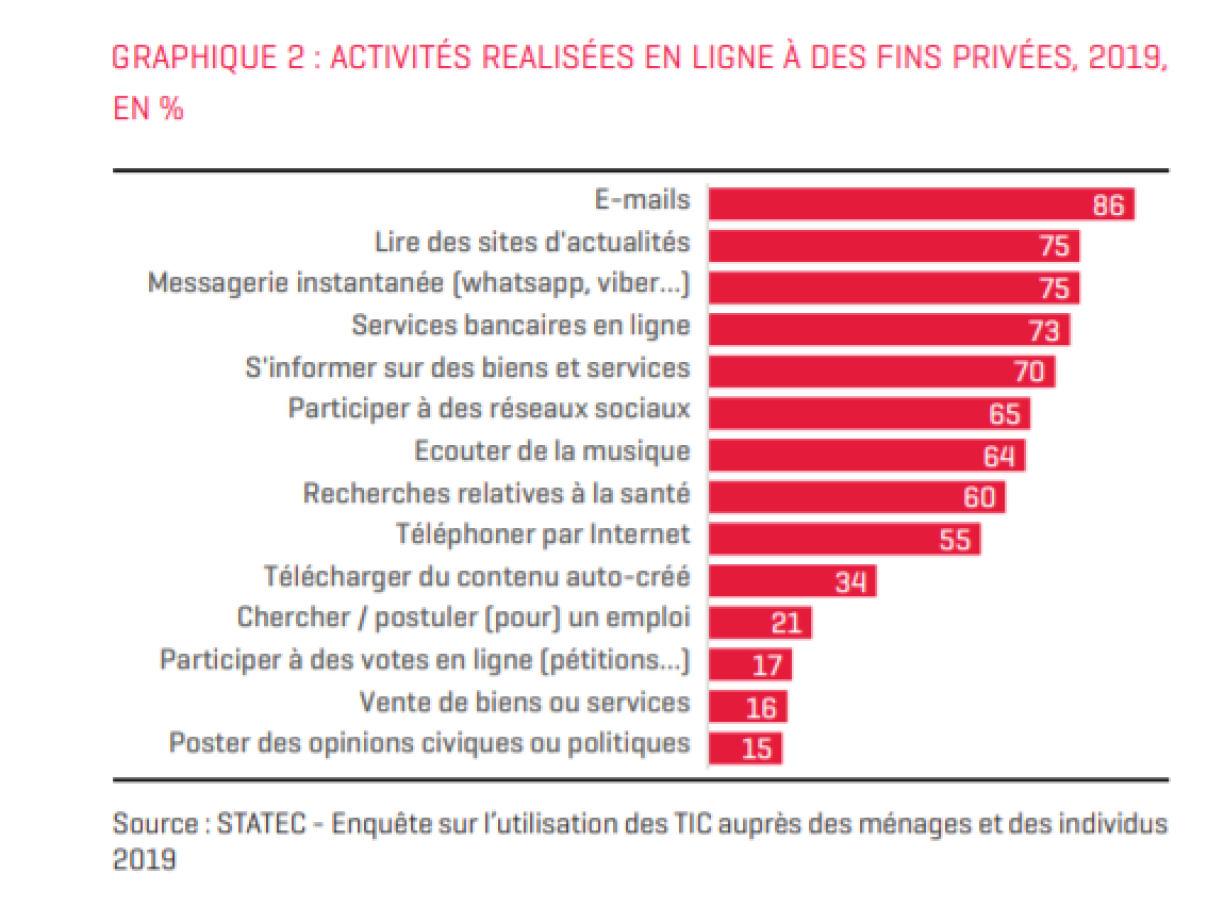
These figures predictably slide as the demographic ages: 65 to 74 year olds mainly use the internet to send e-mails (77%), follow the news (67%), conduct online banking (60%), use Instant messengers (53%) and learn about goods and services (52%).
The 25 to 64 year olds do operate and understand the same activities but in a different degree and order.
Among those aged 25 to 54 there are still many followers of social networks (71%) but the appeal decreases with age.
Read Ian Pocervina's opinion piece: Generations, the digital age, and mental health here
Women are more likely than men to communicate via instant messaging apps (78% vs. 73%), to access and use social networks (68% vs. 62%) and to do carry out research in health topics (65% vs. 56%).
Online learning
Online learning was also limited in 2019. 13%
25-54 year olds and 12% of 16-24 year olds took an online course. On the other hand, they are more likely to use online learning materials (39%) and communicate with teachers or students through educational portals (35%).
A revised publication on the use of ICT in 2020
will provide an update on the impact of COVID-19.





