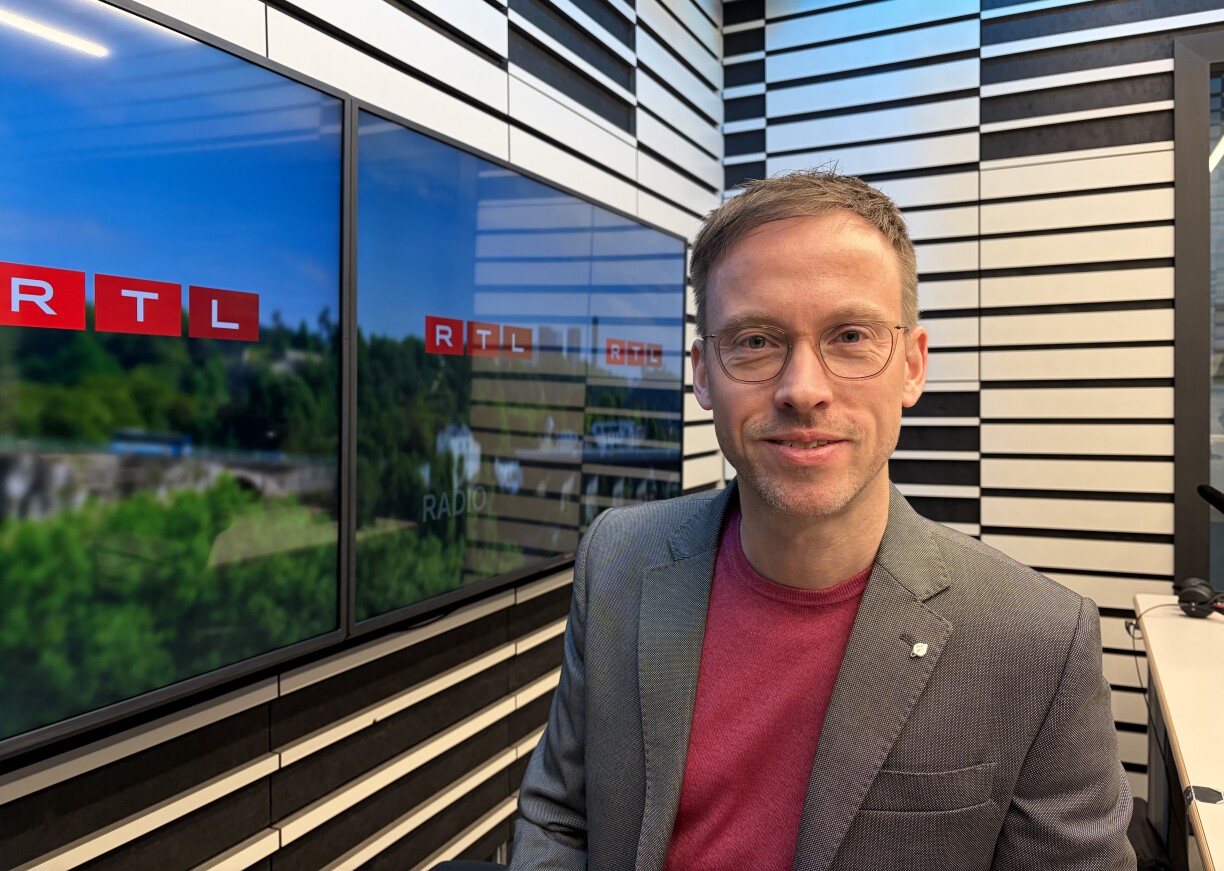
On Wednesday morning, our colleagues from RTL Radio discussed the state of international tourism with Sebastian Reddeker, CEO of Luxembourg for Tourism.
Reddeker stated that Luxembourg is currently not experiencing any negative impact from the US-Israeli war against Iran. He noted that the majority of tourists come from neighbouring countries, and Luxembourg for Tourism expects that last year's record will be broken in 2026.
90% of tourists visiting Luxembourg are from Europe, with most arriving by car or train and therefore not dependent on flights. By way of comparison, some 300,000 Dutch nationals came to Luxembourg in 2024, while barely any tourists arrived from Arab countries.
In 2025, Luxembourg recorded 3.6 million overnight stays and 1.6 million tourist arrivals – "a new record", as Reddeker pointed out. For 2026, Luxembourg for Tourism anticipates a 2% increase. According to Reddeker, bookings for April and June are already higher than they were for the same months in 2025.
Reddeker explained that one of the key arguments in favour of spending a holiday in Luxembourg is that the Grand Duchy is "close by and safe". While this is not necessarily spelled out in travel brochures, he argued that safety plays a very important role when people book holidays or city trips.
On average, tourists stay for 2.4 nights in Luxembourg. Most come from the Grand Duchy's neighbouring countries as well as the Netherlands. Reddeker noted that campsites have invested heavily over the past few years, and those investments are now paying off.
According to Reddeker, nature is a major attraction for tourists, alongside urban tourism. Sightseeing – mainly in Luxembourg City – remains very popular, as does hiking.
He also noted that tourists with an interest in culture and gastronomy are drawn to Luxembourg. These visitors tend to spend more money, according to the CEO of Luxembourg for Tourism, who believes that cultural tourism in particular could be developed further.
Reddeker stated that, provided prices do not rise too sharply, the Grand Duchy could potentially benefit from the current geopolitical situation. He observed that travel remains important to many people and ranks high in the hierarchy of needs – as long as it remains financially feasible and the destination is safe.





