
"I remember when I was a child, there were GPs who would work late into the night, making home visits." This practice is disappearing, says young general practitioner François*. "I think now the new generations want something else."
The 29-year-old grew up in Luxembourg and studied in Paris and Luxembourg before becoming a locum. Since then he has spent four years working in southern Luxembourg, but not full time. The decision was not entirely his to make, but forced by circumstances. "I became a parent during my residency. Before, I didn't really count my hours, and when I was interning in Paris I would often come home very late in the evening. But when I became a parent, all that changed. I wanted to come back early to help my partner. I needed to be available in the mornings, nap times, to spend time as a family... so for me it felt normal to reduce my hours."
These days, he is on part-time parental leave, working two and a half days a week. He does not envisage returning to full-time hours. "After parental leave ends, I plan to do four days a week. And in terms of hours, bearing in mind nursery opening hours, I expect I'll do 7 to 8 hours a day, roughly."
But he admits: "I know the eight hours are rarely respected. It takes just one patient being delayed, or having to wait for blood results... it can quickly add up. I have trouble saying 'no, it's 6pm, my day is over'. There's always something unpredictable, you're being called from all sides. As a doctor my mission is to care for and help people."
He is certainly not an isolated case. "During my residency I encountered lots of young doctors who wanted to work less than their predecessors. They were mainly women with children, but not only women. It's a generational thing. Young doctors want to have three or four day weeks, to have a better work-life balance."
The GP who worked long days, cared for multiple generations of a family, and returned home late every day "was not a cliché, this really existed", says Sébastien Diederich, a GP and general secretary of the Association of Doctors and Dentists (AMMD). "I work with my uncle who is nearly 70 years old and he is still active. He loves his job. And in the past I know he had days starting at 6am until midnight."
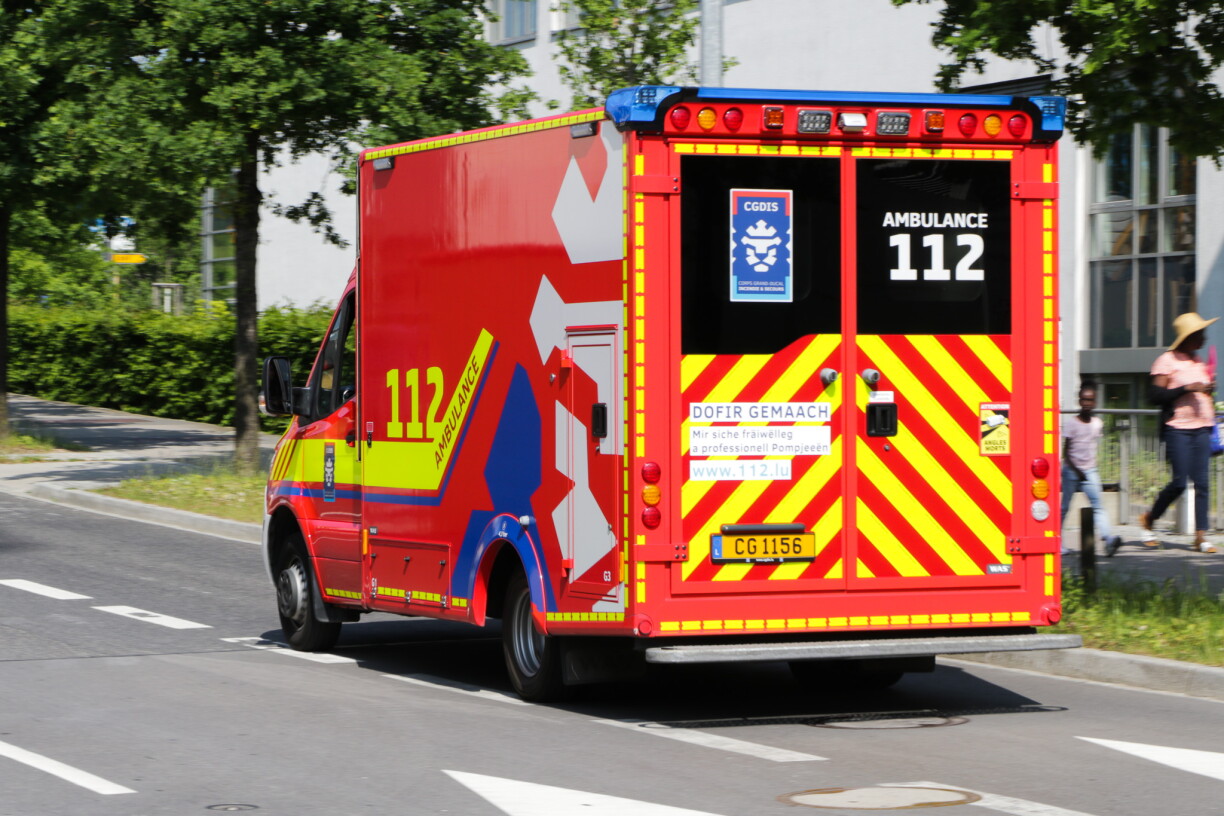
But Diederich adds there is nuance to it. "In the past they didn't have hospitals like nowadays. People needed GPs because they couldn't call 112 to go to hospital for anything and everything. Because we have to admit the emergency services can often be misused these days."
His schedule runs as follows: "I work at the practice on Mondays, Tuesdays, Wednesday mornings and Friday afternoons. On Thursday I work at the emergency department at the CHL, on Wednesday afternoon I work for the AMMD. And once a month I do a shift at CHL on Saturday evenings."
Naturally, doctors must be flexible with their hours. "In the emergency department I can work 10 to 12 hours a day. At the practice, I might do days of 9 or 10 hours, followed with visits, on Tuesdays. The other days I've reduced my hours to spend more time with my family. So I would say around 8 hours a day."
This doesn't account for unpredictable situations. "My patients still manage to contact me if there is an emergency, as that is part of general medicine." It all depends on the patient's condition. "If it is a patient in palliative care, of course I will go. But if it's a patient with a stomach bug, they have to understand it is not a case of force majeure..."
In 2024, the AMMD president declared that 30% of Luxembourg residents do not have a GP. Efforts are being made, however, with the number of active GPs climbing by 48% between 2013 and 2023. There is 1.15 GPs per 1,000 inhabitants, a 23% increase in a decade, but this still remains too low compared to Belgium and France.
There are between 800 and 900 doctors registered with the Medical College, for a population of around 680,000 people, without counting cross-border workers who might visit a doctor in Luxembourg. In addition, many GPs are approaching retirement age. In 2022, there were 65 new doctors and 60 beginning their retirement.
A number of new doctors will be needed to replace the outgoing ones, especially if younger doctors have shorter working weeks. Diederich confims that "the availability of doctors is diminishing. According to CNS, a GP has an average of 17 appointments a day. Overall that isn't too many. I don't believe there is a shortage of GPs in Luxembourg. It's often possible to make an appointment the same day, or the day after."
The criticism of the number of doctors is a sensitive subject for Diederich. "The fact that doctors close too early in the evenings, this is the sort of complaint we frequently get." It's not just patients either. "The Ministry of Health as well, there have been discussions about increasing the availability of GPs. Above all it's politicians claiming there is a shortage. For other professions, there is talk of reducing the working week to 35 hours, but GPs are expected to be available 24/7. How are we paying for this? No one knows but it needs to be done! Next, the National Health Fund demands that we justify an increase in appointments."
*Name anonymised by request





