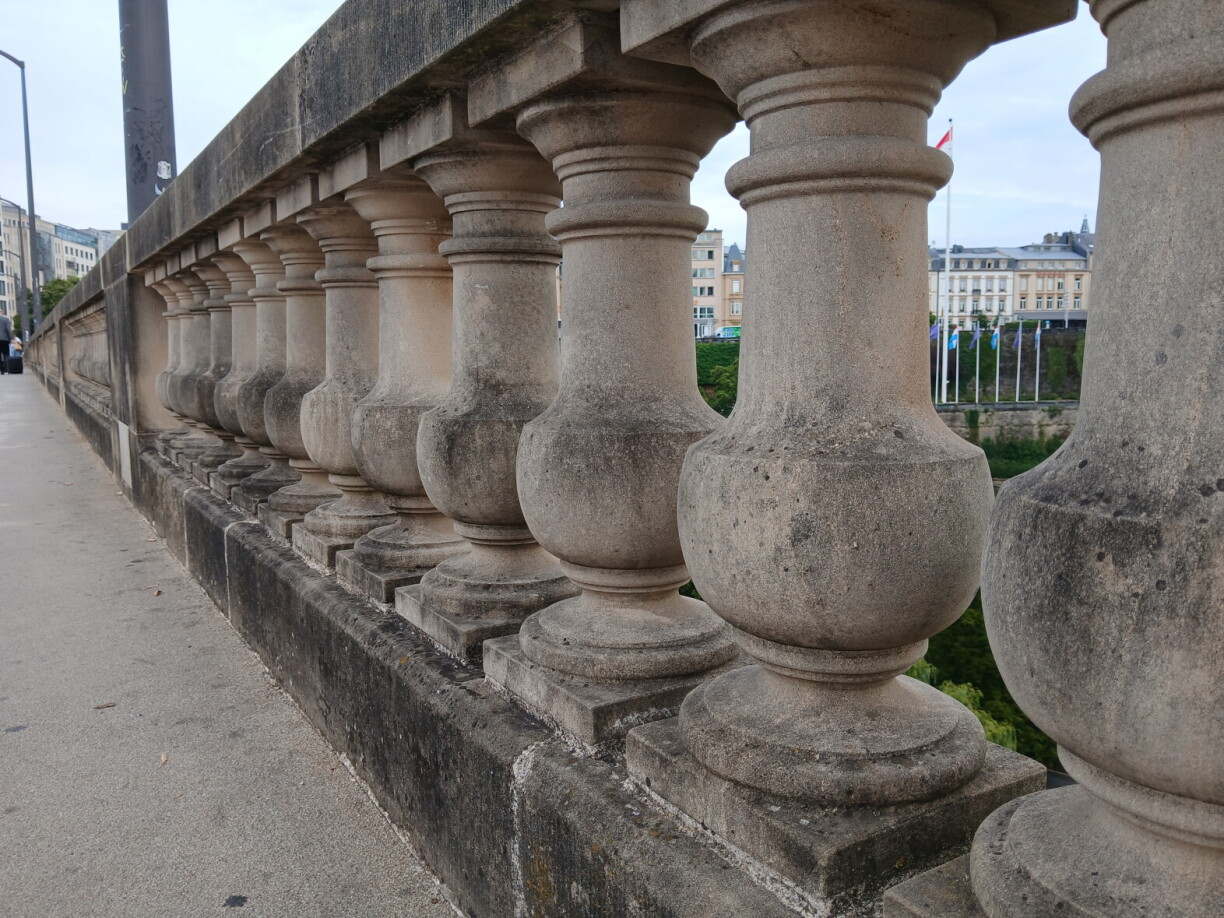
The NGO Guides and Scouts for One World is currently selling pieces of the balustrade from the iconic Adolphe Bridge, using old stones to raise money for a good cause. These stones were made available to the Scouts by the National Roads administration following the bridge's most recent renovation.
The Adolphe Bridge, known locally as the New Bridge, was constructed between 1900 and 1903. It was named after the then-reigning Grand Duke Adolphe from the House of Nassau. Spanning more than 150 metres and rising over 40 metres, the bridge connects Luxembourg City's Old Town with the Gare district. At the time of its construction, it was a unique engineering feat and continues to hold significant meaning for many today.
Marie-Anne Werner, a long-time member of the Scouts, recalls how the bridge has been used over the years and has witnessed many unusual and historic events.
The Pont Adolphe was, for nearly ten years, the largest bridge with a concrete arch; it was an innovative structure. On the other hand, it connected two parts of the city, and I believe it is truly a cornerstone of the country. Nowadays, we can also enjoy the fireworks from that bridge every year, which is beautiful.
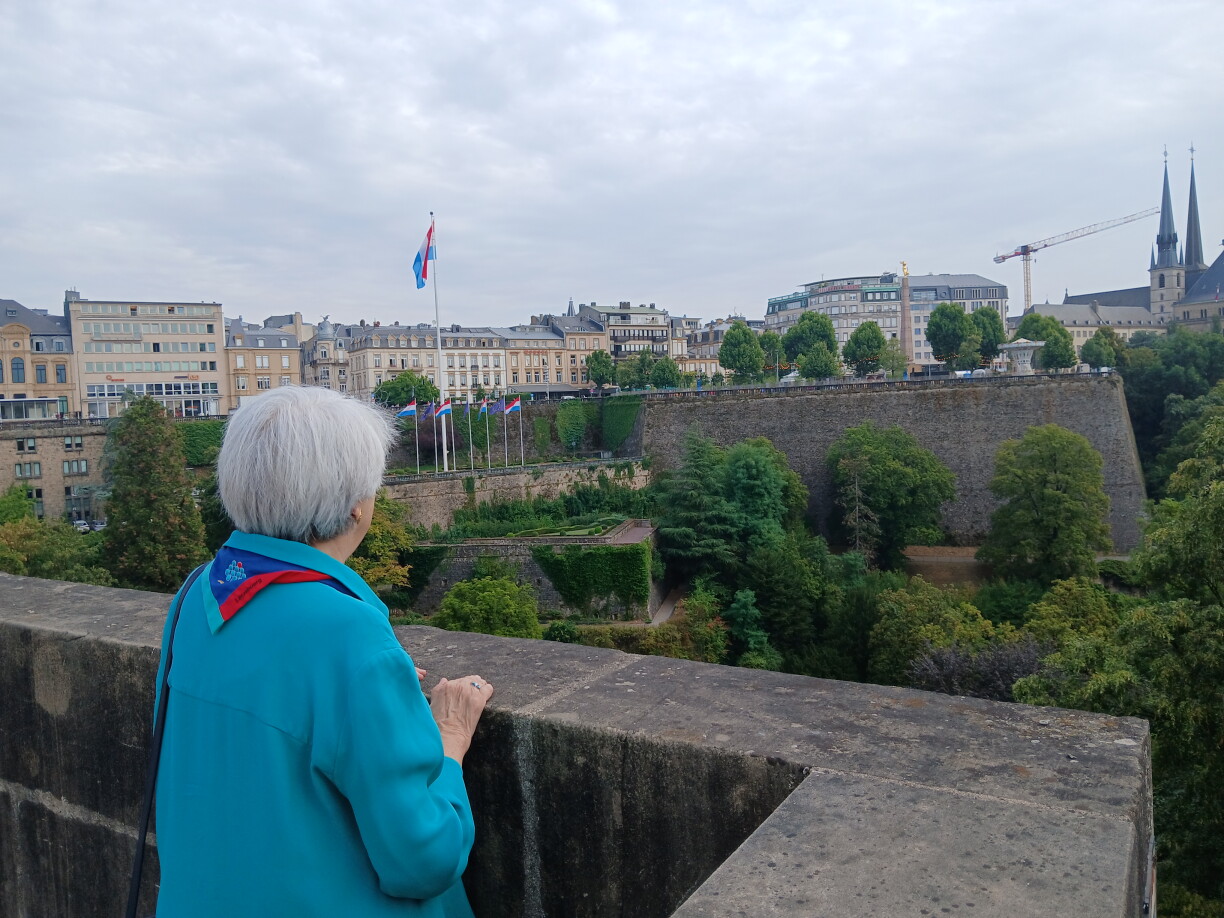
As a child, I saw the Charly train crossing it and also the old trams. When the circus came to town, the animals would arrive by train at the station and then walk to the Glacis. I remember seeing elephants and giraffes; it was quite special. I also recall standing near the New Bridge as a child when Prince Jean and Princess Joséphine-Charlotte got married, and I waved from the sidelines.
Remnants of the bridge’s last renovation from 2013 to 2017 are still vivid in many people's memories. During this period, the bridge was wrapped in scaffolding, and a temporary blue bridge was erected alongside it. This renovation not only restored the bridge but also widened it, necessitating a repositioning of the balustrades.
The original 500 pillars, crafted from French Pierre d'Euville and installed in the early 1960s, were replaced with new ones made from Luxembourg sandstone from Ernzen. Approximately 200 of the original pillars survived the replacement process intact, and the National Roads administration gifted them to the Scouts' NGO. Initially met with some scepticism, the pillars, priced at €175, have now sold out.
At first, it seems like a truly unique idea, and secondly, you think how lovely it is. Not everyone has such an item in their garden; I believe most people who bought it display it in their gardens. You can place a flower pot on it, put it next to a bench and rest your cup of coffee on it, and at the same time, it serves as a beautiful decorative piece.


The proceeds from these sales are expected to fund one or more educational projects in Africa or South America.
Since 2017, the Adolphe Bridge has not only been traversable from above but also accessible from below, either on foot or by bicycle.
The nickname New Bridge distinguishes the Adolphe Bridge from the Pont Viaduc, also known as the Passerelle or Old Bridge, which opened for traffic in 1861. The Viaduc earned its nickname when the construction of the New Bridge commenced in 1900.





