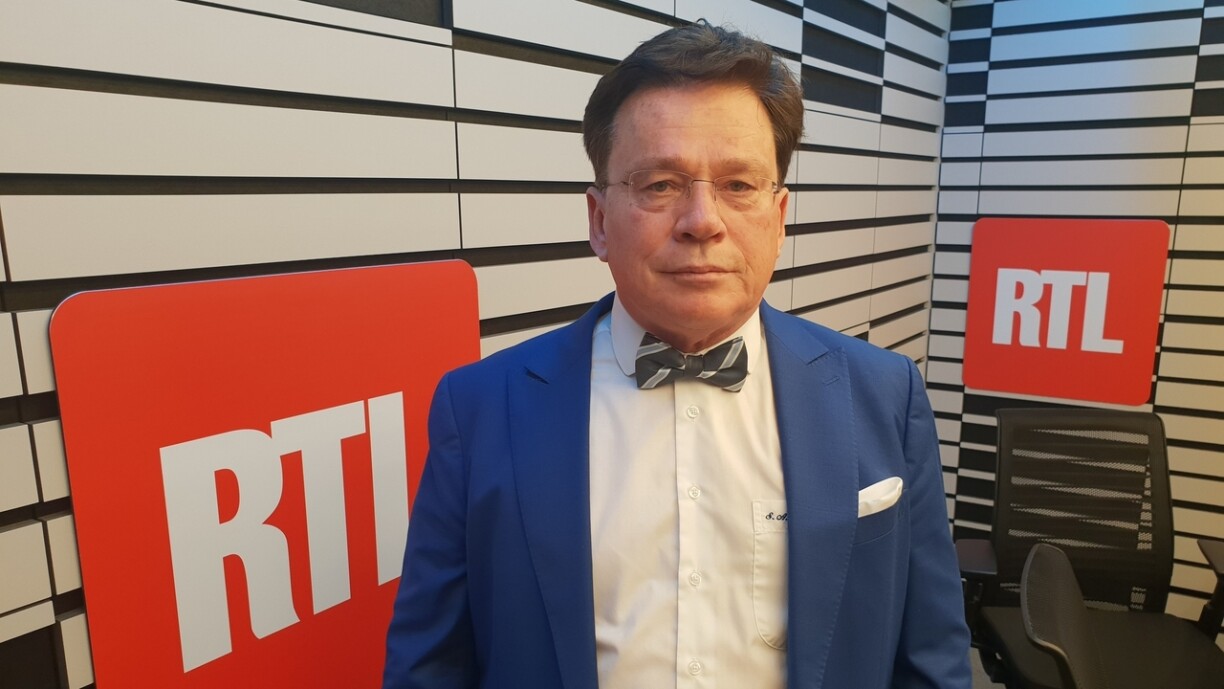
STATEC currently expects a growth rate of 1-2%, which is "not much" by Luxembourg's standards, Allegrezza said in an interview with our colleagues from RTL Radio on Saturday.
Read also: Luxembourg growth to slow - EU warns of 'difficult months' as eurozone faces recession
The upcoming winter season will be a "test" to see how well Luxembourg is prepared. In the event of a recession, Allegrezza hopes that countries will react "in a coordinated way," to avoid a long and harsh economic downturn.
Depending on how the situation evolves, we may see ight at the end of the tunnel in 2024 – if not, "the air will get thin," Allegrezza stated, adding that at this point, European countries would have to consider taking on "substantial shared loans."
While the price cap on gas and electricity prices, which was introduced as a result of the last tripartite negotiations, has had an effect, Allegrezza acknowledges that it is not as significant as expected.
Read also: Knowledge Bites - Tripartite: the Luxembourg social model
STATEC's most recent calculations suggest an inflation rate of 3.4% for 2023. During the last tripartite, the institute still expected 2.8%. Allegrezza explained that food prices are increasing faster than expected, which further drives inflation.
The head of STATEC admitted that the institute may have underestimated the influence of food prices in its calculations. However, the latter were also "not completely off," he stressed.
In general, we are experiencing a "price increase contamination" at the moment, Allegrezza said. He expects that the 1% VAT cut from from 1 January will further slow down inflation, provided that companies will be on board.
Allegrezza rejected the criticism, among others from social associations, that the aid measures decided during the last tripartite are not targeted enough.
According to the STATEC Director, households with lower incomes disproportionally benefit from a general price cap. Allegrezza noted that the measures for 2022, when combined with the tax credit introduced in March, are enough to compensate for the loss of purchasing power.
In its latest forecasts, STATEC estimated that due to inflation, three wage indexations will be triggered in 2023 – the wage indexation that was postponed, one at the beginning of the year, and one at the end of the year.
However, due to the high volatility of energy prices, these calculations are anything but certain, Allegrezza said. He hopes that there will be no need for another tripartite before the legislative elections and that the situation regarding inflation will eventually settle down.
Nevertheless, Allegrezza thinks that tripartite meetings could still be "very interesting" to discuss other topics as well.
Preserving the pension and social system versus the effects of climate change, the competitiveness of Luxembourg versus the wage indexation system: these are issues that the STATEC Director believes politicians should address with social partners and residents in large roundtable discussions so that they can be tackled together.
Allegrezza is convinced that the wage indexation system will have to be discussed sooner or later. He believes that any future reform should explore splitting contributions between private businesses and the state. According to Allegrezza, it is important to maintain the financial leeway needed to tackle "the big challenges."
Despite the urgency and time pressure of the last months, STATEC did not make any mistakes, according to Allegrezza, except perhaps for "errors in judgement." The statistics institute was "one of many" to initially assume that the war in Ukraine would end quickly, Allegrezza acknowledged.
At the end of the interview, the long-time director of STATEC stressed that both he himself and STATEC as an institution are "completely independent." He never felt that his mandates on several administrative boards could represent a potential conflict of interest. On the contrary, Allegrezza considers his various activities as an "asset."
Allegrezza, who is a member of the Luxembourg Socialist Workers' Party (LSAP), said that he is frequently criticised for being too involved in politics.
However, he argues that "if you want to find answers to the questions that politics poses, you have to understand what those questions are," something which you cannot do if you are "too removed from it." For Allegrezza, this means being involved in politics without letting it influence you.
However, he has never been and will never be interested in pursuing an active career in politics, Allegrezza stressed.





