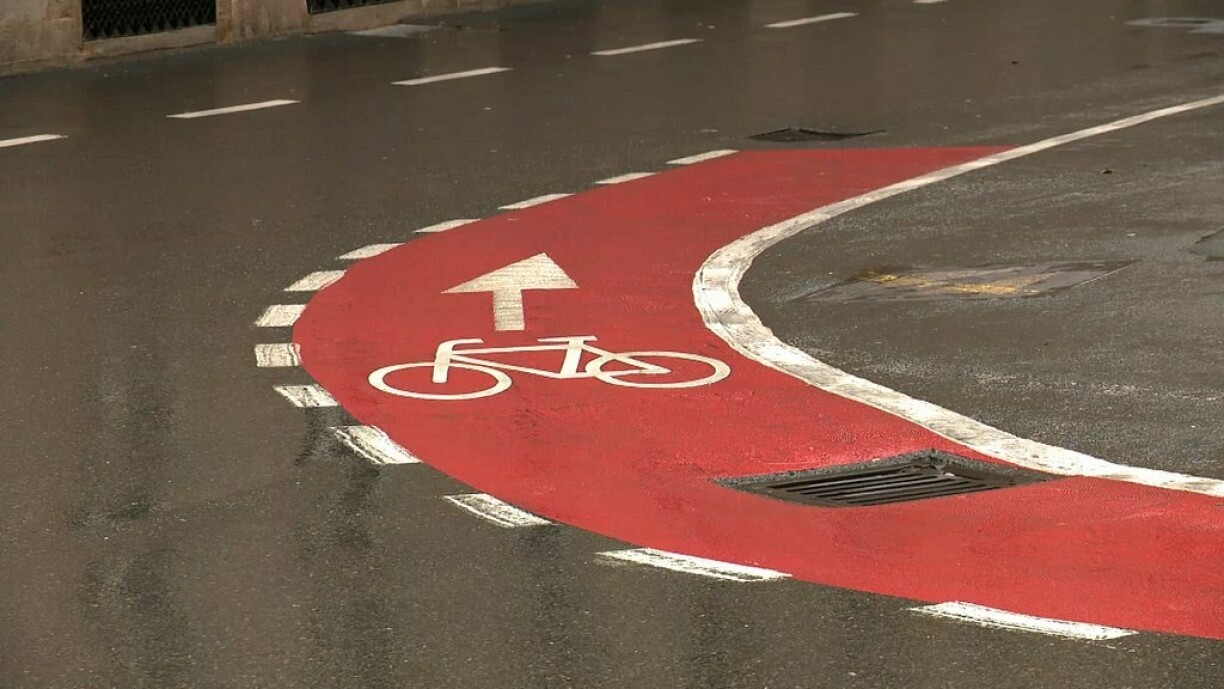
Making cycling a genuine alternative to the car requires more than awareness campaigns, according to German journalist and filmmaker Ingwar Perowanowitsch, who was invited to Luxembourg by the Hesperange section of The Greens (déi gréng) for a screening of his film Cycling Cities.
Earlier that day, Perowanowitsch spoke to the press at Pro Vëlo.
In 2025, he made an unusual journey, taking to his bike to travel through some of Europe's most beautiful cycling cities. In each city, he met with people to discuss cycling, with the aim of showing that cities can prioritise cycling and reduce reliance on cars.
Perowanowitsch explained that he investigated what requirements are need to transform a city in a cycling city, examining what other countries can learn from spaces where these initiatives have been successful.
"I journeyed from Paris to Belgium and the Netherlands, then from Hamburg to Copenhagen. I met with politicians, experts, urban planners, and activists", he said.
The film depicts, among others, the enormous changes which have occurred in Paris over the last year or so. The city has restricted access to bikes only on some roads, making the city greener and reducing the number of cars on its roads. These changes were initiated by former mayor Anne Hidalgo.
In Dutch cities, for example, the bike has become a key component of transport. In Amsterdam, children in the early 1970s demanded the closure of roads so they could have somewhere to play again.
All the cities on Perowanowitsch's journey had one thing in common: they showed it was possible to live without a car, as politics prioritised introducing the necessary requirements.
According to Perowanowitsch, this approach is known as offer-oriented transport planning, meaning that people first need to be shown a viable alternative before they can be expected to change their mobility habits. In his view, political campaigns encouraging people to cycle are unlikely to work if the infrastructure does not feel safe or welcoming.
He added that a city that wants to become more liveable, climate-friendly, and healthy must therefore adapt what it offers to residents and make sustainable choices easier in everyday life. As Perowanowitsch put it, this means creating "better conditions for cyclists, pedestrians, and public transport".
Alongside this, cities have to make conditions more difficult for motorists, which would lead to people voluntarily leaving their cars at home, he said. Furthermore, if there is a genuine desire to change mobility long-term and sustainably, one cannot forget rural areas.
Perowanowitsch also stressed the importance of fast cycle paths in rural areas, citing the Netherlands as a model for how such infrastructure can connect larger towns and cities over considerable distances. There, he explained, cyclists can travel more than 40 kilometres between major urban centres on routes that are both comfortable and safe.
However, he added that cycling alone cannot solve mobility challenges outside cities. As Perowanowitsch put it: "In rural places, the bike is not the only answer, as public transport also plays a role. In future we could look at partially autonomous on-demand shuttle systems, decreasing the reliance on cars."
Perowanowitsch concluded that the car remains a cost trap for many households. For him, any serious discussion about social justice must therefore include giving everyone the option to live without depending on their own vehicle.





