
Here are five things you should know at the end of this week:

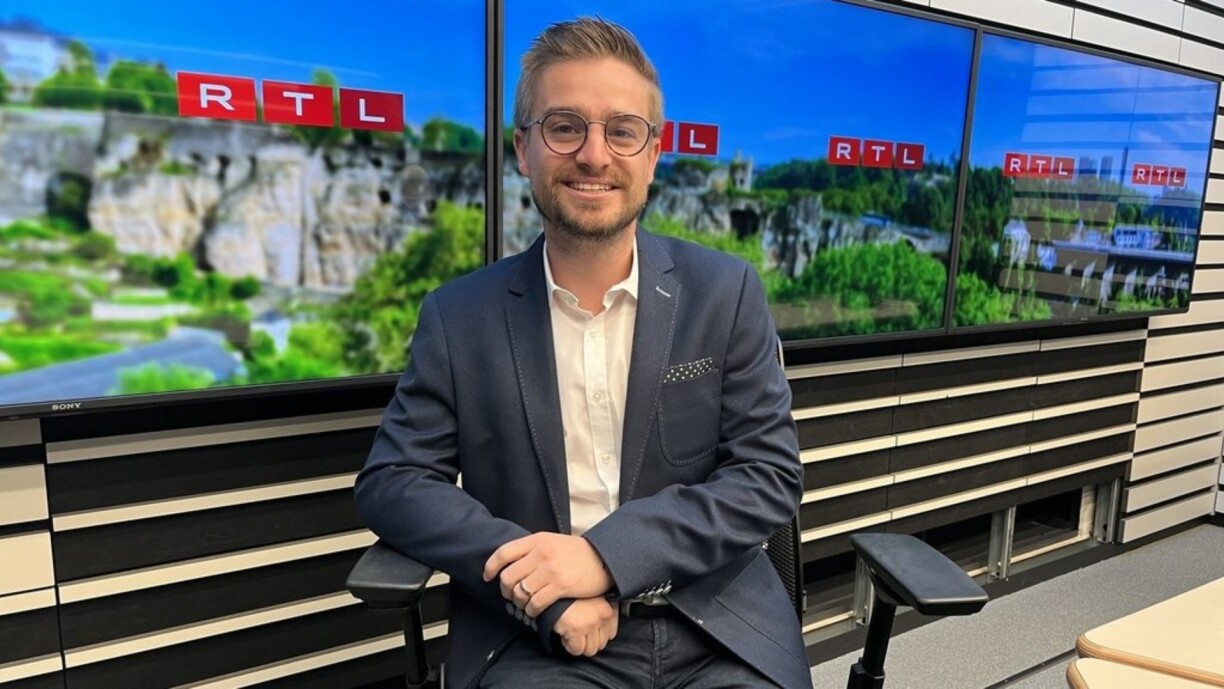
MP Ben Polidori has officially joined the Luxembourg Socialist Workers' Party (LSAP) after leaving the Pirate Party, increasing LSAP's parliamentary seats to 12.
Switching ranks – MP Ben Polidori's decision to join the Luxembourg Socialist Workers' Party comes after leaving the Pirate Party, a move that boosts the LSAP's representation in the Chamber of Deputies to 12 seats. Polidori was previously a key figure in the Pirate Party, having helped secure a crucial third seat for them in the October 2023 elections. His switch has weakened the Pirates' parliamentary influence, while strengthening LSAP’s position ahead of future political negotiations and policy discussions.
The best fit – Explaining his decision to leave the Pirate Party, Polidori noted that after months of reflection, it became clear his values were most aligned with the LSAP, particularly on issues of solidarity and justice. He described the internal divisions within the Pirate Party as part of the reason for his exit, and while other parties like the Democratic Party (DP) and the Christian Social People's Party (CSV) expressed interest in him, Polidori ultimately felt the LSAP was the best fit for his political future.
Decision to be respected – LSAP President Francine Closener was enthusiastic about Polidori joining the party, emphasising that his political priorities, such as pensions, family policy, and education, align well with the LSAP’s core socialist values. She highlighted that Polidori’s profile and public positions never conflicted with the party's platform, making his transition smooth. Meanwhile, leaders from other parties, such as the DP’s Gilles Baum and the CSV’s Marc Spautz, acknowledged their disappointment in not securing Polidori, while respecting his decision to join LSAP.
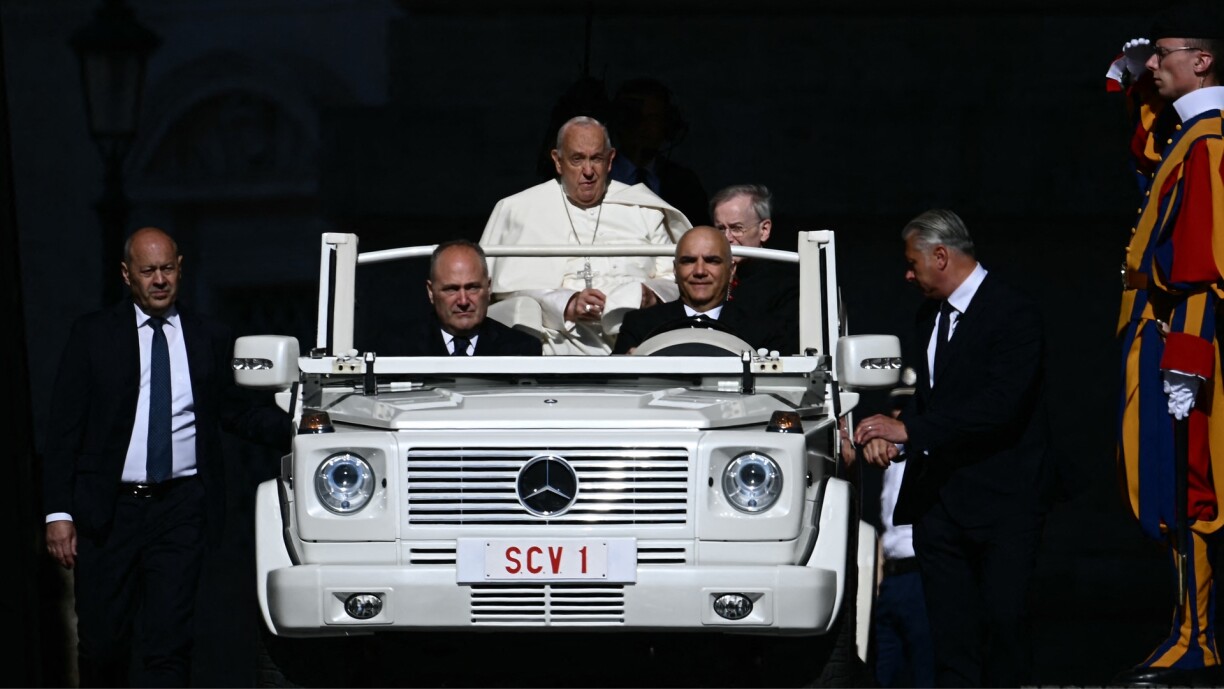
Pope Francis will visit Luxembourg City on 26 September, with a schedule including meetings, a public procession, and a gathering with the local Catholic community.
Major road closures and security measures will be in place, with significant traffic disruptions, especially around the city centre and Plateau Bourbon.
Public transport will largely continue as normal, though tram services will be suspended briefly, and some car parks and public venues will face restrictions.
A busy schedule – On 26 September, Pope Francis will arrive in Luxembourg City for a highly anticipated visit. His schedule includes a series of official engagements, such as a meeting with the Grand Ducal Couple at the Palace, a speech at Cercle Cité, and a procession through the city in the Popemobile. Later in the day, the Pope will meet with the local Catholic community at the Luxembourg Cathedral, though no mass will be held. His visit will conclude with a farewell ceremony before departing for Brussels.
Road closures ahead – Extensive security measures and road closures will be implemented to ensure the safety of the Pope and facilitate the procession. Major streets like Boulevard Roosevelt, Boulevard de la Pétrusse, and Plateau Bourbon will be closed, with restrictions on individual traffic from 9am in the city centre and surrounding areas. Security will be managed by both local police and Vatican personnel, while key public spaces, such as the Luxembourg City Library and Tourist Office, will be closed for the day.
Public screenings – Public transport services will mostly remain operational during the visit. The tram service will be temporarily suspended from 12.15–1.45pm to accommodate the procession, while buses are expected to run on schedule. Parking will be affected, with restrictions on accessing car parks like Knuedler and reserved parking spots at Glacis. Special delivery hours will be allowed early in the morning to minimize disruptions for businesses. For those wishing to witness the procession, large public screening areas will be available at Kinnekswiss and Place de Paris.
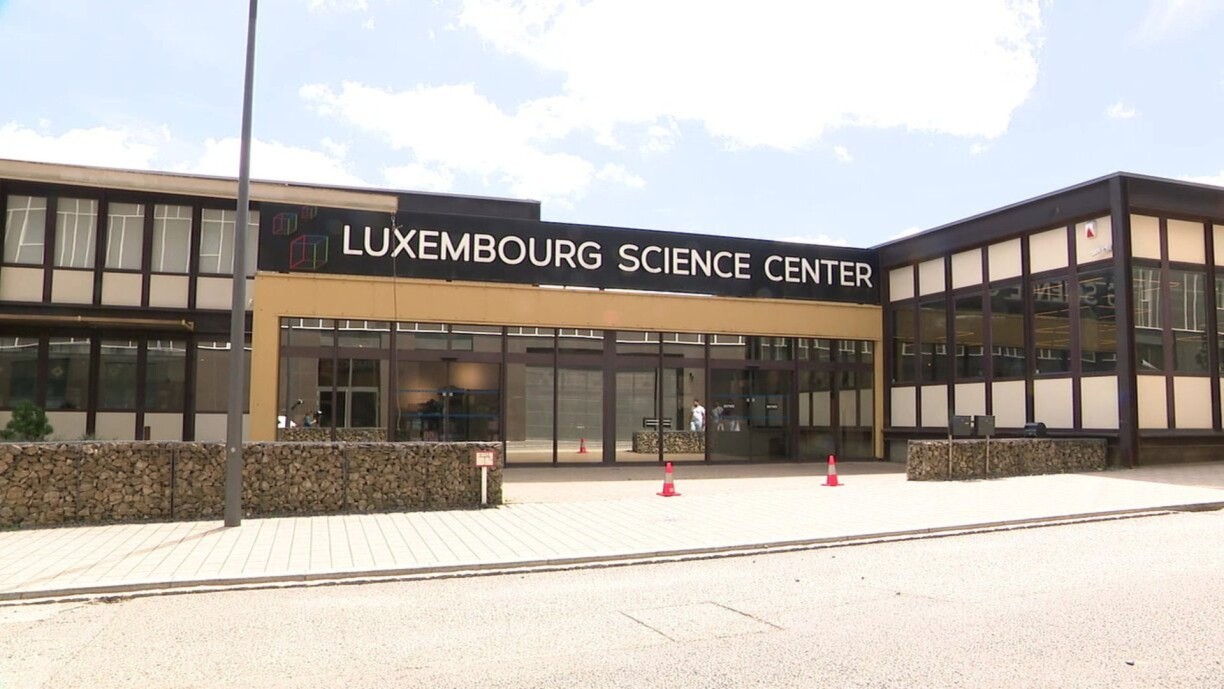
The Luxembourg Science Center this week resolved a conflict of interest involving its director, Nicolas Didier, who was tied to the private company GGM11, as Didier is no longer on the board of administration.
Employees previously linked to GGM11 have been integrated directly into the Science Center under its non-profit structure, ensuring job continuity.
A new agreement, costing the state nearly €3 million annually, has been signed to support the Science Center's operations and staff salaries, with government representatives now on its board.
Conflict of interest resolved – The Luxembourg Science Center faced a significant governance issue due to Nicolas Didier, who served as both the director and chairman of the board while also owning GGM11, the center's sole contractor. This dual role created a clear conflict of interest, prompting two years of criticism and scrutiny. The matter has now been resolved, with Didier no longer serving on the board of administration. Education Minister Claude Meisch recommended further action, suggesting Didier should step down as director to allow a new team to lead the Center.
Jobs secured – Previously, staff at the Science Center were employed indirectly through GGM11, which heightened the governance concerns. As part of the resolution, these workers have been fully integrated into the Luxembourg Science Center under its non-profit structure, securing their roles and ensuring they can continue contributing to the project. The direct integration of staff was a key proposal from the Education Ministry to address the irregularities and provide stability.
Government oversight – To secure the Science Center’s future, a new agreement has been signed between the Luxembourg government and the non-profit, covering operational costs and staff salaries at just under €3 million per year. This agreement will remain in place until next year, giving the newly appointed board, which includes representatives from the Education and Finance Ministries, the opportunity to review governance and financial arrangements. Although the Science Center charges an entrance fee, it still requires government subsidies to ensure financial sustainability.
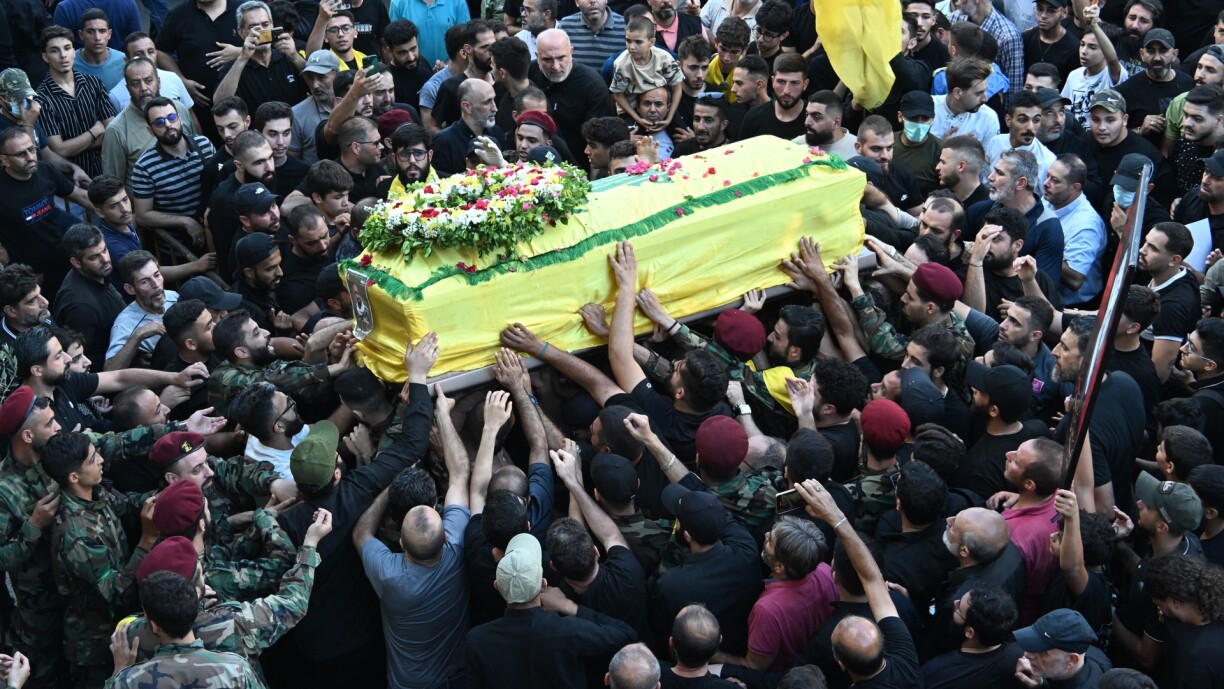
A series of explosions from Hezbollah pagers and walkie-talkies across Lebanon killed at least 32 people and injured more than 3,000, in what Hezbollah claims was an Israeli sabotage operation.
The devices, including pagers recently imported by Hezbollah, were allegedly booby-trapped with explosives before being delivered to the group, though Israel has neither confirmed nor denied involvement.
Investigations are ongoing, with Taiwanese and Hungarian companies denying responsibility for manufacturing the explosive devices, and further probes into their origin underway.
Escalating tensions – A wave of explosions occurred across Hezbollah strongholds in Lebanon, killing at least 32 people and wounding more than 3,000. The blasts targeted pagers and walkie-talkies used by Hezbollah members, with the Iran-backed militant group quickly blaming Israel for the attack. The incident has escalated tensions in the region, already fraught due to ongoing clashes between Hezbollah and Israeli forces along the Lebanon-Israel border amid the Gaza war.
Sophisticated attacks – The pagers and walkie-talkies that exploded were reportedly part of a shipment recently imported by Hezbollah. Initial investigations suggest the devices were sabotaged with explosives hidden near the batteries, set to detonate remotely. Although Hezbollah blamed Israel for the sabotage, Israel has not officially commented on the attack, though analysts speculate that Mossad, Israel’s intelligence agency, may have been involved based on the sophistication of the operation.
Investigations underway – In the aftermath of the attacks, attention has turned to the origin of the devices. The Taiwanese company Gold Apollo and its Hungarian partner BAC Consulting KFT, which were allegedly involved in the supply chain, have both denied manufacturing the explosive devices. Taiwanese authorities have launched an investigation, questioning executives to determine if any local companies were involved in the production or distribution of the explosive pagers, while Hungary has similarly distanced itself from direct involvement.
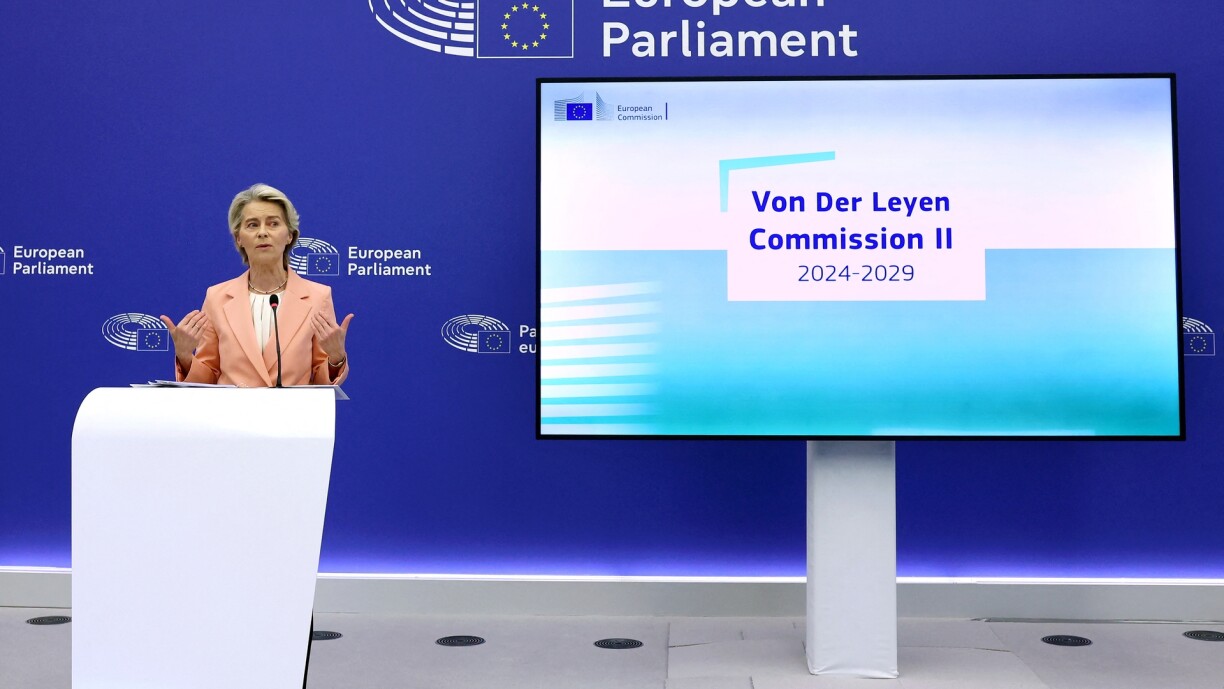
Ursula von der Leyen Tuesday unveiled her new European Commission team, assigning key economic and security roles to France, Spain, Italy, and Eastern European nations in response to global challenges like Russia's war in Ukraine.
Italy's Raffaele Fitto, a far-right figure, was controversially appointed as vice president, reflecting shifts in EU politics, while gender balance efforts fell short with only 40% women in the lineup.
The proposed commissioners still need European Parliament approval, with hearings starting soon and some candidates, like Hungary's Oliver Varhelyi, expected to face tough scrutiny.
Candidates unveiled – Ursula von der Leyen announced her new European Commission team, distributing powerful portfolios to key member states like France, Spain, Italy, and Eastern European nations. These appointments come at a critical time as the EU faces challenges from Russia's ongoing war in Ukraine, rising competition from China, and uncertainties like a potential return of Donald Trump to the US presidency. Security and economic transitions, especially in tech and climate, are central to this new lineup, with countries like Lithuania and Estonia given strong roles in defence and foreign policy.
Controversial choices – Italy's Raffaele Fitto, a member of Prime Minister Giorgia Meloni's far-right Brothers of Italy party, was appointed as a vice president, a decision that raised concerns among centrist and left-wing groups. His cohesion portfolio reflects the increasing influence of far-right parties in the EU following their electoral gains. Meanwhile, von der Leyen's efforts to achieve gender balance in the commission fell short, with only 40% of roles going to women despite her push for more female nominees from member states.
Delays expected – The new commissioners must still undergo European Parliament approval, with hearings scheduled to begin soon. Some candidates are expected to face strong opposition or scrutiny, particularly Hungary's Oliver Varhelyi, who has been given a diminished role in health and animal welfare after representing Viktor Orban's nationalist government in Brussels. While the goal is to have the new commission in place by 1 November, diplomats anticipate potential delays, making a 1 December start more likely.
Criticism from Luxembourg – Von der Leyen early in the week faced criticism from Luxembourg MEPs over her new leadership team, particularly regarding gender imbalance and the selection of Luxembourg's EU Commissioner. Socialists argue for Nicolas Schmit, while the government supports Christophe Hansen of the CSV. MEPs also criticised the European People's Party's dominance and the lack of female representation.
Business & Tech – Global stock markets rallied Thursday, with major US indices surging to all-time highs after the Federal Reserve delivered a bumper interest-rate cut and pledged further reductions.
Science & Environment – European Commission President Ursula von der Leyen on Thursday announced €11 billion in funds for member nations reeling from "heartbreaking" devastation after floods caused by Storm Boris.
Entertainment – Japanese-language feudal epic Shogun made Emmys history on Sunday as the most awarded show in a single season, as well as the first non-English language winner of the coveted best drama prize.
LSC is back – Luxembourg gears up for Eurovision 2025 with the return of the Luxembourg Song Contest on 25 January, where the nation's next ESC representative will be chosen live at the Rockhal in Esch-Belval.
Subsidy cuts – Discussions in the Chamber over proposed changes to Luxembourg's Climate Protection Law have sparked criticism, with environmental groups and politicians raising concerns while the government defends the adjustments as aligned with market trends and alternative support measures.
Charity run – Students and staff at the International School Michel Lucius raised over €8,000 through a charity run in honour of a late colleague, supporting cancer research through the Cancer Foundation.

Your Weekly Recap is published every Friday at noon. Read earlier versions.





