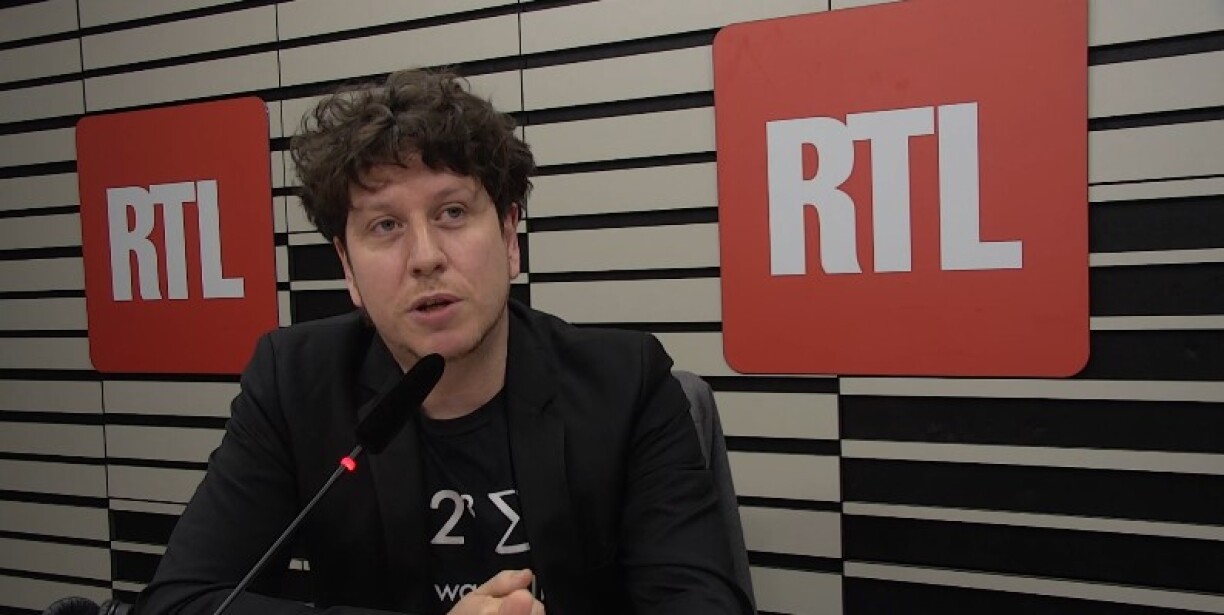
"We are in the middle of a race, but we know neither where the finish line is, nor how many mountains are still ahead of us": This is how Jean-Paul Bertemes, editor-in-chief at Science.lu, summed up the current situation in the fight against the pandemic. However, Bertemes stressed that we do have an influence on how fast we are running in this "race".
The end goal is immunity for a large part of the population. The question is how to achieve this goal, according to Bertemes, who studied both chemistry as well as German language and literature.
Vaccinations are a method to accelerate the development of this immunity, the scientific journalist explained. The other option is to wait until the virus has infected enough people. However, the second option requires authorities to repeatedly take measures to 'flatten the curve'. According to Bertemes, we must ask ourselves the same question when it comes to a potential vaccine mandate: Are we willing to wait even longer? Or do we want to get to the finish line more quickly?
Bertemes stated that he has "a lot of understanding" for people who have doubts or fears regarding vaccination and are now feeling pressured by a potential vaccine mandate. Nevertheless, he stressed that the pandemic is "a collective phenomenon" that requires "a collective solution". It is simply unavoidable that some people will not be on board with this, according to Bertemes.
For this reason, the scientific journalist thinks that it is not the time to speculate about when the pandemic will be over. Bertemes stated that it is not good to make promises that cannot be kept in the end, seeing as so much is simply unknown for now. The same is true for the new omicron variant, Bertemes added, pointing out that there is not enough data. Omicron might be the last wave, but there might also be others, with Bertemes stressing that mutations are precisely what makes it so difficult to predict an exact end date, as they occur completely at random.
When asked about the latest data on 'Long Covid', Bertemes explained that while a lot remains unknown about the potential long-term effects of a Covid-19 infection, it becomes increasingly evident that they affect between 10 to 20% - some estimates even go up to 30% - of all Covid-19 patients. There also seems to be a connection between the severity of an infection and the likelihood of developing Long Covid, Bertemes added. Since vaccinations protect against these severe cases, Bertemes thinks that it is valid to say that vaccinations also effectively grant a certain protection against Long Covid.
Bertemes described his own role as a scientific journalist as someone who "stands between the scientific community and the general public". His role is "to communicate and to translate what researchers are looking into", Bertemes explained. The editor-in-chief and his colleagues at science.lu announce "what the scientific community knows and what it doesn't know" and try to shine a light on the methods behind the science, Bertemes concluded.





