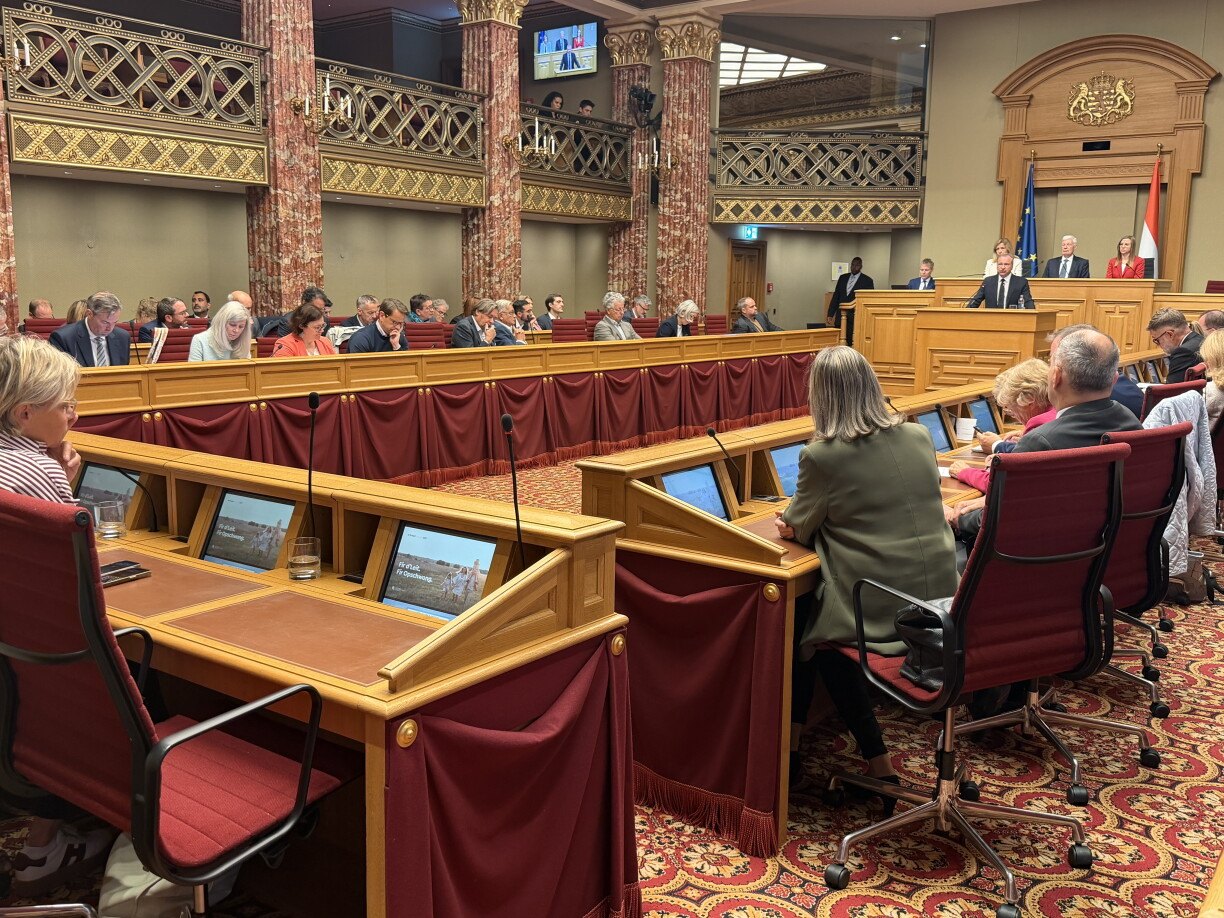
"Where is the upswing?", asked Sam Tanson of déi Gréng (The Greens). A look at the figures, she said, revealed a projected deficit through to the end of the legislative term, with debt to rise once again. By 2028, national debt would exceed 29% of GDP.
The Alternative Democratic Reform Party (ADR) and Fred Keup went further still. In their view, the Christian Social People's Party (CSV) and Democratic Party (DP) government's tax-cutting policy would plunge the country into unprecedented debt, resulting in even higher debt and deficits than under the previous coalition, a trajectory they said would be bad for both the country and its people.
Joining the critical chorus was the Luxembourg Socialist Workers' Party (the LSAP), who put forward that the mere spending of large sums of money did not amount to a political strategy.
LSAP parliamentary group leader Taina Bofferding said she saw no clear direction. Housing, for instance, remained the country's "mother of all crises", and yet no new measures had been announced. Money alone, she argued, was not enough; legislation was also needed to put an end to speculation.
Déi Lénk (The Left) underlined that many of the social measures could be traced back to the "Resilience Pact" and the trade unions, achievements for which the government should not be claiming sole credit.
The budget, in their view, also fell short on climate action. On housing, substantial funds were being earmarked for off-plan sales (VEFA), but the actual homes never materialise. David Wagner criticised the level of allocated spending to the defence industry.
The Pirate Party generally approves of the budget's direction, but holds very different political views on certain points. On childcare, for instance, Marc Goergen argued that it would be better to provide financial support to parents who look after their children themselves, rather than heavily subsidising private daycare centres.
The Pirates also argued that capital gains on shares should be taxed more heavily; extending the tax-exemption period from six to twelve months, Goergen said, would not be enough.
The CSV and the DP, naturally, take a more positive view of the draft budget. André Bauler of the DP described it as "proactive". He pointed to the importance of further strengthening the financial sector, the country's economic engine and "cash cow".
Unlike the opposition, Bauler praised the government for keeping the national debt below 30%, pointing out that the trend heading into 2030 was "downward rather than upward".
A little more optimism, added CSV parliamentary group leader Laurent Zeimet, would do the opposition no harm. Looking at the international context or at neighbouring countries such as France, where no budget agreement had materialised, Luxembourg was in a very strong position, he said. In these uncertain times, the country was able to invest and to support its people.