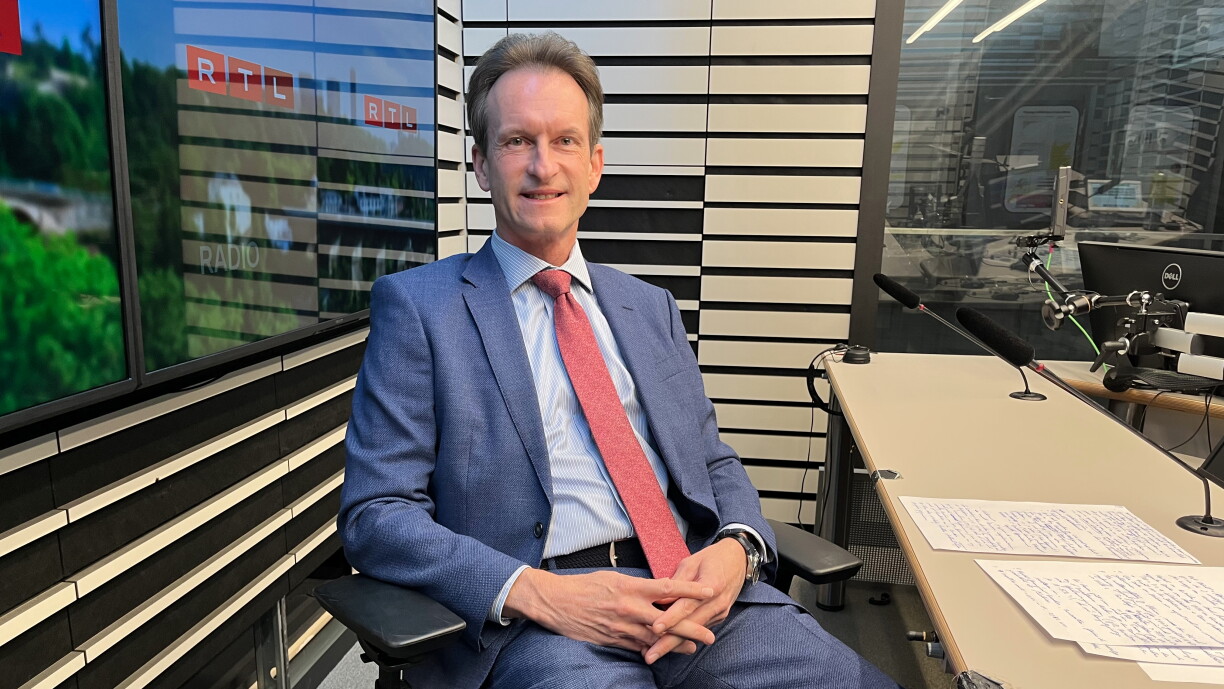
As the government prepares to present its new state budget, Carlo Thelen, Director General of the Luxembourg Chamber of Commerce, warns that while the latest budget will likely maintain the "continuity" of previous years, with high social spending, major transfers, and public sector investments, there are deeper worries about Luxembourg's economic long-term sustainability.
Thelen expects the budget to be in the line with previous budgets but argues that the tendencies, especially in spending and revenue, are "causing us short- and long-term concern, particularly given the current polycrisis environment".
He also highlights that Luxembourg, despite its strong welfare provisions, faces difficult geopolitical and economic conditions that are beyond its direct control.
Major structural challenges, particularly in pensions and health spending, must be addressed urgently, according to him. Recent reforms are not enough to secure long-term financial health, especially as fewer young people are entering the workforce to support the system.
Thelen is critical of the ongoing expansion in the public workforce and questions the necessity of hiring large numbers of new civil servants each year when they are not always easy to find.
Each new regulation leads to more staff needed for enforcement, but he believes greater use of digitalisation and artificial intelligence could help reduce this need: by implementing AI as quickly as in the private sector, some roles could become redundant, and the state would not need to keep hiring more staff.
He also suggests that the government should redeploy and retrain existing civil servants through "upskilling and reskilling", rather than always hiring new people, which is standard practice in private businesses.
Thelen argues that state hiring should not be used to reduce unemployment; instead, he believes "the economy needs to be restarted" as Luxembourg has experienced "no growth for five years and no productivity gains for ten years", with company profitability declining, in his words, even as residents’ purchasing power rises.
Once the topic reached taxation, Thelen acknowledges that tax revenues have risen, especially from the financial sector, thanks partly to "one-off effects from arrears that have been collected", but cautions that this is not sustainable in the long run.
Continued zero economic growth means tax receipts cannot keep rising, and this reality must be faced, according to him.
He disputes calls to increase taxes on capital or wealth, stating that both capital and labour are already heavily taxed in Luxembourg. "You can’t play work and capital off against each other", he said, as both are impotant production factors, and the perception of Luxembourg as a tax haven is outdated.
Thelen points out that Luxembourg retains a wealth tax in addition to corporate taxes, making it almost unique in Europe, and that targeting high net worth individuals would only deliver short-term gains, as such fortunes move very quickly and there are not so many of them in the country.
Turning to Luxembourg’s indexation system, Thelen voices concern about the sustainability of frequent tripartite agreements that boost spending every time inflation triggers wage and benefit adjustments.
He questions how often the country can continue to afford such measures, noting that while the most recent agreement was necessary, there may not be many more.
He urges that long-term structural problems be tackled at their root, especially since high inflation keeps triggering index-linked spending increases.
While recognising that the indexation system is considered a "sacred cow" in Luxembourg, Thelen says it is time to ask whether the country can still afford it, as no other nation maintains such a system without reform.
He calls for "courage and ambition" to modernise the indexation mechanism, as Belgium has done, and warns against relying on short-term high revenues that are not sustainable.
Thelen concludes that vigilance is needed in future tax policy, and the government must constantly assess whether there is any room for manoeuvre.
Regarding the budget, Thelen’s take sees Luxembourg needing less short-term patching and more bold reform if it is to sustain its social model and economic competitiveness in the years ahead.