Here are five things you should know at the end of this week:


Luxembourg's Chamber of Deputies approved the EU's Digital Services Act (DSA) on Wednesday, despite opposition from the ADR, which argued it threatens free speech.
Law passed – On Wednesday, Luxembourg's Chamber of Deputies approved the European Union's Digital Services Act (DSA), with 55 MPs voting in favour and five against – all from the Alternative Democratic Reform Party (ADR). The law, designed to create a safer and more accountable online environment, drew criticism from ADR MP Tom Weidig, who claimed it infringes on constitutional rights by limiting free speech and enabling political control over digital expression.
Supporters, including MPs from the Democratic Party (DP) and The Left (Déi Lénk), argued that the law is necessary to counter misinformation and ensure factual discourse in the digital sphere, framing it as a safeguard rather than a censorship tool.
Oversight – As part of the DSA's implementation, Luxembourg's Competition Authority will be responsible for monitoring digital services within the country, particularly smaller platforms that do not meet the threshold of 45 million users. These platforms will be supervised at the national level, whereas the European Commission will directly oversee content enforcement on larger platforms such as X and Facebook.
Criticism and support – While the Digital Services Act is framed by EU officials as a measure to uphold online safety and protect fundamental rights, it has sparked controversy in Luxembourg and across Europe over its potential implications for freedom of expression. Critics, including the ADR and figures like Elon Musk, argue that the law enables censorship under the guise of regulation, particularly as it pushes platforms to remove content that violates national or EU laws.
In contrast, defenders of the DSA stress that it does not redefine legality but simply requires digital platforms to comply with existing legal standards – ensuring that what is illegal offline is equally prohibited online.

Luxembourg's 2024 police report shows a rise in vehicle thefts, drug-related crimes, and assaults, while muggings and burglaries have declined.
Bodycams will be introduced for police officers starting 1 June, following a policy approved in 2023.
Local policing initiatives are expanding in May to Differdange and Grevenmacher, supported by recruitment efforts and a focus on visible, community-based policing.
Mixed data – The Luxembourg Police's annual report for 2024 revealed a noticeable rise in certain crime categories, including vehicle-related offences, drug-related incidents, and cases of assault and battery. Private vehicle thefts increased by over 37%, while drug cases rose by a similar margin, with more in-the-act arrests highlighting intensified enforcement.
On the other hand, there was a modest decline in property crimes such as muggings, burglaries, and simple theft, suggesting a shift in criminal patterns and possible gains from preventive policing strategies.
Bodycams – Starting 1 June 2025, police officers in Luxembourg will begin wearing body cameras, a move aimed at increasing transparency and accountability during interventions. The decision follows a July 2023 parliamentary approval of the measure, originally proposed by the previous government coalition but initially opposed by some parties, including the now ruling Christian Social People's Party (CSV) and the still opposing Alternative Democratic Reform Party (ADR).
Expansion and recruitment – In an effort to improve community engagement and combat emerging threats like cyber and financial crime, Luxembourg is expanding its local policing pilot projects. After positive results in Luxembourg City and Esch-sur-Alzette, the initiative will be extended to Differdange and Grevenmacher in May 2025.
Reinforcing this approach, over 90 new officers joined the force in 2024, and Minister Gloden reaffirmed the importance of the "4-P principle" – Personnel, Presence, Proximity, and Prevention – as the foundation for enhancing public safety and trust.
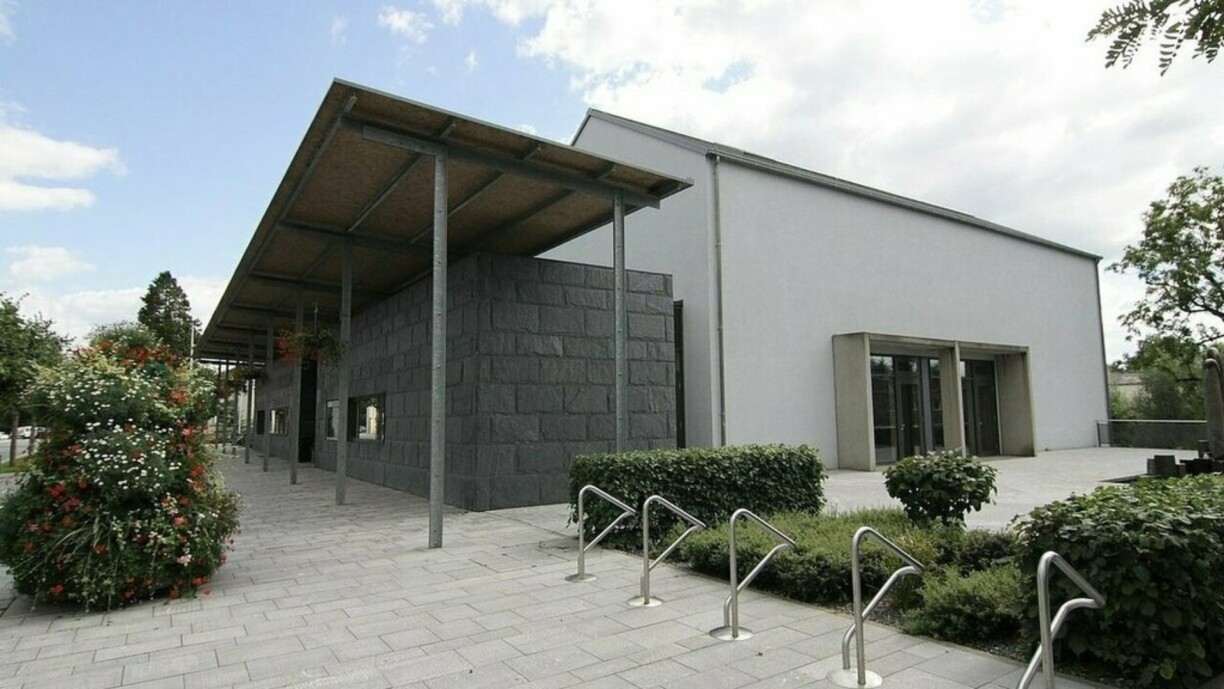
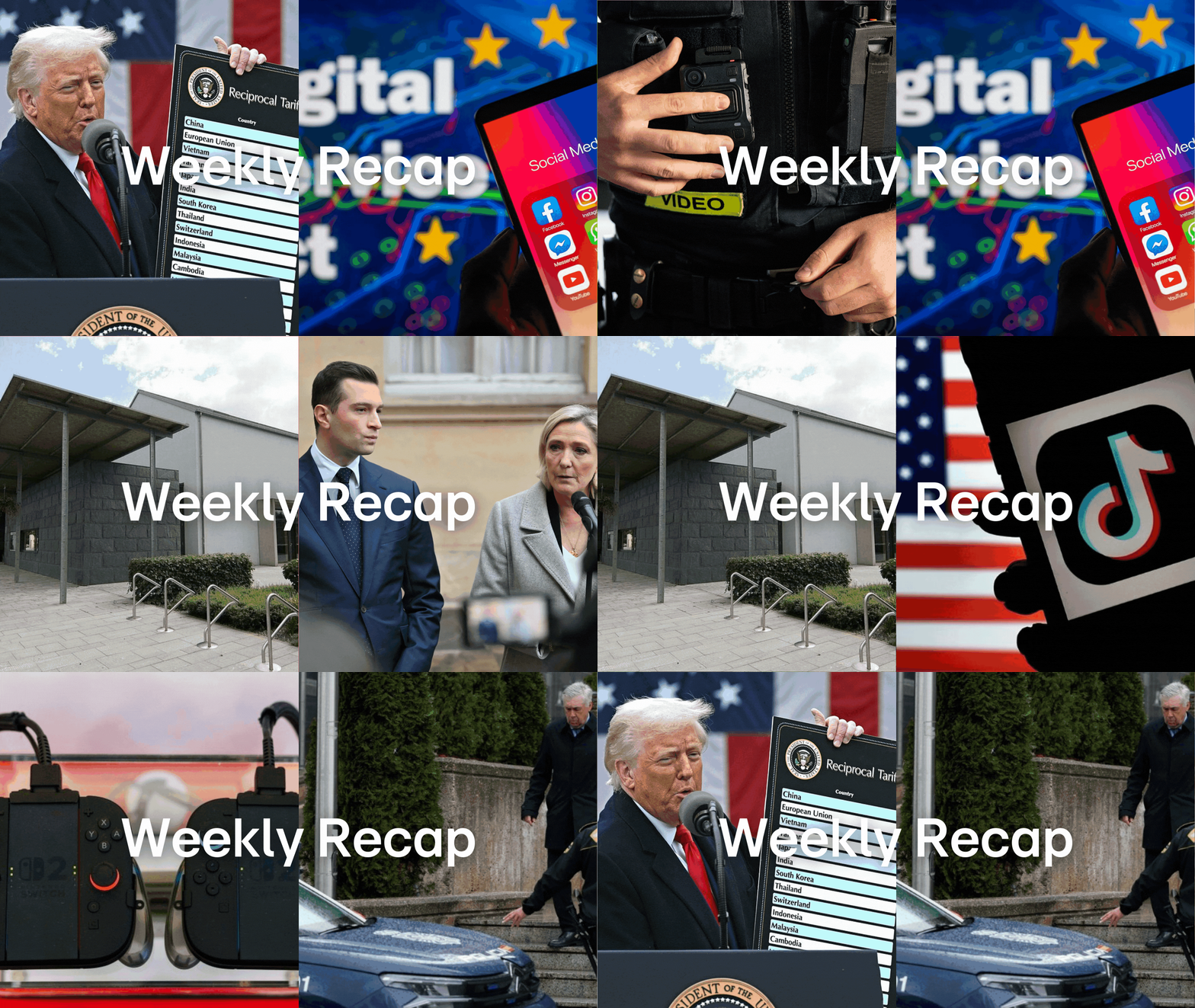
An independent audit of Dippach’s municipal administration revealed a toxic work environment allegedly driven by Mayor Manon Bei-Roller's impulsive leadership and poor communication.
Employees described systemic dysfunction, fear of retaliation, and uneven workloads, prompting calls for urgent structural reforms and clearer operational procedures.
Mayor Bei-Roller rejected accusations as a “witch hunt", while admitting to unprofessional conduct; the executive board has begun mediation to address internal tensions and rebuild trust.
Troubled workplace – A damning audit of Dippach's municipal administration exposed a culture of dysfunction, marked by poor communication, mistrust, and alleged bullying, with Mayor Manon Bei-Roller of the Luxembourg Socialist Workers' Party (LSAP) identified as the central figure behind the turmoil. The report, based on interviews with staff and executive members, described her leadership style as impulsive, emotional, and disrespectful.
Employees reported a breakdown in basic organisational structure, widespread disregard for hierarchy, and an atmosphere of fear, where deviating from the mayor's views could result in professional consequences. Several accounts described harassment, overreach, and micromanagement, painting a picture of a deeply troubled workplace.
Recommendations – Employees highlighted significant stress due to chronic understaffing, inconsistent decision-making, and the erosion of trust across teams. Multiple audit reports over several months confirmed these issues, noting that the toxic environment had already led to resignations.
The report concluded that restoring effective governance would require immediate action, including clearly defined procedures, organisational reforms, and a reset in the professional boundaries between staff and leadership.
Mayor defiant – In response to the audit, Mayor Bei-Roller acknowledged some past mistakes but rejected much of the criticism, calling the report one-sided and likening the backlash to a "witch hunt". During a joint interview with board members, she admitted to behaving "too much like a friend" rather than a professional, while Executive Board Member Luc Emering confirmed tensions within the leadership, particularly between Bei-Roller and fellow LSAP member Philippe Meyers.
Mediation has now begun to resolve internal disputes, with all parties expressing a commitment to improving communication and restoring workplace stability.
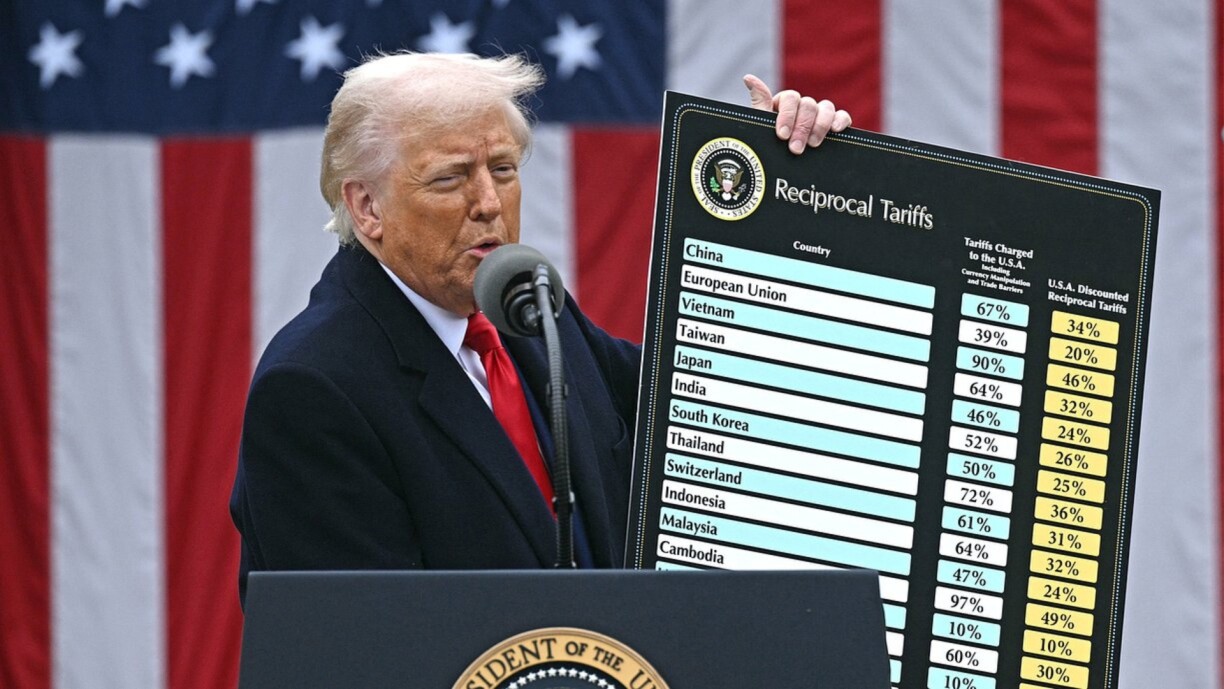
Trump's sweeping global tariffs – including a 54% rate on Chinese goods and 20% on the EU – sparked international backlash, rattled markets, and marked what he dubbed "Liberation Day" for US economic independence.
Allies and adversaries alike condemned the move, with China, the EU, and others vowing countermeasures but keeping negotiation channels open despite Trump insisting the tariffs are not up for discussion.
The tariffs triggered global market turmoil, with sharp stock drops, a slumping dollar, and fears of recession mounting as Luxembourg's PM Luc Frieden and FM Xavier Bettel warned of long-term economic harm and global instability.
'Liberation Day' – US President Donald Trump announced a broad set of new tariffs on nearly all trading partners, including a dramatic 54% tariff on Chinese goods and significant levies on the European Union (20%), Japan (24%), and the UK (10%). Calling it "Liberation Day", Trump framed the move as a declaration of economic independence, arguing the US was finally standing up against years of unfair trade practices.
However, the move was seen by many as an aggressive escalation of protectionism, marking a profound shift in American economic policy that disregards traditional alliances. Financial markets responded with alarm: stocks plunged globally, the dollar slumped, and gold surged to a record high as investors sought safer assets amid growing fears of recession and inflation.
Restraint amid defiance – Governments around the world reacted swiftly and negatively to Trump's announcement. China demanded the tariffs be scrapped and vowed countermeasures, while France and Germany threatened to target US tech giants in retaliation. The European Union's leadership described the tariffs as a "major blow to the world economy" but emphasised the importance of pursuing negotiations before launching a full-scale trade war.
Despite the widespread criticism, most countries held back from immediate retaliation, signalling a willingness to engage diplomatically. EU Trade Commissioner Maros Sefcovic and other global leaders continued to seek dialogue, even as Trump's administration insisted the tariffs were non-negotiable, reflecting a new, confrontational approach to US foreign and economic policy.
Market reactions – The financial impact was swift and severe: US and global stock markets saw their worst single-day drops in years, with the tech-heavy Nasdaq plunging 6% and European markets falling sharply. The US dollar fell more than 2.6% against major currencies, and oil prices tumbled on fears that a global slowdown would crush demand. Economists warned that the tariffs would lead to higher consumer prices and inflation, while businesses – especially in sectors like automotive and apparel – sounded alarms about disrupted supply chains and production halts.
Luxembourg leaders Xavier Bettel and Luc Frieden called the tariffs economically reckless, predicting a “lose-lose” outcome and voicing concerns over long-term damage to global trade and investment.
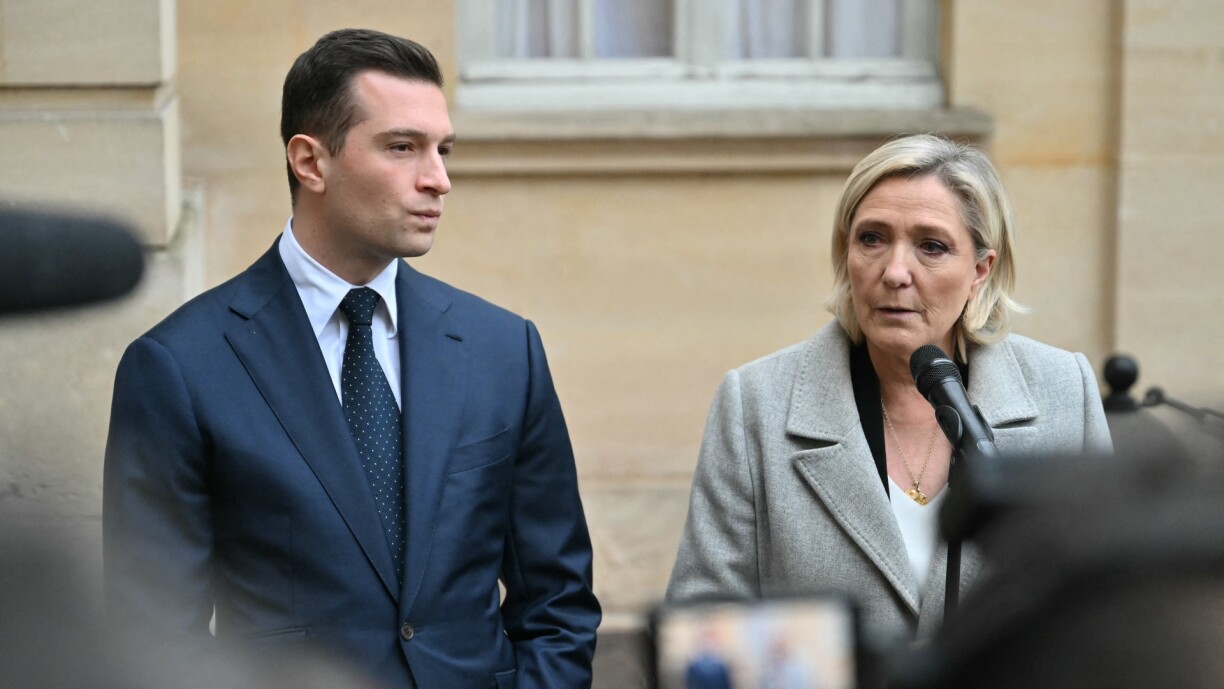
French far-right leader Marine Le Pen was convicted for embezzling EU funds through fake parliamentary jobs, receiving a four-year prison sentence, partly suspended, and a five-year immediate ban from holding public office.
The ruling, which Le Pen has vowed to appeal, sparked global reactions and support from rightwing figures, including Trump, Orban, and Musk, who claim the decision is politically motivated.
Le Pen's National Rally party is rallying behind her with a planned protest and a potential "Plan B" candidacy by party leader Jordan Bardella if her appeal fails before the 2027 presidential election.
Conviction and consequences – Marine Le Pen, leader of France's far-right National Rally (RN), was convicted by a Paris court for embezzling nearly €2.9 million in EU funds by misusing European Parliament allowances to pay party staff disguised as parliamentary assistants. The court handed her a four-year prison sentence – two years suspended and two to be served with an electronic bracelet – and imposed a five-year ban from running for public office, which takes immediate effect regardless of appeals.
This decision throws into question her much-anticipated 2027 presidential run, which she had been widely expected to lead, with polls showing her as the frontrunner following her party's success in the 2024 legislative elections.
Defiance on the right – The court ruling triggered an outpouring of support for Le Pen from rightwing and nationalist leaders worldwide, who framed the conviction as an attack on democracy and political dissent. Prominent voices such as US President Donald Trump, Hungarian Prime Minister Viktor Orbán, and billionaire Elon Musk compared Le Pen's legal troubles to politically motivated crackdowns, echoing narratives of "lawfare" used against anti-establishment figures.
Russia and Brazil joined in criticising the decision, with Kremlin officials and Jair Bolsonaro suggesting that the case illustrates growing authoritarianism in European democracies. Despite the judiciary insisting the decision was legal and not political, Le Pen and her allies have called the sentence a "nuclear bomb" meant to derail her campaign.
'Plan B' – In response to the verdict, Le Pen and the RN have launched a campaign to rally public support, planning a protest in Paris to defend what they call the integrity of French democracy and the right to political representation. Le Pen remains defiant, pledging to exhaust all legal avenues – including appeals to France's Constitutional Council and the European Court of Human Rights – to overturn the ban in time for the 2027 election.
In the meantime, RN party leader Jordan Bardella, aged 29 and not implicated in the case, is being positioned as a potential replacement candidate. While Bardella enjoys strong media presence and internal support, questions remain over whether he has the experience to lead a successful presidential bid without Le Pen at the forefront.
Business & Tech – TikTok on Friday is hours from a deadline to find a non-Chinese owner or face a ban in the United States.
Science & Environment – The world added the smallest amount of new coal capacity in two decades last year, a report said Thursday, but use of the fossil fuel is still surging in China and India.
Entertainment – Gaming specialists who have handled Nintendo's new Switch 2 say the console is a clear upgrade on its predecessor, but it lacks must-have new features and the progress comes at a steep price.
Housing – The Chamber of Deputies has extended key housing investment incentives until the end of June, amid political division and growing calls for reform and transparency in the property market.
Family matters – On Wednesday, the government passed a landmark reform of its adoption law, expanding rights to single individuals, unmarried and registered couples – the first update to modern family dynamics since 1989.
Succession – Luxembourg's Red Bridge lit up with lasers and fog effects Monday night during a surprise test run for October's upcoming throne transition celebrations.

Your Weekly Recap is published every Friday at noon. Read earlier versions.





