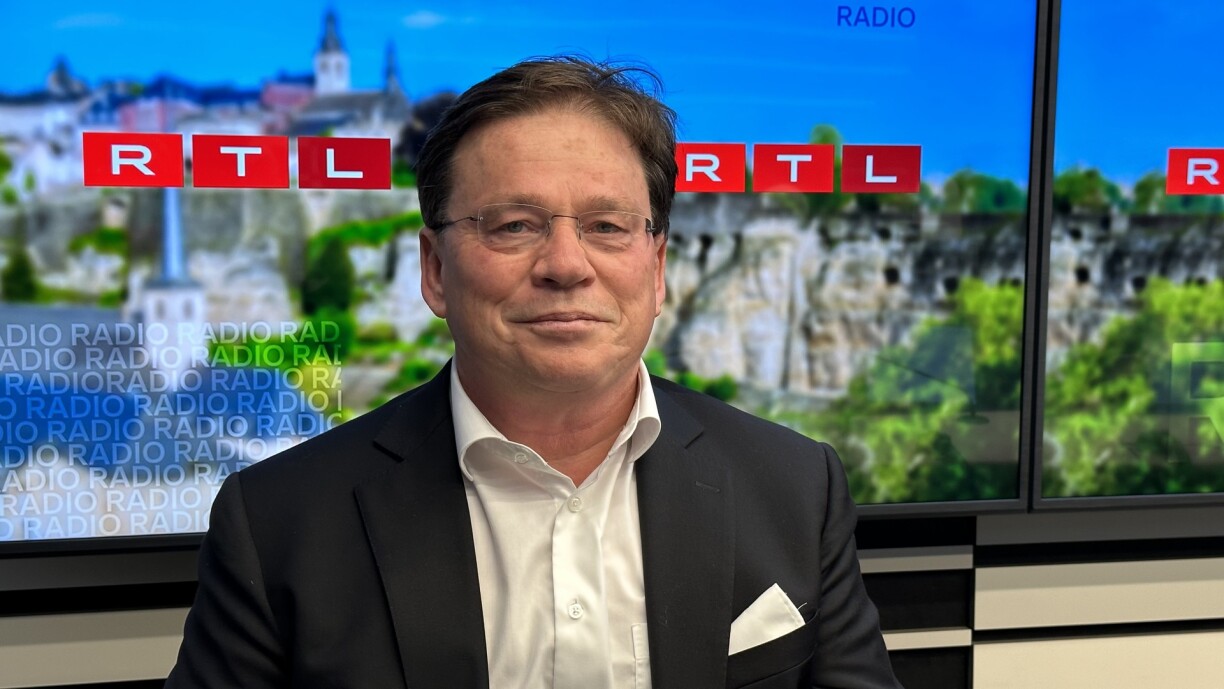
While there fortunately is no recession, Luxembourg's economic growth of 2% remains slow, says STATEC director Dr Serge Allegrezza. This corresponds to neighbouring countries and the Eurozone as a whole, which operates in "slow motion", according to the statistician.
Dr Allegrezza explained that these tendencies are observable in the Grand Duchy and are most notably reflected in bankruptcies, private consumption, and bank deposits. People save more money and take fewer credits, which has resulted in a real-estate crisis.
The statistician believes that the European Central Bank (ECB) might change its interest policies again next year. However, a potential rebound depends significantly on the continent's geopolitical situation, which is difficult to predict.
When asked about reducing work hours, Dr Allegrezza argued that there is not enough information to allow for a nuanced debate. A recent study on the issue, carried out by the Luxembourg Institute of Socio-Economic Research (LISER), was based on individual statistics, which is why final impact projections still have to be made, according to the STATEC director.
Dr Allegrezza finally shared his personal view that increased productivity has allowed work time to steadily go down over time. He further pointed out that people in Luxembourg are already working fewer hours compared to other European countries.





