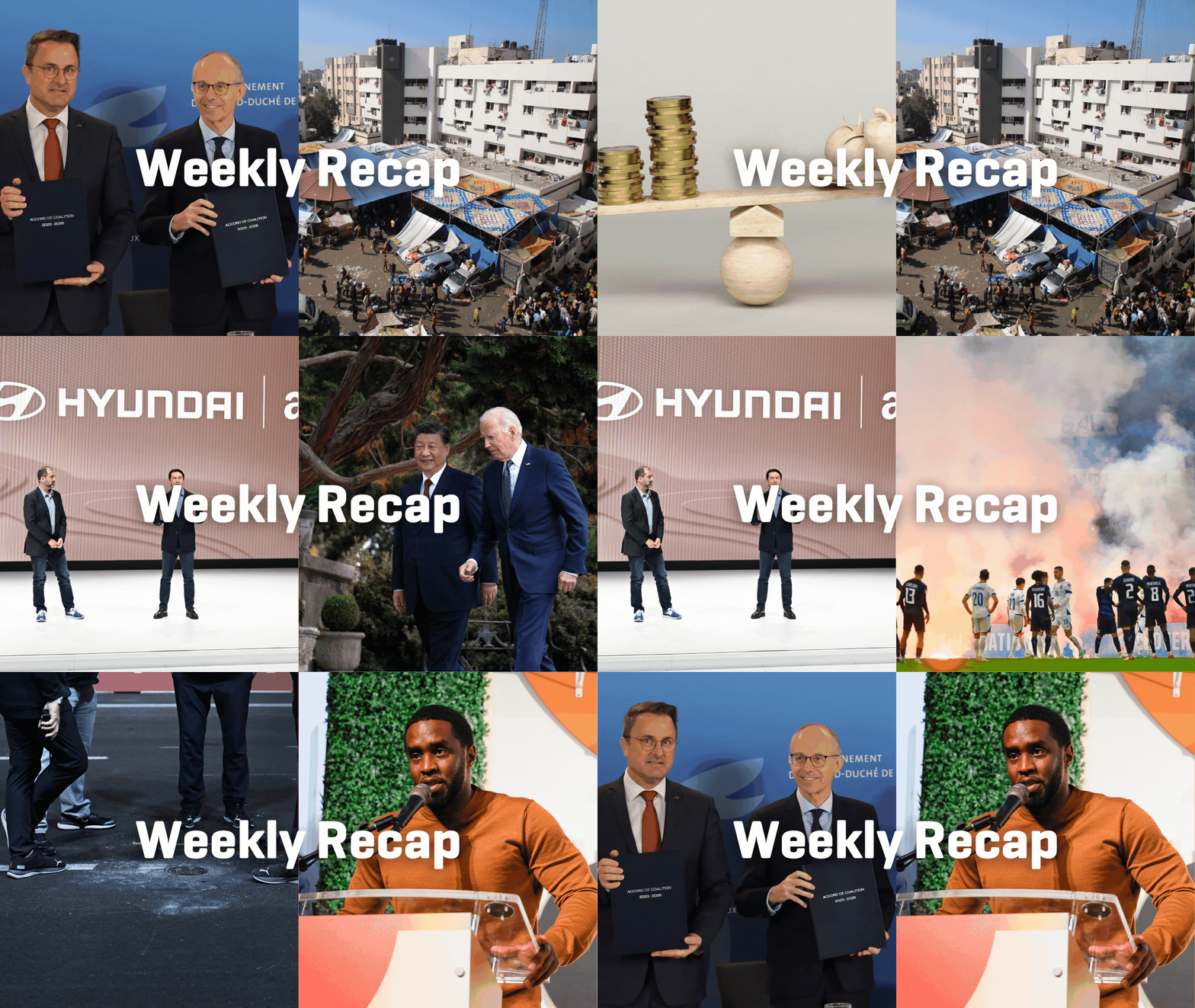
Here are five things you should know at the end of this week:

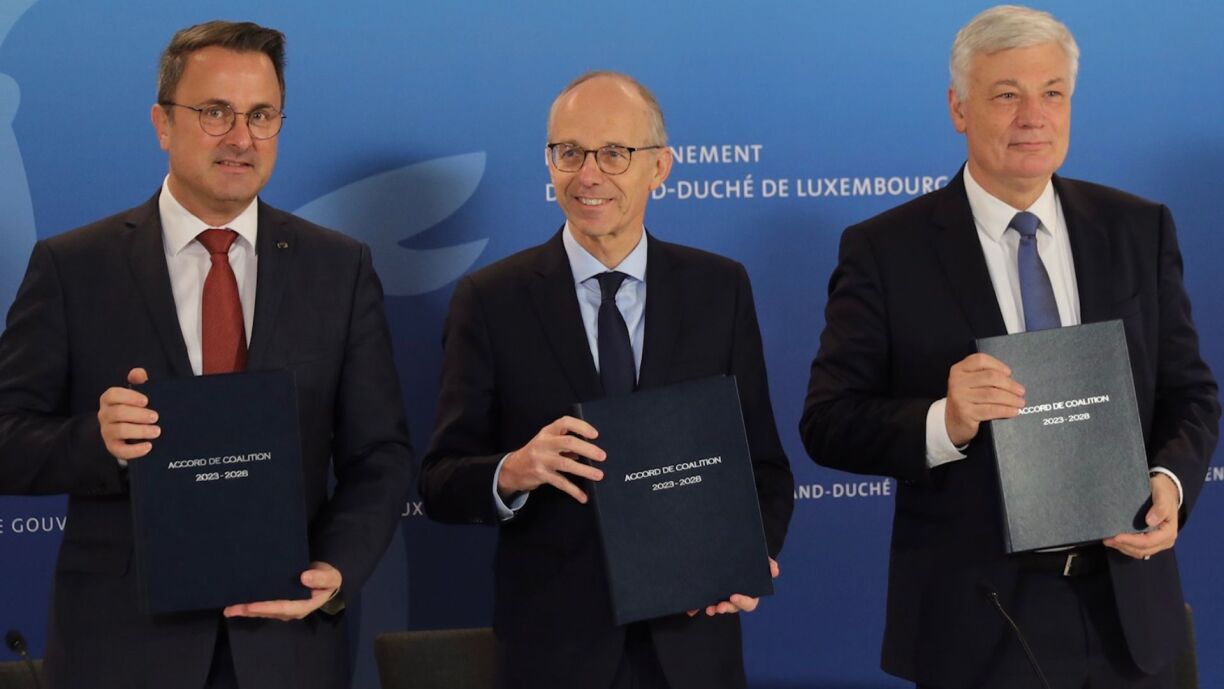
Luxembourg's new coalition government formed by the CSV and DP, led by Prime Minister Luc Frieden, aims to strengthen the country's economic standing and citizen welfare, with a focus on purchasing power, the environment, and the housing market.
Common goals - The new coalition government is setting its sights on reinforcing Luxembourg's economic framework and enhancing the quality of life for its citizens. Both parties share common goals in their political manifestos, especially in the areas of strengthening purchasing power and addressing environmental concerns.
The coalition, backed by a solid majority in parliament, is poised to implement its policies promptly, focusing on a balanced approach that seeks to preserve the economy while promoting social welfare and sustainable development.
Agreement signed - Detailed in the 209-page coalition agreement are strategies for fiscal adjustments and environmental initiatives. The agreement proposes tax reforms, such as lowering the tax table by four indexations beginning January 1, 2024, to alleviate the tax burden on citizens and adjusting business taxes to be in line with OECD standards.
This is coupled with a commitment to bolster the renewable energy sector through increased support for businesses and advancing digital processes for companies and individuals.
Additionally, the coalition aspires to tackle the housing market issues with a two-year plan to stimulate the market and address the construction sector's challenges. These include tax rate reductions and enhanced tax credits for homebuyers to encourage the development of affordable housing and streamline bureaucratic processes related to housing.
15 new ministers - On the social front, the government plans substantial investments in the healthcare sector, aiming to enhance ambulatory care and digitalise healthcare processes. This initiative is part of a broader effort to modernise Luxembourg by investing in digital infrastructure across all sectors.
The coalition also intends to reform policing laws and childcare quality. Moreover, the agreement includes measures to improve the work-life balance, such as extending parental leave, making maternity leave more flexible, and addressing discrimination in adoption laws. These steps are indicative of the government's commitment to supporting families and creating a more inclusive society that values the well-being of all its members.

Luxembourg's economy is expected to contract by 0.6% in 2023, with a forecasted rebound to 1.4% growth in 2024 and 2.0% in 2025, amidst a slowdown in key sectors like finance, trade, and construction.
The European Commission predicts a rise in unemployment from 4.6% to 6.0% by 2025, and an increase in the public deficit to 1.9% of GDP in 2023 due to measures to counteract high energy prices.
Although inflation peaked in 2022, it is set to slow down, with Luxembourg experiencing negative export growth contributing to the economic downturn.
Optimism despite contraction - Luxembourg is bracing for an economic contraction, with GDP expected to decrease by 0.6% in 2023, a steeper decline than the International Monetary Fund's prediction of 0.4%. This downturn is felt across pivotal sectors such as finance, trade, and construction, which have traditionally powered the country's economy.
Despite this, there is optimism for recovery in the following years, with projections of a GDP increase to 1.4% in 2024 and a further rise to 2.0% in 2025, indicating a potential gradual return to pre-pandemic economic conditions.
Unemployment and deficit rise - The labour market in Luxembourg, which saw unemployment rates dip to 4.6% in 2022, is anticipated to face challenges, with the European Commission projecting an uptick in unemployment reaching up to 6.0% by 2025. This rise is attributed to the economic slowdown, which may compel businesses to curtail hiring or reduce their workforce.
Concurrently, the public deficit is also expected to worsen, increasing to 1.9% of GDP in 2023. This is largely due to the government's fiscal policies, which include measures to alleviate the burden of soaring energy costs on households and businesses, thus impacting the nation's fiscal balance.
Negative export growth - Inflation in Luxembourg reached unprecedented levels in 2022, but is now expected to decelerate. The European Commission's forecast suggests that the rate of inflation will decline, helped by policy measures targeting the high energy prices that have significantly contributed to the inflationary surge.
Nevertheless, the country is facing negative export growth, which is set to impede economic performance, leading to the -0.6% GDP downturn for the year 2023. This decline in exports reflects broader global economic challenges and a decrease in international demand affecting Luxembourg's trade balance.

Luxembourg delivered an impressive performance to defeat Bosnia-Herzegovina 4-1, with key goals from Mathias Olesen and Gerson Rodrigues, who scored twice, including a long-range stoppage-time goal.
Despite the absence of Bosnian stars Miralem Pjanic and Edin Dzeko, Luxembourg's Red Lions showcased a mature display, with Leandro Barreiro earning Man of the Match for his pivotal role, including winning a penalty.
Luxembourg secured third place in Group J and now looks forward to the playoffs with confidence after a strong Euro 2024 qualification campaign, which will conclude with a game against Liechtenstein on Sunday.
Dominant display - Luxembourg's national football team, known as the Red Lions, put on a commanding display to overpower Bosnia-Herzegovina with a 4-1 victory. Mathias Olesen initiated the scoring with a precise header, followed by Gerson Rodrigues capitalising on a penalty awarded after a VAR review.
The team's dominance was further cemented by an own goal in their favour, and although Bosnia-Herzegovina managed to find the net from a corner during stoppage time, Rodrigues sealed the deal with a stunning long-range goal, marking his second for the night.
Man of the Match - Leandro Barreiro's dynamic performance earned him the Man of the Match title, significantly contributing to the win by winning the penalty that led to Luxembourg's second goal.
Playoffs ahead - Despite not securing automatic qualification for Euro 2024, as Slovakia claimed that with their own victory, Luxembourg's solid third-place finish in Group J and the prospect of the playoffs maintain a high team morale. Their qualifying campaign is set to conclude against Liechtenstein, with optimism riding high for what lies ahead.

Israeli forces have conducted a targeted military operation at Al-Shifa hospital in Gaza, which they believe houses a Hamas command centre, amidst warnings from the US and the presence of thousands of civilians.
The operation has resulted in horrific conditions within the hospital, including a lack of electricity and medical supplies, and an escalating humanitarian crisis across Gaza with many hospitals non-operational.
Amidst the ongoing conflict, negotiations are underway for a hostage exchange between Israel and Hamas, with international efforts being made to mediate a ceasefire.
Concerns disregarded - The Israeli military Wednesday launched a precise assault on Al-Shifa hospital in Gaza City, which they claim is being used as a command centre by Hamas militants. This action took place despite international concerns and sharp warnings from the United States, emphasising the necessity to protect the hospital and its civilians.
The Israeli army attempted to mitigate civilian casualties by providing evacuation routes and advance notice, but the operation has still been met with considerable international scrutiny and criticism, particularly because it compromises the safety of the thousands of civilians, including patients and medical staff, who are sheltering within the facility.
Dire situation - Inside Al-Shifa hospital, the situation is described as dire, with reports of medical procedures being conducted without anesthesia, families lacking basic necessities, and the overwhelming stench of decomposing bodies. The lack of electricity has exacerbated the crisis, rendering the morgues nonfunctional and leading to the use of mass graves within the hospital complex.
his is a reflection of a larger crisis in the Gaza Strip where, according to the World Health Organization (WHO), a significant number of hospitals have become nonfunctional due to combat damage, lack of fuel for generators, and the overall impact of the conflict, severely limiting access to essential health services for the population.
Help from international mediators - The conflict has also led to a complex hostage situation, with ongoing negotiations between Israel and Hamas. Israel is demanding the release of hostages taken during the attacks by Hamas, while Hamas is seeking the release of Palestinian children and women from Israeli prisons.
Efforts to secure a ceasefire and facilitate a hostage exchange have been stymied by the demands on both sides, with international mediators from Qatar and expressions of support from the US President indicating a push for resolution. The severity of the situation is heightened by public pressure from relatives of the hostages and the broader international community, who are calling for immediate action to end the hostilities and address the humanitarian crisis.
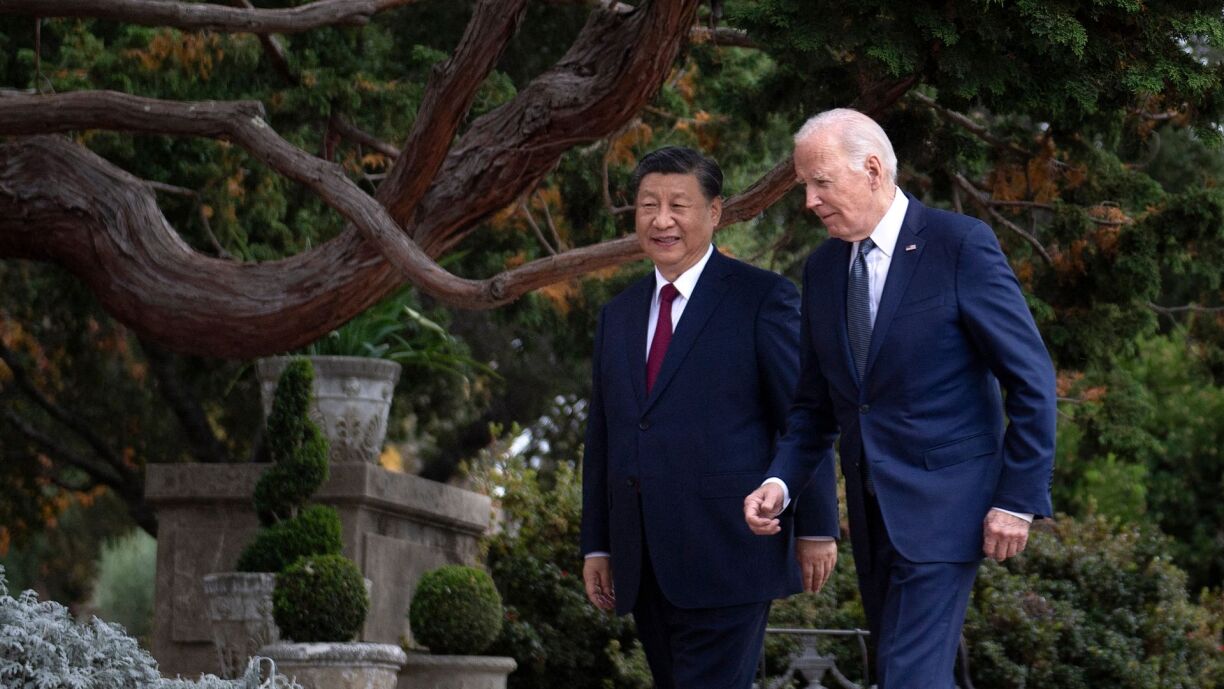
US President Joe Biden and Chinese President Xi Jinping agreed to restore military communications and China committed to crack down on fentanyl precursors during a summit in San Francisco.
Despite economic challenges, Xi presented a cooperative front, meeting with US executives, amidst ongoing sanctions and concerns over China's assertive military behaviour in the Asia-Pacific region.
The summit precedes both Taiwanese and US elections, with Biden urging Xi to respect Taiwan's electoral process as the island faces potential political shifts and China's continued claims of sovereignty.
Successful meeting - During the recent summit in San Francisco, President Joe Biden achieved significant agreements with Chinese President Xi Jinping. The two leaders agreed on measures that would enhance bilateral communication, with China agreeing to reopen military communication lines with the United States, which had been a longstanding request from the US side.
Additionally, China pledged to take action against the production of precursor chemicals used in the synthesis of fentanyl, addressing a major American public health crisis linked to opioid addiction.
Stability sought - President Xi's participation in the summit comes at a time when China is grappling with economic difficulties, marked by reduced foreign investment and challenges in the property sector. Despite these headwinds and the US' firm stance on high-tech export sanctions, Xi engaged with leading US business figures, signalling a willingness to maintain economic ties and present a cooperative stance. This approach suggests an effort by China to stabilise its international relationships amidst domestic economic pressures and global technological competition.
Taiwan - The timing of the summit is critical as it may be the last in-person engagement between Presidents Biden and Xi before the US and the Taiwanese elections. Biden's call for Xi to respect Taiwan's democratic process underscores the delicate nature of cross-strait relations, especially as Taiwan approaches a significant electoral event.
The outcome of these elections could influence future US-China interactions, with the potential for a shift in Taiwan's political landscape posing strategic implications for both US and Chinese policy in the region.
Business & Tech - E-commerce giant Amazon said Thursday it would start selling new automobiles on its platform in the United States next year.
Science & Environment - China and the United States pledged Wednesday to work more closely together to fight global warming, declaring the climate crisis "one of the greatest challenges of our time".https://today.rtl.lu/news/world/a/2066108.html
Entertainment - Superstar rapper and music industry mogul Sean Combs was sued Thursday by the singer Cassie, who accused him of rape and physical abuse.
Top diplomat - On Tuesday, acting foreign minister Jean Asselborn signalled his intention to step down from the Chamber of Deputies.
LuxExpo - The smoke of screeching tires, smell of gasoline, and sight of beautifully modified cars: the International Motor Show Luxembourg welcomed well over 30,000 visitors at LuxExpo last weekend.https://today.rtl.lu/news/world/a/2066108.html
Homeless support - The "Wanteraktioun" campaign, organised by the Dräieck ASBL, launched on Wednesday, and will offer support to Luxembourg's homeless population until 15 April 2024.

Your Weekly Recap is published every Friday at noon. Read earlier versions.





