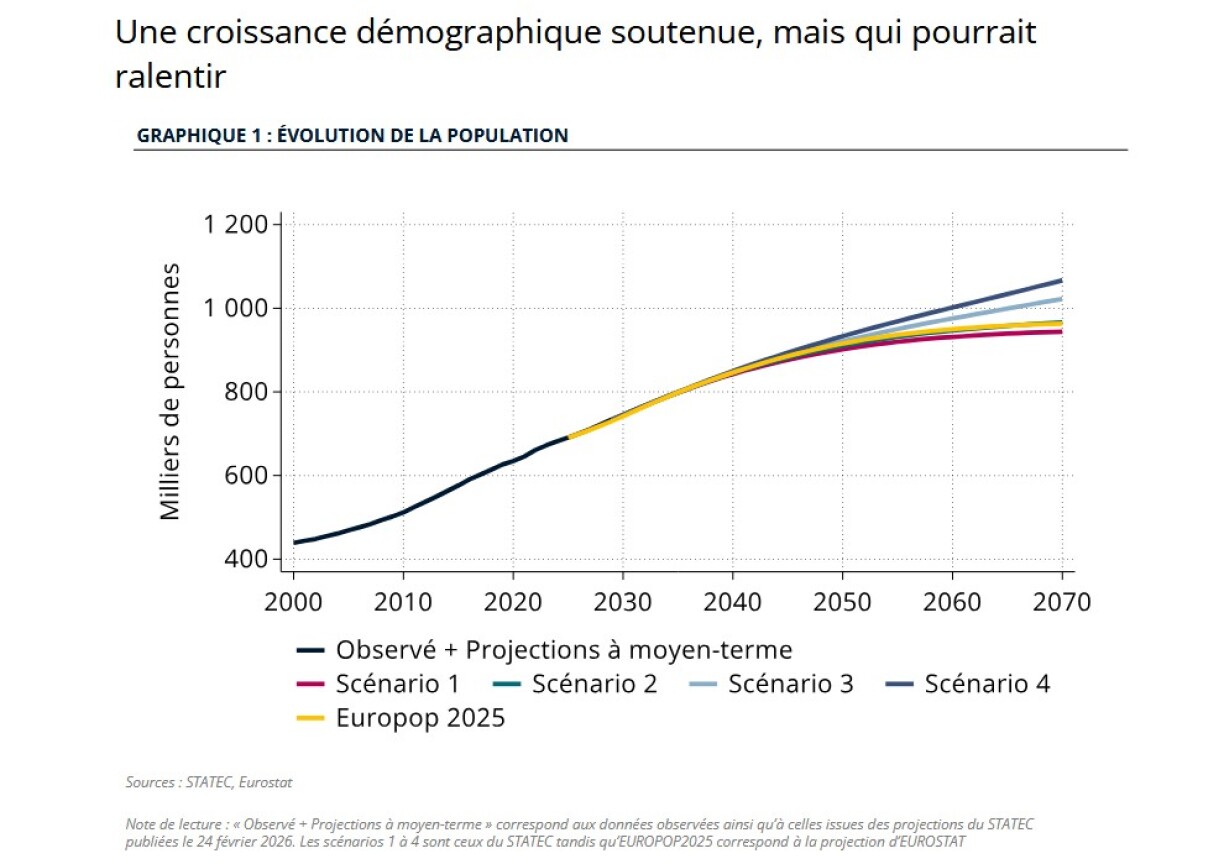
Luxembourg’s population continues to grow and could approach one million residents by 2070, according to new projections by the National Institute of Statistics and Economic Studies (STATEC). As of December 2025, the Grand Duchy had around 691,000 inhabitants.
The projections outline four scenarios, ranging from around 944,000 residents to more than one million, depending largely on economic performance and how attractive Luxembourg remains compared to neighbouring countries.
In the low productivity scenario, weaker growth and less competitive wages reduce the country’s appeal, leading to lower migration and a population of around 944,000 by 2070. A slightly stronger version of this scenario sees the figure rise to about 966,000.
More optimistic projections are based on stronger economic performance. In the moderate-high productivity scenario, higher growth and more competitive wages attract more migrants, pushing the population past one million to around 1,022,000.
In the most favourable scenario, strong economic growth drives the highest levels of migration, with the population reaching about 1,067,000 by 2070.
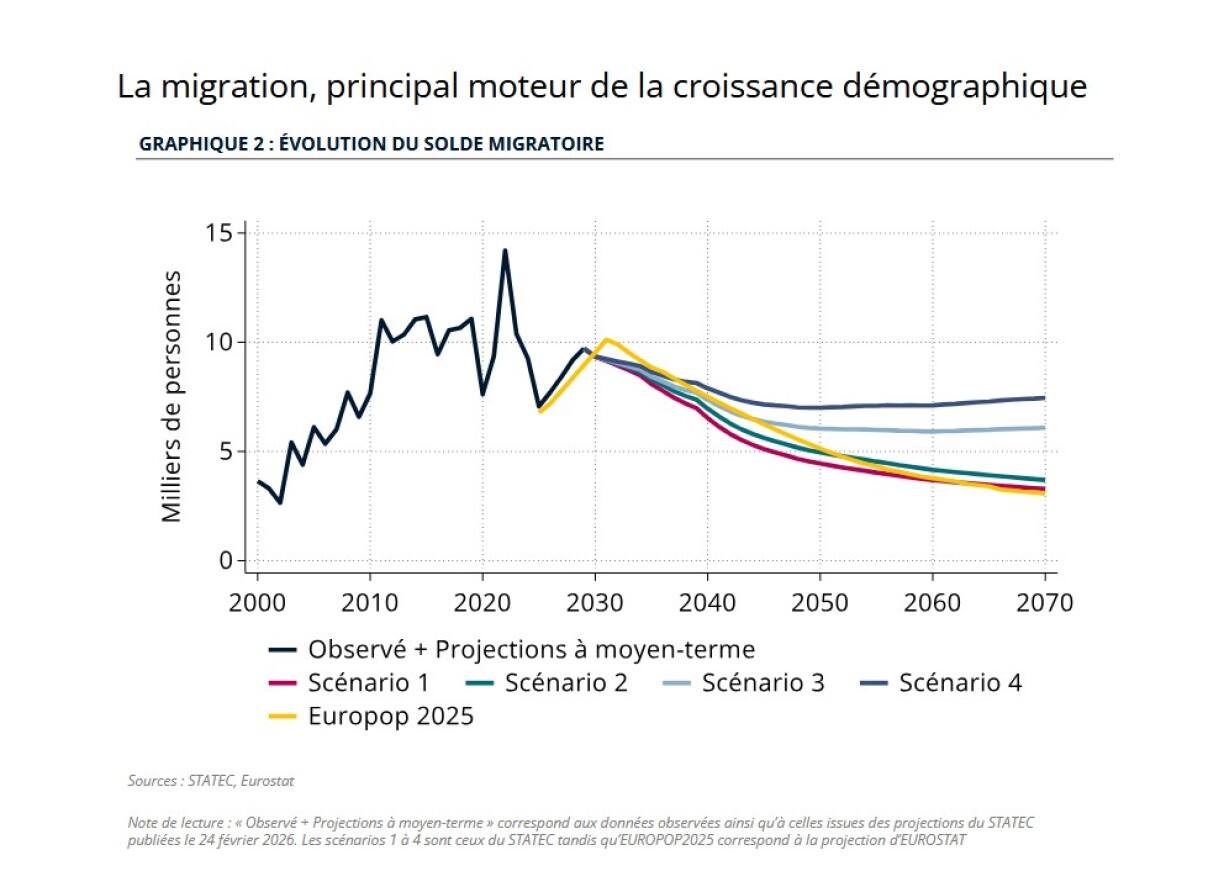
Migration remains the main driver of population growth, accounting for around 80% of the increase in recent decades. Depending on the scenario, net migration is projected to range between 3,300 and 7,500 people per year by 2070.
Eurostat, which bases its projections on past trends rather than economic performance, expects migration to peak at around 10,000 in 2031 before gradually declining to just over 3,000 by 2070.
At the same time, Luxembourg’s population is set to age significantly. The average age is projected to rise from around 40 today to between 46 and 48 by 2070, with a growing share of residents aged 65 and over. This trend is expected to be more pronounced in scenarios with lower migration, where fewer young workers arrive.
Fertility is expected to increase slightly over time, but remain well below the replacement level. Even by 2070, the number of children per woman is projected to reach around 1.5, meaning population growth will continue to rely heavily on migration.
Life expectancy is also set to rise, with people in Luxembourg expected to live to nearly 90 years on average by 2070.





