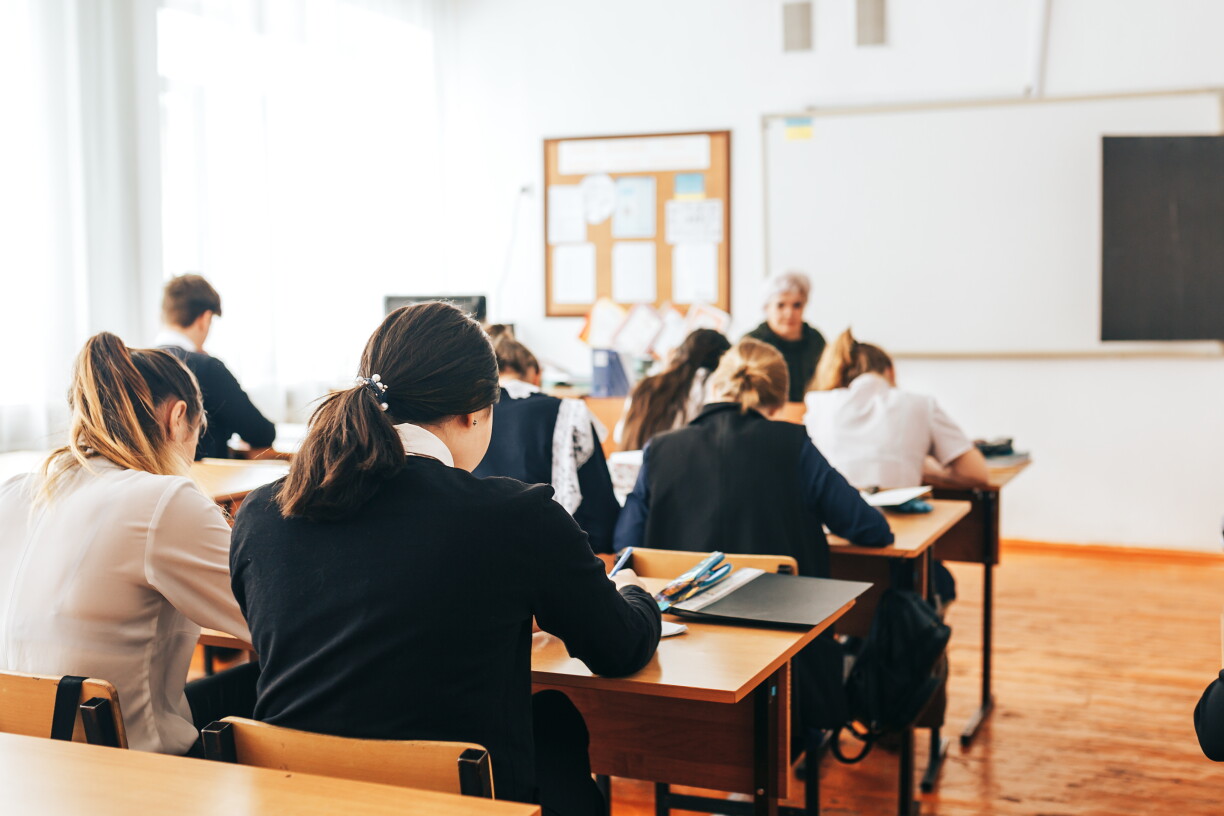
Last week's fresh PISA results are likely to have taken the shine off the start of the new school year for many. Luxembourg's pupils turned in their weakest ever performance in an international comparison.
More than 30% of young people are failing to reach even the minimum proficiency level in reading comprehension, mathematics and science. It is a state of affairs that leaves no one satisfied.
RTL spoke to representatives of secondary school leadership and to students themselves about what has to happen next, and how they explain this fresh decline in young people's skills.
Steve Manderscheid, principal of the Lycée technique du Centre and the current head of the "Collège des directeurs", the body that brings together the country's secondary school principals, and Semir Honsic of the National Conference of Luxembourg Students (CNEL), agree on two points.
First, the PISA results call for a far more detailed examination if they are to yield a genuinely in-depth reading. Second, the growing use of smartphones and digital tools such as AI naturally means that young people today are more easily distracted, work in different ways, and approach problems from a different angle. Once mobile phones and similar devices play an ever larger role in society as a whole, that inevitably feeds back into the classroom, the Luxembourg City principal noted.
Young people, he added, are reading faster and more superficially, with reading comprehension suffering as a result. Honsic, vice-president of the CNEL, put it in his own way. It is clear, he said, that writing on paper with a pen in hand is an analogue process, one that draws on far more motor-cognitive training and therefore helps to lock information in more effectively than tapping it out on an iPad. Those, he suggested, are in fact the optimal conditions for learning.
As Education Minister Claude Meisch responds to the latest PISA scores by tightening the mobile phone ban in secondary schools up to the 5e level, the national student conference CNEL argues that the move sidesteps the real challenge posed by AI and digital devices, while principals such as Steve Manderscheid welcome ministry reforms already under way, from the KI-Kompass initiative to a wider curriculum consultation planned by 2028.
The CNEL takes the view that Education Minister Claude Meisch is opting for the easier path by announcing, in the wake of the latest PISA study, that the only immediate consequence will be a tightening of the current mobile phone ban in secondary schools up to the 5e level.
Semir Honsic pointed out that smartphones and AI carry a serious risk of eroding critical thinking skills. Instead of simply taking phones away from young people at school and putting iPads in the dock, he said, the issue has to be tackled differently.
What is needed, in his view, is targeted media literacy, preparing pupils to work with media and devices, and a specific framework around AI so as to prevent a slide in cognitive abilities.
The national student conference has been sceptical of blanket school phone bans from the outset. A simple, blunt ban, in the CNEL's view, does nothing to teach anyone how to critically deal with issues such as "deepfakes".
Secondary school principals, for their part, are taking the announced tightening of the rules in their stride. In practice, this has already been the reality in many schools since 2024. iPad classes, too, have picked up clearer pedagogical frameworks.
Steve Manderscheid made much the same point. At his school, mobile phones are already fully banned for pupils in years 7e through 5e. They stow their phones in a secure locker in the morning and get them back in the evening. He, too, has seen a number of positive effects, with pupils talking more to teachers and to one another, playing football during breaks, and so on. Those are positive things in themselves, and they also do a great deal to cut distractions.
Excessive smartphone use, however, can only be reined in if parents also play their part at home. Schools and parents, both interviewees stress, have to work hand in hand.
The responsibility, the CNEL vice-president added, cannot rest on young people alone.
To help promote reading, the CNEL suggests, among other steps, that free newspapers be made available in secondary schools. For many young people today, reading no longer holds much appeal, especially when it comes to paper.
Manderscheid is well aware, of course, that reading remains an essential core skill on which a great deal of other knowledge depends. The PISA report, in his view, clearly underlines the importance of the fundamentals.
The aim of schooling, he said, has to be to nurture critical, empowered citizens who can navigate the world and manage their own lives. Reaching that goal, however, requires certain basic skills. Reading is one of the most crucial, and the very foundation of learning. It is also indispensable in working life, since one needs to be able to understand one's own mobile phone contract, for instance. On top of that, if a teacher expects a pupil to engage critically with a subject, the very first condition is that the pupil actually understands the text in front of them.
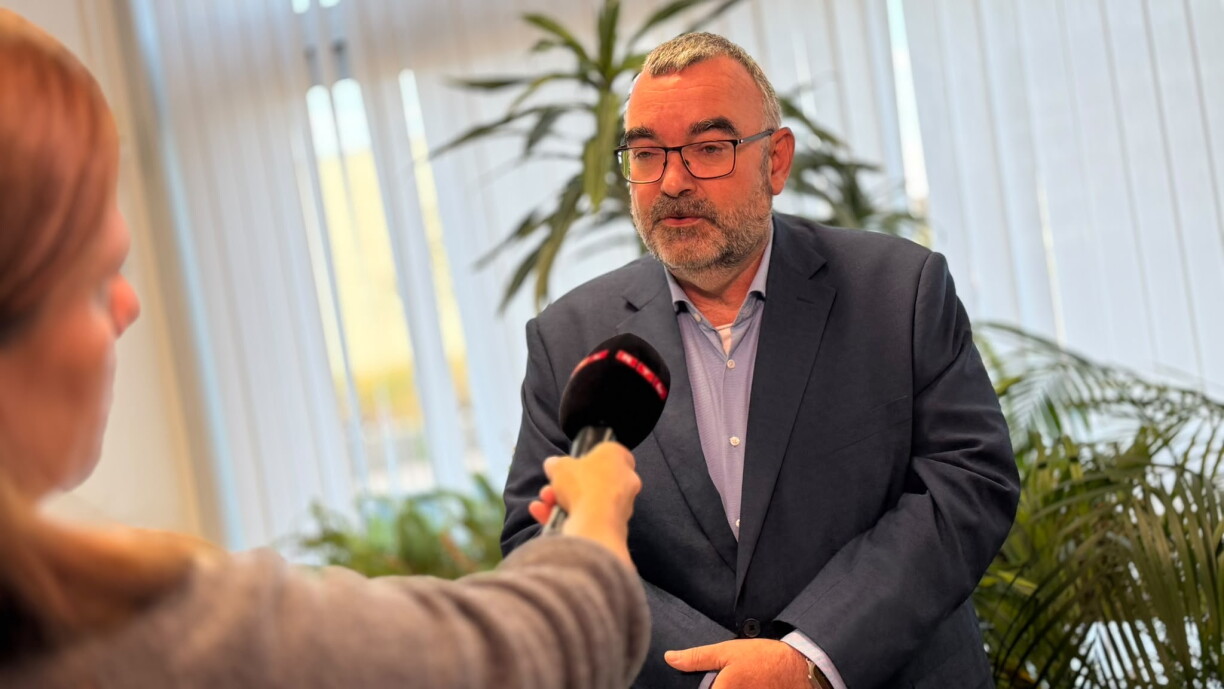
The Luxembourg City secondary school principal takes the view that many of the education ministry's reforms are moving in the right direction. It just takes time, he added, for such measures to bear their full fruit.
Manderscheid pointed to the "KI-Kompass" initiative and openly welcomed the fact that, after reforms at primary level, the ministry is now turning to the secondary school curriculum. Meisch reiterated this same point at the press conference welcoming the start of the school year.
A broad consultation on future curricula, and on what should be taught in schools going forward, is due to take place by 2028. Action is all the more necessary, Manderscheid noted, given that a third of people feel school today offers them no real benefit.
Singapore, a global reference for educational excellence, has built its curriculum much more heavily around the fundamentals, according to Manderscheid, though without entirely turning its back on digital tools.
Estonia, a European country whose PISA scores have been on the rise, has poured considerable resources into early intervention. Pupils who are falling behind, in the Estonian model, receive extra support before they fall too far off the pace.
That, too, could offer an interesting model for the Grand Duchy, where success and failure still hinge to a very large extent on socioeconomic background.
The SEW/OGBL and Féduse teacher unions are laying the responsibility for the poor PISA results squarely at the door of the Education Minister. The youth wings of the governing parties, the Christian Social People's Youth Party (CSJ) and the Young Democrats (JDL), have also recently voiced criticism of Meisch's policies.
If the CSV's youth wing had to grade Meisch over the PISA results, they would give him a failing mark, and are calling on the Education Minister to take a renewed look at his recent reforms in light of the country's weak performance. Despite considerable investment, they argue, he has failed to deliver on the promise of a fairer and more socially equitable school system.
Over the summer, the Young Democrats had already questioned the practice of automatic year progression in the lower secondary school grades. Academic progression, they contend, should be more closely tied to a pupil's actual competences. Those with gaps in core subjects should receive support at an earlier stage, including mandatory tutoring, and, if necessary, be asked to repeat the year.
On Tuesday morning, members of the parliamentary Education Committee will, for the first time, be walked through a detailed overview of the PISA study.





