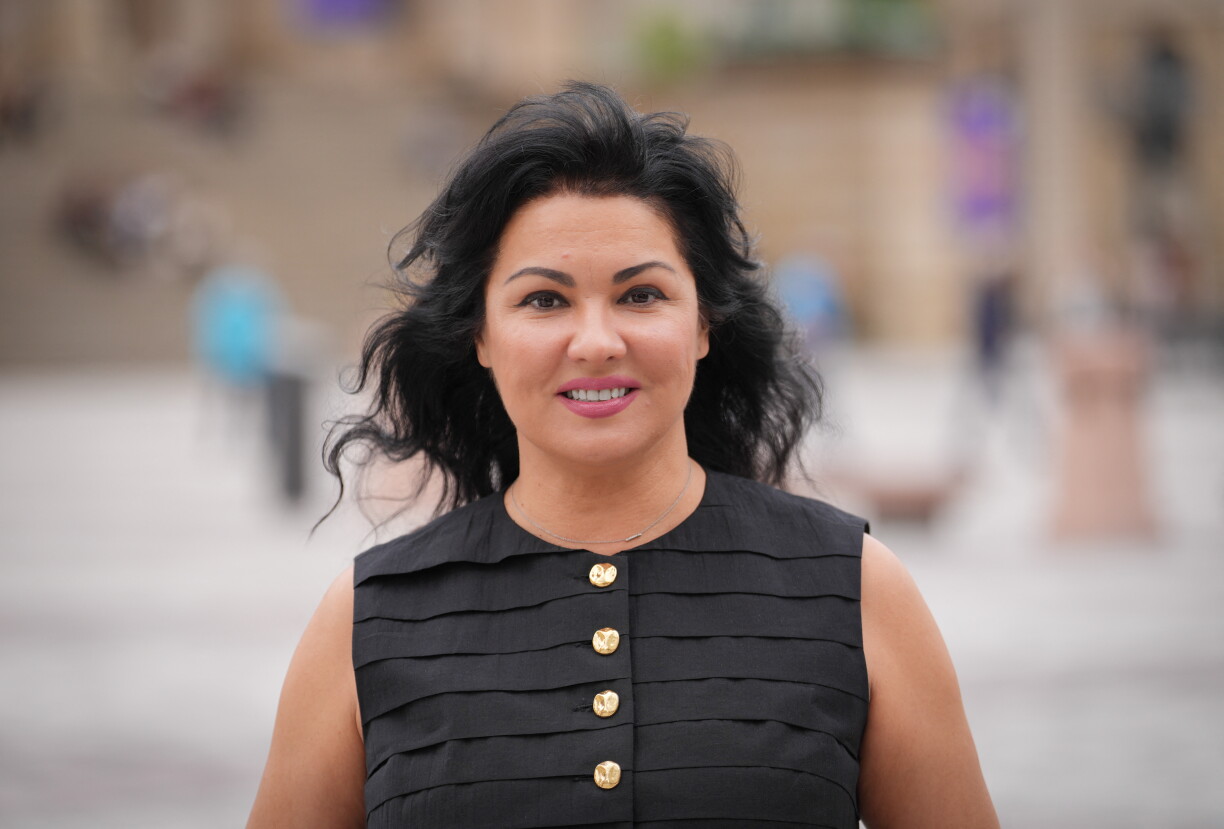
Russian soprano Anna Netrebko is due to perform on Monday evening before a sold-out Philharmonie; the concert has drawn sharp criticism because of the war in Ukraine.
In a statement, the Ukrainian Embassy said it was deeply concerned, arguing that the opera singer had supported Vladimir Putin in the past and represented Russia's cultural establishment. The Philharmonie, for its part, pointed out that the singer had spoken out against the war in the past.
Claude Radoux, Ukraine's honorary consul in Luxembourg, said that anyone who does not clearly distance themselves from Putin is, ultimately, aligned with Putin. He said he had been contacted by the Ukrainian ambassador and shared the concerns raised. According to Radoux, the perception is that Netrebko is very close to the Putin regime.
He said appearances by Russian artists who do not clearly distance themselves from the war are seen by the Ukrainian community around the world as a provocation and, to some extent, as support for Russia's war against Ukraine.
The Philharmonie declined to give an interview on the subject. In a written statement, it said it believes that culture, and music in particular, should remain a space for dialogue.
The Philharmonie said it understood that Netrebko's appearance could raise concerns among some members of the public, particularly in the context of the war in Ukraine. However, it added that its mission was to ensure that the Philharmonie remains a place that brings people together and encourages dialogue, including in times of crisis and conflict.
The Philharmonie also pointed out that Netrebko had spoken out against the war in Ukraine in the past, and that she continues to perform in other European opera houses and concert halls.
After the start of the war, a number of Western opera houses cancelled Netrebko's concerts. At the time, she issued a statement saying that she was opposed to the war and was not a member of any political party.
She withdrew from the stage for several months before resuming performances across Europe, though her appearances have continued to attract criticism and protests.
Radoux is not convinced by these arguments. He said the Russian government is responsible for the war and that this must be clearly stated. Referring to the period after the Second World War, he argued that no one simply said peace had to be made with the Germans without naming responsibilities.
In his view, it is necessary to clearly identify who is responsible and who is being harmed, rather than treating the issue like a playground dispute where everyone is simply told to get along again. He added that performances elsewhere had also faced regular opposition, both from Ukrainian communities and from official Ukrainian representatives.
Culture Minister Eric Thill was not available for an interview due to scheduling reasons. In response to a written request, the Ministry of Culture said the minister does not interfere in programming decisions, but remains in contact with cultural institutions.
The ministry said the Philharmonie had confirmed that its programming is based on artistic and professional criteria. It added that all invited artists must respect the legal framework and commit to the fundamental values of society, including respect for human dignity, diversity, and equality, as well as the rejection of all forms of racism, discrimination, hatred, or incitement to violence.
The Philharmonie had already faced criticism over its programming a few months ago. In November, the Israel Philharmonic Orchestra performed there, which critics saw as an attempt to whitewash the actions of the Israeli government.





