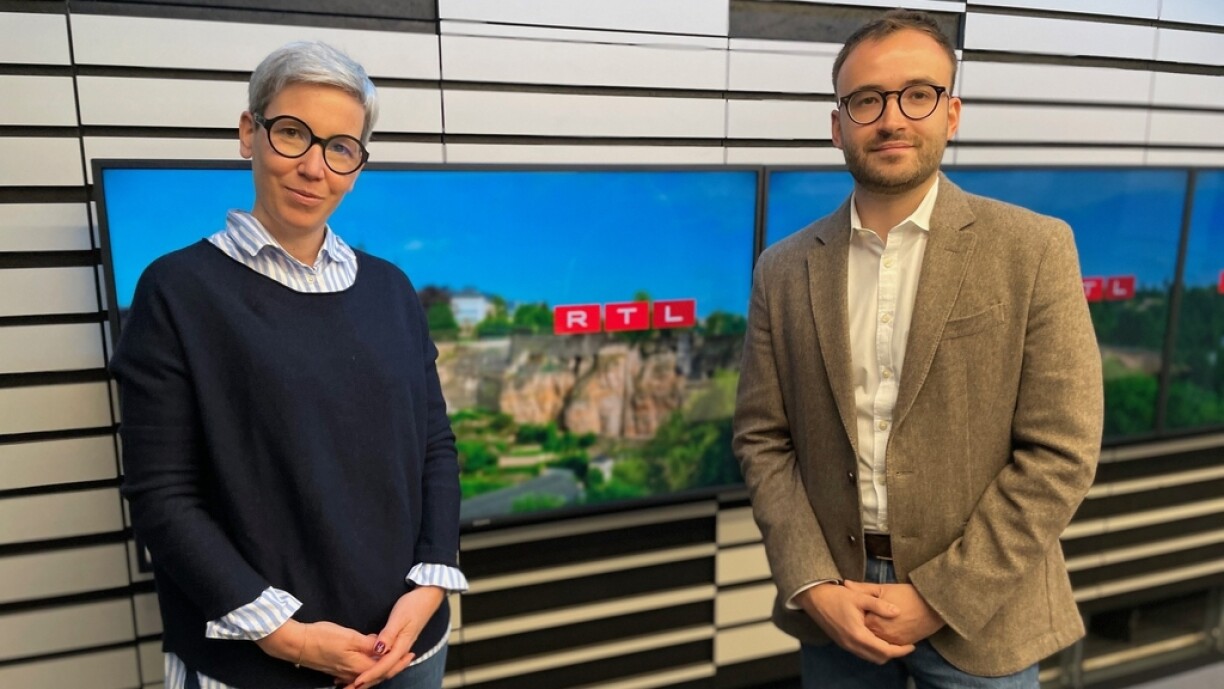
During an interview with our colleagues from RTL Radio on Saturday, Sam Tanson, the Green Party's top candidate for the upcoming legislative elections, spoke about the party's plans and aspirations. Tanson stated that as an established party, it is normal to go into the elections with a lead candidate.
Read more: Is Luxembourg really one of the most dangerous countries in Europe?
However, in the latest election poll (Sonndesfro), Tanson trailed behind Xavier Bettel, Paulette Lenert, and Luc Frieden, with only 6% of respondents saying that they would like to see her as prime minister. When asked if she still aspired to become prime minister, Tanson replied that her aspiration is to do what voters mandate, adding that there are still "a few months to go" before the elections.
The Minister of Justice and Culture also discussed the rise in crime in Luxembourg and Europe during the interview. Although Luxembourg "is still a safe country," the minister acknowledged that the issue needs to be taken seriously and promised a response. While the Minister did not confirm an increase in juvenile delinquency, she acknowledged that the pandemic has created "tensions" in society and that young people need more support.
Tanson also confirmed that the draft bills related to juvenile criminal law and youth protection are making their way through the legislative process.
She explained that the Ministry decided on a criminal age of 13 because of "concerns" raised by the judicial authorities. The Human Rights Commission would like to set the limit much higher, at 16. Other countries, such as Austria or Germany, decided on a criminal age of 14.
The Green Party lead candidate expressed concerns about the fact that minors are still being sent to Schrassig prison, stressing that this is "a problem that must be resolved as quickly as possible." The minister confirmed that the structures of the Security Unit (UniSec) in Dreiborn would be adapted in this context.
Tanson called for an increase in police presence, but dismissed the idea of a municipal police force, suggested by the Christian Social People's Party (CSV). The minister pointed out that the difficulty of dividing competences was the reason why the gendarmerie and the police were merged in 2000.
On the topic of cultural heritage, the Minister of Culture noted that although progress has been made, much work remains to be done. Tanson highlighted that, since taking office, she has advocated for the protection of over 700 of the more than 2,000 buildings listed in Luxembourg.
Municipalities also play an important role in the protection of cultural heritage, Tanson stated. Through the general development plans (PAGs), the communes have the authority to protect certain buildings, in close collaboration with the National Institute for Architectural Heritage (INPA). However, the Minister acknowledged that some municipalities are "more reticent" than others in this regard.
The Green Party's lead candidate expressed openness to potential coalition talks, stating that the cooperation with the Democratic Party (DP) and the Luxembourg Socialist Workers' Party (LSAP) has "worked well" over the past years. However, the Green Party would also be open to negotiate with the CSV.
Sam Tanson said that the party's choice of partners would be based on the latter's commitment to advancing climate and environmental protection and making the country more sustainable.





