Luxembourg's forests remain under pressure. The results of the 2026 phytosanitary inventory, presented by the Minister of the Environment, Climate and Biodiversity Serge Wilmes and the Director of the Nature and Forest Administration Michel Leytem, show a further deterioration in the health of the country's trees.
The inventory, conducted annually since 1984, allows authorities to monitor the health of Luxembourg's forests through a network of observation plots distributed across the country. In 2026, 1,176 trees were examined at 51 sampling sites.
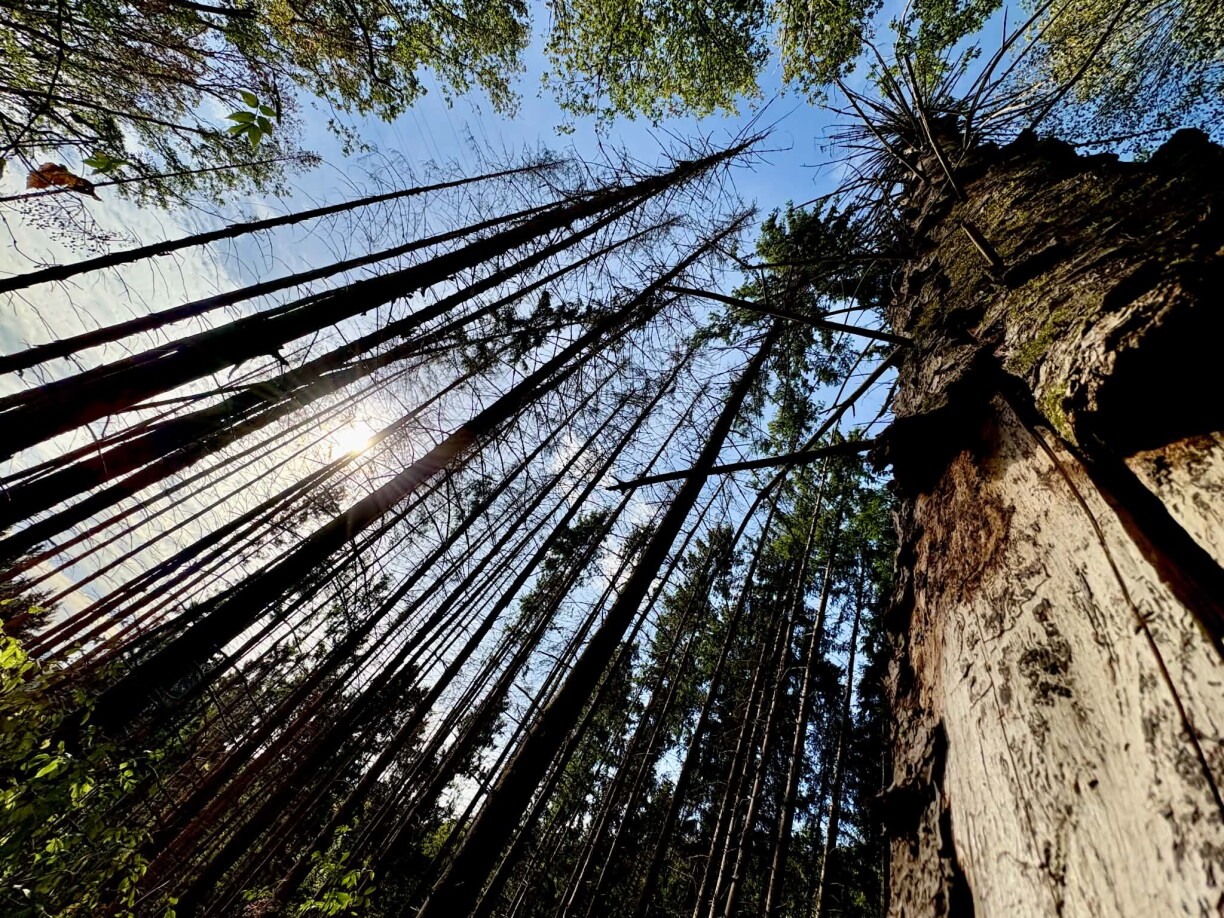
Just 12% of the trees studied showed no signs of degradation, while 30% showed minor damage. A whopping 58% of trees showed moderate to severe damage, or had died. Worryingly, this proportion of trees had increased by 11% compared to the 2025 report.
Some species are more susceptible to damage than others. Oak copses were found to be in the most alarming situation, with 91% of trees severely damaged or dead. Among beech trees, only 1% are considered to be in good condition. Oaks and other broadleaf trees also show significant degradation, with 73% of specimens affected by substantial damage.
The experts at the Nature and Forest Administration said these results primarily reflect the cumulative effects of the drought and heat episodes observed in recent years.
2026 was marked by particularly difficult weather conditions: it was significantly hotter and drier than 2025, with the hottest summer recorded since measurements began in 1984. The average summer temperature reached 20.6 degrees Celsius, while a rainfall deficit was already observed even before the start of summer.
Experts say that forests often react with a delay to climatic events. Repeated droughts weaken trees and make them more vulnerable to diseases or pests, such as the oak jewel beetle.
To address the issues, the Ministry of the Environment and the Nature and Forest Administration are continuing their close-to-nature management strategy. This strategy prioritises natural regeneration, diversification of tree species, preservation of deadwood, restoration of wetlands, and improved water retention in forests.
The authorities are also promoting various financial aids, including the "Klimabonus Bësch" scheme for private forest owners, as well as the "Nature Pact" to support municipalities in their actions in favor of biodiversity and ecosystem resilience.
The government intends to strengthen consultation between the various stakeholders in the sector through the national round table "Bësch a Juegddësch", whose work has resulted in several measures aimed at promoting natural regeneration and the adaptation of forests to future climate challenges.
Officials at the Nature Administration say that adapting forests to climate change is a multi-decade process. Luxembourg is also contributing to European nature restoration goals through the "Planting for the Future" campaign, which aims to plant 3 billion more trees in the EU by 2030.
The figures from the 2026 inventory thus confirm a trend observed for several years: Luxembourg's forests are bearing the brunt of the effects of global warming and require increasing efforts to preserve their vitality and the many ecological services they provide to society.