Bolt, Stellantis and Pony.ai are now operating level 4 vehicles in fully autonomous mode, a major step towards establishing a driverless mobility ecosystem in European cities.
The three companies hope to make Europe their new playing field by deploying their artificial intelligence solutions for robo-taxis, with trials already underway in Croatia, the United Kingdom, and, more recently, Luxembourg. Their short-term goal is to have 2,000 vehicles operating in five cities.
Now, five of these driver-less cars are being tested on the Grand Duchy's roads, authorised for scientific testing by the Ministry of Mobility and Public Works since 1 November.
Equipped with numerous sensors, these vehicles are being driven on public roads, under real-world traffic conditions, in the municipalities of Bissen and Niederanven.
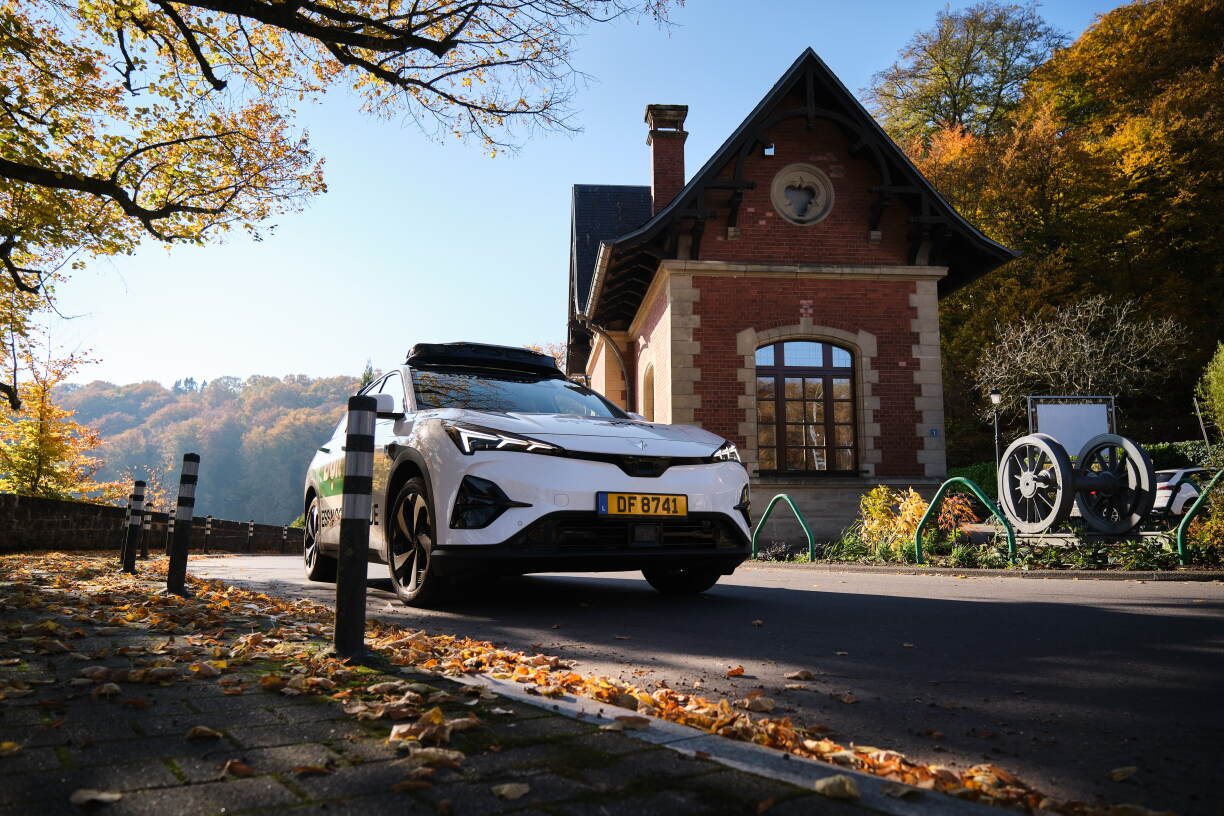
A trained safety operator is present on board. This is a requirement in Europe. The tests are conducted with a driver on board, who will not touch the steering wheel or controls, but will be responsible for ensuring everything runs smoothly and will be able to intervene if a problem arises. Based on this initial phase, Bolt aims to expand operations to a wider area in Luxembourg and extend autonomous driving to a broader range of operational design domains (ODDs).
Currently, Pony.ai's fleet is limited to a few dozen robo-taxis in Europe, compared to several thousand cars in China, its main market.
The year-long test programme was launched with five autonomous robo-taxis in the municipality of Bissen and will gradually expand to a denser urban area in Luxembourg City, with around thirty vehicles. The main objective is to test these vehicles in a "living laboratory", in urban traffic, not on a closed track, and to test their "adaptation to Europe."
Europe appears to be lagging far behind the United States and China in the field of autonomous cars, but the continent presents particular challenges for the sector.
"A typical European city often has an old town with narrow streets. There is also mixed use of the road by buses, trams, cars and many roundabouts, which is not very common in new Chinese cities," explains Leo Haojun Wang, co-founder of Pony.ai.
The group must also comply with European regulations, particularly on data, and with very high security requirements.
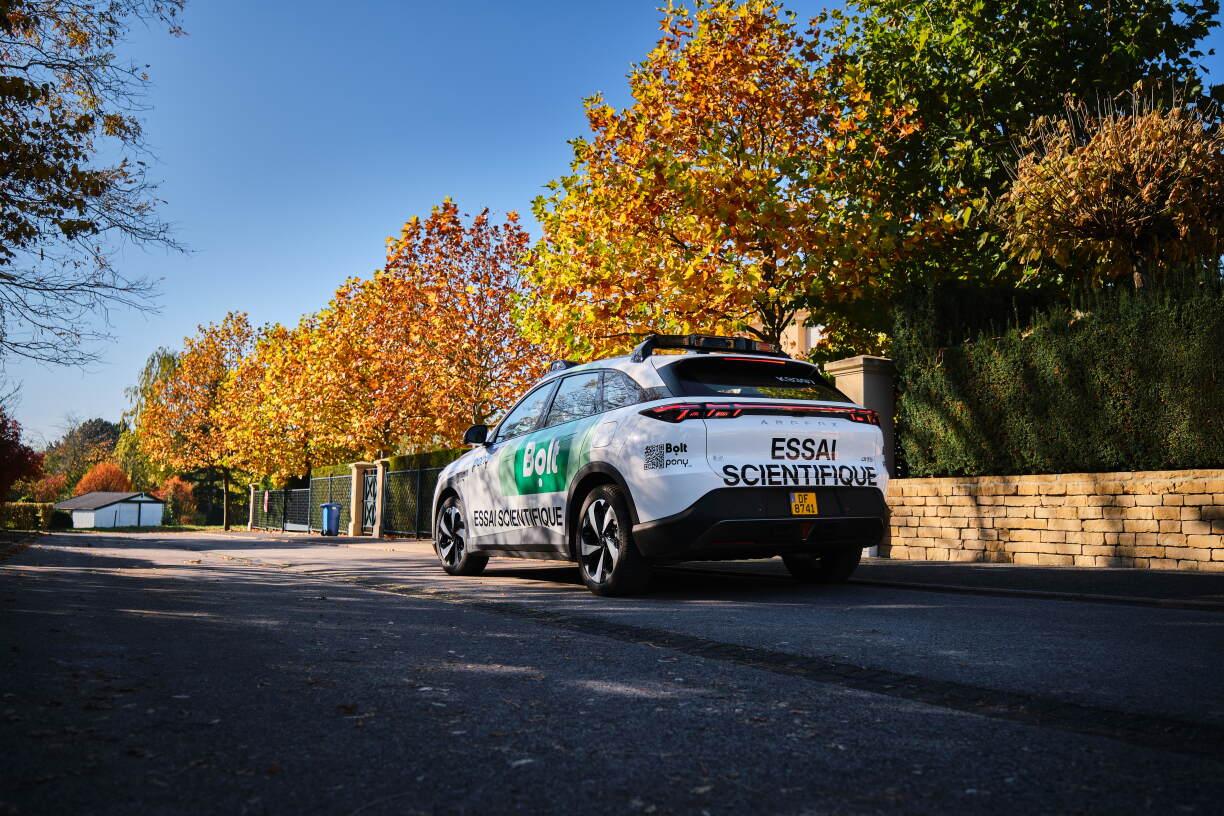
Bolt combines cutting-edge autonomous vehicle technology with its platform, fleet management systems, and regulatory expertise to deliver a unified autonomous mobility service designed for European cities. Bolt Autonomous Driving Solutions will manage the programme from end to end, from technical integration and regulatory approvals to partnerships with cities that enable the integration of autonomous vehicles into everyday life.
"Autonomous mobility only makes sense if it operates as a service, with the vehicle, the driving system, the permits and the operations working together. Luxembourg's forward-looking approach makes this possible, and this is where we are putting it into practice. From here, we will move forward city by city, according to European guidelines, with the goal of reaching 100,000 autonomous vehicles on Bolt by 2035," explains Jevgeni Kabanov, President and Head of Autonomous Driving at Bolt.