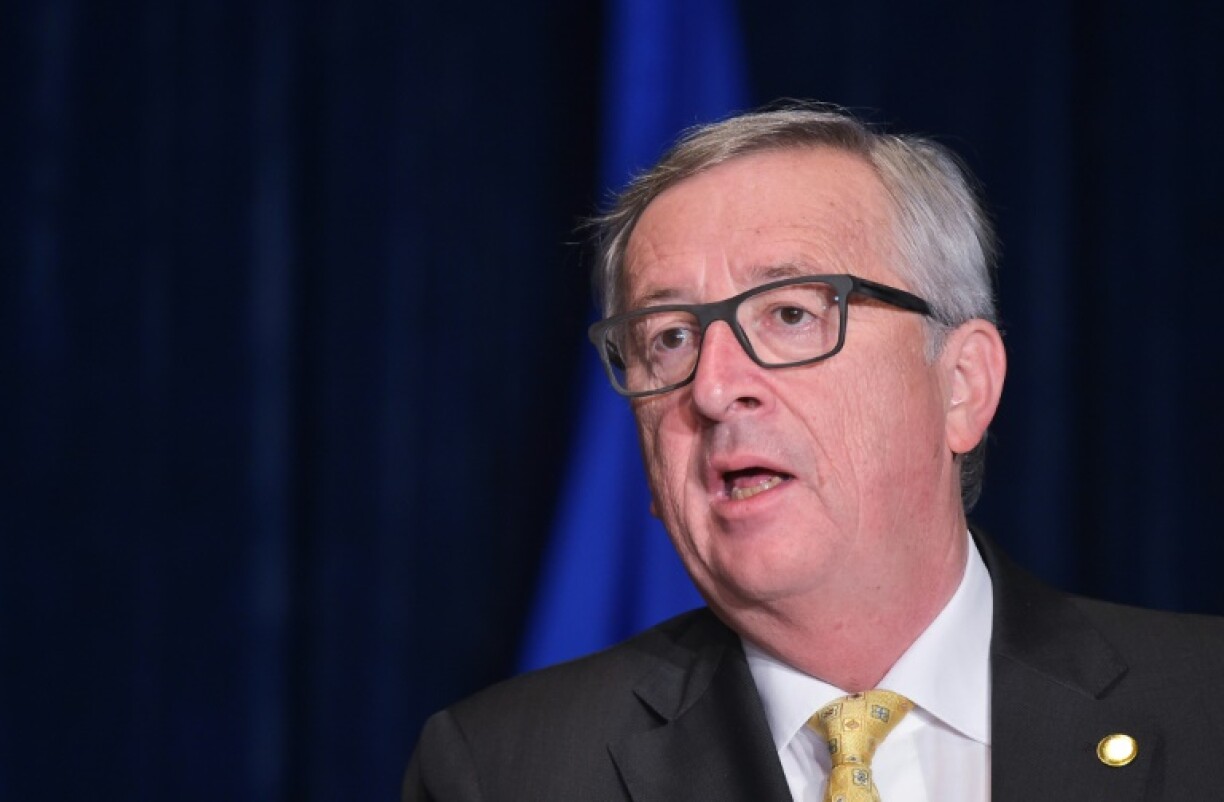
Currently, there are between 70 and 80 active armed conflicts worldwide. Whether internal within a country or between states, little has improved in the year 2023. Many things have even worsened, starting with the conflict in Ukraine, which made war tangible for us again.
“Even those who are of faith must admit that the possibility of divine intervention is thin at the moment. Therefore, it comes down to the people. We must change ourselves if we want to change the world. Otherwise, the world will change us. That's what is happening as we speak."
On the situation in the Middle East, Juncker provided his reflections.
"Every bomb. Every grenade. Every drone. Every bullet. Every rape. Every death, especially of innocents. Did the innocent that have lost their lives so far deserve to die? I don’t think so. New hatred has been sown. In another 30-40 years, we will have to deal with the consequences of the conflict we couldn't resolve. So, no. 2023 was not a good year.”
As proud European, the former President of the European Commission emphasised that the current geopolitical situation makes Europe more visible. Therefore, the European Union (EU) is more focused on how it can effectively intervene.
"In matters of foreign affairs, it is rare that every European state is in consensus. This is evident in the Ukraine conflict. This is evident in Sweden and Finland's NATO membership application. Depending on a state's fundamental principles, their stance on the rule of law, people can deviate from the norm. For instance, Hungary when it comes to the rule of law. Others when it comes to military strategy or geopolitically predetermined positions. We, as Europeans, are not as strong as we could be if we were just more united."
The EU is increasingly more united on the international stage, not just due to the political weight the Union carries but also as an economic power. The 27 member states are strong in unity if they ultimately stick together, Juncker said. "The EU is greater than the sum of its parts."
Jean-Claude Juncker's position on the future of the EU is clear when it comes to enlargement: he remains very cautious as he believes that the right conditions have not been met by candidate countries or internally within the EU.
"Look. With 27 member states, it is already extremely difficult to make decisions. Especially in foreign policy. Imagine with 33, 34, or 35 member states if Ukraine were to join. And if one imagines, which I don't personally believe, that Turkey would join, it becomes an ensemble that is moving towards increased enlargement. This will lead to a weaker bond between member states. Or as the Germans call it, alliance. We would need many alliances if this bond does not succeed. No, no, and no. Internal reforms are a necessity before any enlargement hopes. Especially in the way decisions are made in Europe."
Juncker underlined: "A blind enlargement would be a mistake."





