Valère: You have been the rector of this university for almost a year now. Could you tell us, in broad strokes, the direction in which you would like to see the institution evolve?
Prof. Kreisel: Our university is currently focused on two key directions. Internationally, we aim to position ourselves as a premier institution for research and education; on the other hand, as the only university in the country, we are a strategic instrument for the nation. Being there for the community and excelling internationally might be a challenge, but I firmly believe we can and should achieve both.
Looking ahead, there are three major themes for the years to come, the first one being digital transformation. This is undeniably one of our university's greatest strengths. Digitalisation is not confined to informatics or physics; it extends to diverse areas such as sociology, biology, and history. We will further enhance this through the establishment of a new national centre for cybersecurity. In the realm of digitalisation, it is crucial to adopt a societal perspective. We have a great many opportunities in artificial intelligence and related technologies, and we must approach them responsibly. I have observed how other countries have set up centres of digital ethics co-financed by one of the GAFAs (Google, Apple, Facebook, Amazon)... Do I need to say more? We too will establish a centre for digital ethics at our university, but it will be supported by our academic community and not funded by the digital industry.
The second point of focus is health. It stands as a bold ambition for the university, given our current absence of a medical faculty. We are in the initial stages of this endeavour, having established bachelor's programmes and research in systems biomedicine. We acknowledge that achieving this ambition will take time, as it necessitates the education of medical professionals.
The third area of concern is sustainability. We have made substantial contributions to social and economic sustainability, notably in sustainable finance and education, as well as in fostering a just society. Yet, when it comes to issues related to climate, ecology, and renewable energy, it is apparent that we have not done enough. This leads us to question whether we should just accept this shortcoming or take action to address it. For instance, we might accept the absence of an astrophysics programme at our university; however, we cannotaccept the lack of meaningful involvement in climate, biodiversity, and ecology. Therefore, we are committed to establishing a new centre for environmental systems.
You may wonder what this means for our students. While it may initially seem research-focused, it is essential to understand that every facet of these strategies includes educational support. Our master's programme in data science aids in digital transition, while our programmes in sociology, finance, and law, as well as our bachelor’s in medicine and master’s in psychology, all contribute to our sustainability and health initiatives. The university offers a total of 18 bachelor’s and 45 master’s programmes, each playing a role in our overarching goals. Significant emphasis is placed on interdisciplinarity and partnership. Topics such as democracy, climate, health, and digital transformation are inherently interdisciplinary, requiring a collaborative approach that transcends single disciplines. Furthermore, it is essential to collaborate with hospitals on medicine, with companies on digitalisation, with the European Court of Justice on law, etc. These are the two “superpowers" driving progress.
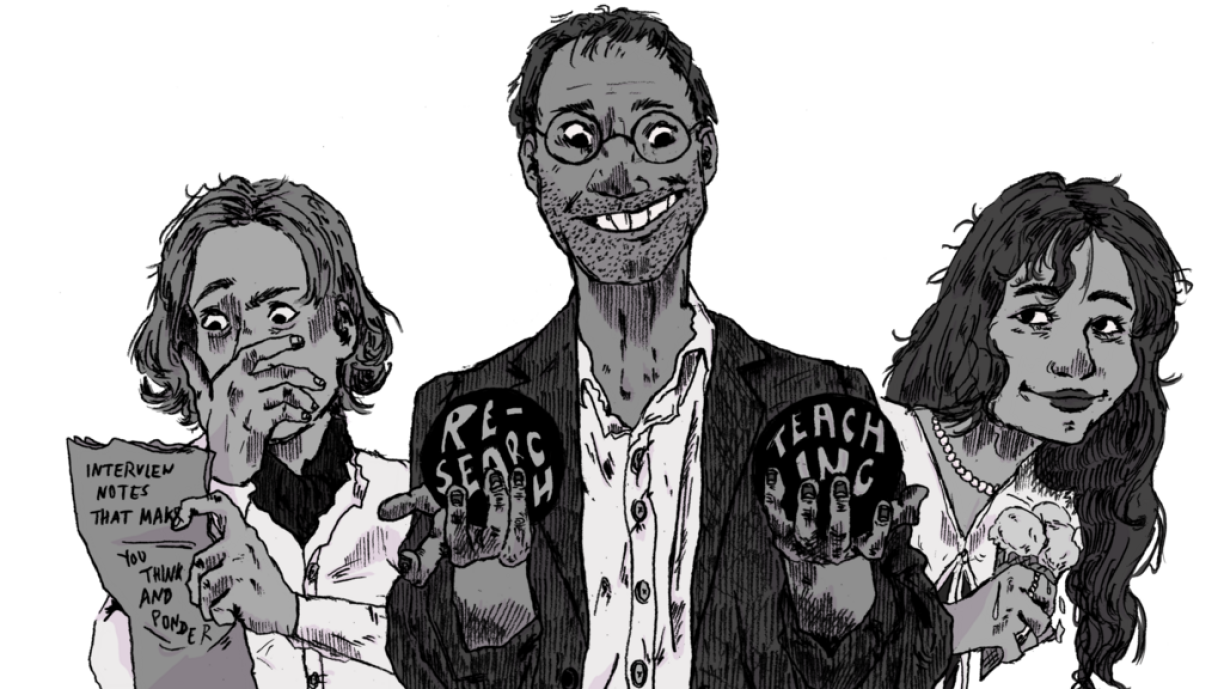
Valère: The University of Luxembourg is generally promoted as a research university. Yet, it boasts a rare ratio of 1 teacher per 20 students, which seems quite ideal for teaching. You used to be and still are a professor, teaching physics on top of your duties as rector, so you are by no means a stranger to that aspect. How do you see the relation between research and teaching at the University of Luxembourg?
Prof. Kreisel: Being a research university does not mean that teaching comes second. Prominent research universities like ETH, Cambridge, Harvard or MIT are excellent in both research and teaching. The name 'teaching university' refers to institutions that provide teaching and teaching only. In a research university, both research and teaching are equally paramount. 300 professors serving 6.000 students is the strength of our teaching, while 1,000 PhD students form the bulk of our research capacity. This ratio enables us to provide personalised teaching – a commitment we have no intention of changing. Neither I nor anyone else aims to transform our university into a mass institution.
Kristina: Talking about masses… The University of Luxembourg has accepted more students this year than any year prior. At least it feels like this, seeing how crowded the canteen is these days (laughs). As the rector, how do you feel about this?
Prof. Kreisel: For three or four years after the university opened, there was – understandably – a steep increase in student admissions. Now that we have existed for twenty years, the number of students increases at a slower pace. There has been an increase this year, but it has been relatively small. What is happening, though, is that people are more present on campus after the years of lockdown. Compared to previous years, there’s much more to see and do.
Valère: The vice-rector for academic affairs, Catherine Léglu, has said that of the 6,000 students at this university, 2,000 have requested student accommodation, but that there is only enough space to satisfy half of these requests. How does the university intend to solve this problem?
Prof. Kreisel: First of all, I should like to clarify that the initial list of people asking for student accommodation is different from the list of those really needing one; this is because many people search both on the private housing market and for a university residence. The gap we need to close, therefore, is actually closer to 400 than 1,000 student housing placements. To this effect, we have a number of plans, in concert with the Luxembourgish government, that will be concretised during the next half-decade: rooms for students will be built in Belval, Esch-sur-Alzette and Luxembourg City. Considering these ongoing projects and the state of their progress, I feel quite confident that the student housing problem will be solved in four to five years.
Valère: Thank you. We announced this interview on ROUX’s social media, asking the students to send us questions they would like to ask you. If you do not mind, we will spend the rest of the interview addressing these demands.
Prof. Kreisel: Go ahead.
Valère: Many students have raised concerns about access to drinking water on campus. The only possible option for students, at the moment, is to get a pricey water bottle from the vending machines, with little to no possibility of refilling it – which, on top of everything else, is not very sustainable. Are there any plans to install free water dispensers on the different campuses?
Prof. Kreisel: I will be very straightforward: I do not know. I am not aware of any current plans concerning this idea, but I find it interesting. I will look into it.
Valère: So it is within the realm of possibility?
Prof. Kreisel: I consider by nature every possibility. Obviously, we would need to assess every implication of such a project, budget-wise and everything else.
Kristina: What is your zodiac sign?
Prof. Kreisel (laughs): Well, what do you think?
Kristina: Considering what you just said, I should guess not Aquarius…
Valère: I am feeling Leo.
Kristina: Valère is a Leo…
Prof. Kreisel: Balance; it is all about balance! I am a Libra, from the 24th September.
Sof: No way! That’s my birthday too.
Prof. Kreisel: So, what kind of people are Libras, according to you?
Sof: Well, they care about fairness; they are born diplomats; they are creative and quite optimistic but also very dreamy…
Prof. Kreisel: Aha! I identify with the first ones and would add openness to compromise to the mix. As for dreaminess, however, I am not sure… I would replace it with ambition, which is a certain kind of dreaming but also goes beyond it.
Kristina: And now, what is your favourite ice cream flavour?
Prof. Kreisel: White chocolate.
Valère: Libra, white chocolate… Makes sense.
Prof. Kreisel: (laughs) It is a little gourmandise [guilty pleasure]. I am also fond of lemon sorbet. But white chocolate is my little gourmandise.
Valère: Next question. A student asks: Barbie or Oppenheimer?
Prof. Kreisel: Recently, I watched and liked Oppenheimer. I am a physicist, as you know; I teach quantum physics every Thursday and, during my classes, I often happen to mention the so-called Born-Oppenheimer approximation. I thought the film well-made, despite Einstein’s portrayal as a clown, which I found a little excessive. Have you seen the film?
Kristina: Most people in ROUX are team Barbie…
Prof. Kreisel: Ah… Well, the movie is worth it.
Valère: I am somewhat anticipating the next questions, but since we are on the topic… What other movies do you like?
Prof. Kreisel: Like many of my generation, I am a huge James Bond fan. I must have easily watched each one of them at least five times. I also like to watch documentaries: when they are well-made, they are both relaxing and interesting at once.
Valère: Do you have a favourite song and book you would like to share with the students?
Prof. Kreisel: I do not think I have a favourite song. I can say, however, that I very much like James Blunt, whose music puts me in a good mood. Otherwise, I have an appreciation for classical music, which is something I share with my wife. We often go to the Philharmonie together. She is very knowledgeable about it – much more than me, I enjoy it more as an amateur than as a musician.
In regards to books, my interests span many genres. I am an avid reader; not only because my profession requires me to be one, but also privately. I like to balance the great amount of technical and demanding reading I must do as a professor and rector with lighter things: crime novels, for instance. I also like to read biographies of people whose deeds inspire me. Currently, I am reading an excellent biography of Alexander von Humboldt. There were two Humboldt brothers, as you might know…
Valère: Alexander and Wilhelm.
Prof. Kreisel: Exactly. Alexander is the one who travelled a lot. He said something that I took to heart: “Travelling opens perspective”. I made this sentence mine because I really believe it to be true. And I believe our university opens perspective because of its international appeal and the diversity of the cultures it brings together.
Alexander von Humboldt was also one of the first to acknowledge the existence of ecosystems during his expedition in South America: he studied how nature, plants, animals – and even humans – all come together in a symbiotic and sustainable relationship. As for the other brother, Wilhelm, he is the one who set up the Prussian education system, that is to say, the unity of research and teaching. All modern universities are built on this system. A biography of him will be my next book.
Valère: Any writer you especially like?
Prof. Kreisel: At your age, my favourite writer was Stefan Zweig. When I was a student, I would save up my money and go hunting for first editions of his writings. I still own every one of his books… and of some, I even have multiple copies! (laughs)
Kristina: Thank you so much for taking the time to chat with us. Is there any final message you would like us to pass on to the student community?
Prof. Kreisel: And what about vice versa? In earnest, I would like to know what your expectations are towards the university. What can we do for you? Is there a message from the studentry you would like to pass on to me?
Sof: As a magazine team, we would like to have more creative spaces.
Kristina: As an architecture student, I am luckier in this regard because the university provides us with a studio where we can work on our projects all day and even during the night. But other study programmes are not as fortunate.
Prof. Kreisel: I am indeed very inspired by projects where they create such buildings for students, like the student centre at ETH Zurich. These are large, open spaces, full of natural light and equipped with tools for creative projects. This is something the university is interested in implementing; and, hopefully, with the help of our donors, we can make it happen.
Us: Great news! We are looking forward to seeing this initiative brought to life.
Roux Magazine is a student-run publication from the University of Luxembourg. RTL Today is proud to share their articles, as we love their work. You can find all of their issues on Issuu.





