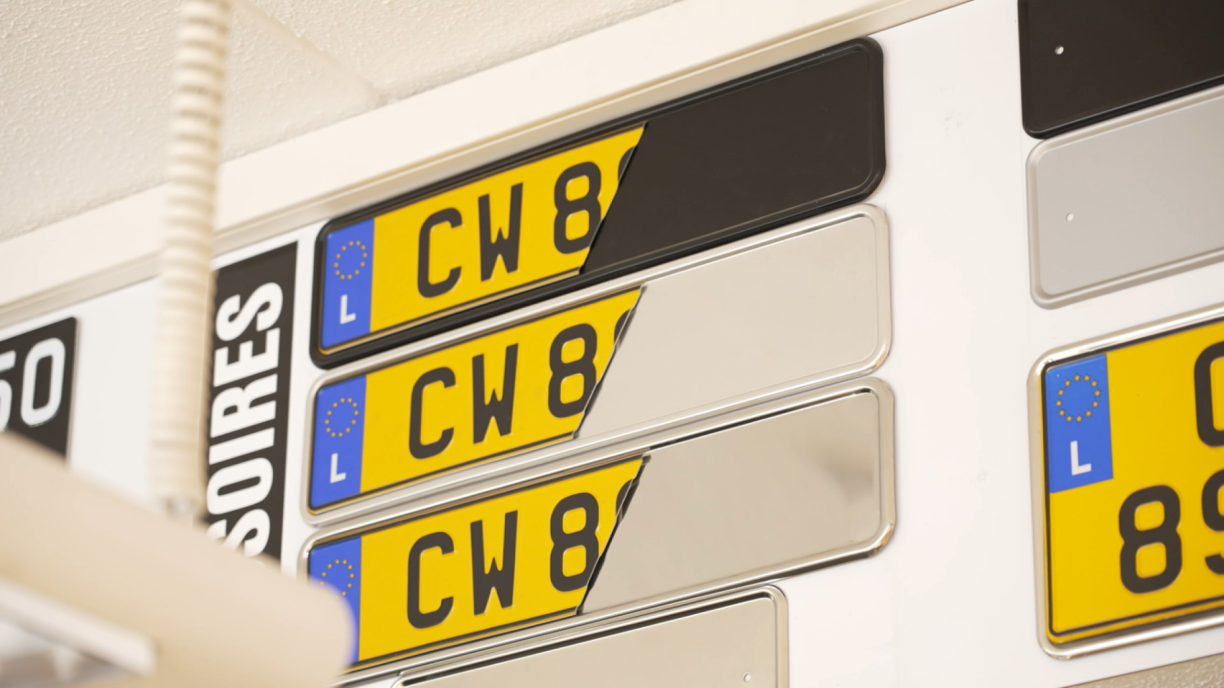
In Luxembourg, personalised licence plates are becoming an increasingly common sight. While traditional plates consist of randomly generated numbers, many motorists are opting for custom combinations.
With a personalised plate, drivers can choose their own mix of letters and numbers, provided the combination is still available and complies with legal regulations. For many, this has become a form of self-expression.
In contrast to neighbouring Belgium, where customisation goes far beyond what is permitted in the Grand Duchy, Luxembourg’s system is more limited. Belgian motorists can register names and words without the need for additional digits, whereas Luxembourg plates must fit within the format of two letters and four numbers, leaving only limited room for personalisation.
However, personalised plates are significantly cheaper in Luxembourg. While they cost around €1,000 in Belgium, the fee in Luxembourg is roughly €200. This lower cost has made them more accessible, and demand has risen sharply in recent years, turning custom plates into a noticeable feature on Luxembourg’s roads.
Luxembourg now has more than half a million registered vehicles and ranks second in the EU for passenger cars per 1,000 inhabitants, just behind Italy. The car remains the dominant mode of transport in the country.
Standard licence plates are assigned automatically under a fixed system. For those looking to stand out, personalised plates offer a way to add a personal touch.
In Luxembourg, the distinctive yellow plates are produced by companies such as Grün Signalisation, but must be approved in advance. Combinations are only issued if they are available and comply with legal requirements. Requests may be rejected if they are considered offensive, politically sensitive, or otherwise problematic. This includes letter combinations associated with historically charged symbols, which are generally not issued.





