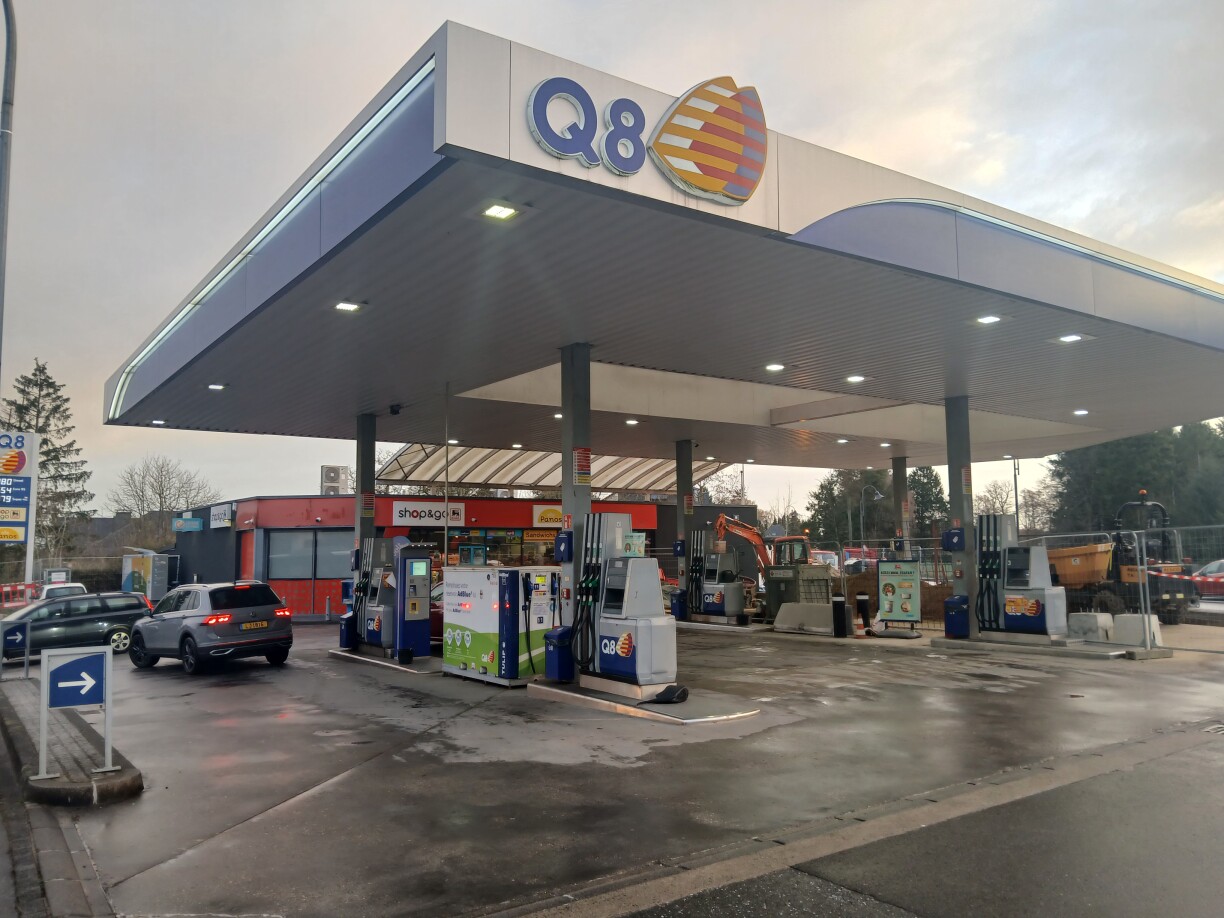
Petrol stations in Luxembourg are facing several challenges beyond rising fuel prices, including a sharp drop in transit traffic and increasing difficulties in recruiting staff.
According to the sector, recent increases in fuel prices, driven by tensions related to the Iran conflict, have not yet led to a noticeable drop in demand. Petrol station operators believe the situation is likely to stabilise in the near future. However, fuel prices are only one of several issues currently affecting the industry.
For many years, Luxembourg was seen as something of a European "refuelling hub", thanks to lower excise duties that made fuel significantly cheaper than in neighbouring countries. This attracted not only cross-border commuters and residents of the Greater Region, but also lorry drivers who would sometimes take significant detours just to fill up in the Grand Duchy.
However, this transit traffic has declined sharply in recent years, as explained by Romain Pütz, president of the Federation of Petrol Station Operators.
Pütz said that looking at last year's figures alone, diesel sales linked to transit traffic fell by around 20%. Compared with four to five years ago, the drop is closer to 50% when it comes to lorry traffic, he added.
This is largely due to more competitive fuel taxation policies in neighbouring countries, which have reduced Luxembourg's advantage, according to Pütz. He also noted that this trend is particularly concerning for motorway service stations.
According to Pütz, there are also significant differences between petrol stations located near borders and those situated more centrally in the country when it comes to the sale of cigarettes and alcohol. He emphasised that the sector employs a large number of people: around 2,000 directly at petrol stations, with additional workers employed by wholesalers and suppliers servicing the sites.
Asked about recruitment challenges, Pütz said that finding suitable staff is difficult, as the job requires a high degree of flexibility and versatility – qualities that are not always easy to find.
Pütz explained that the profile of employees also varies depending on location: border stations tend to employ workers from neighbouring countries, while more central stations rely more on Luxembourg residents.
While the sector is currently dealing with declining transit traffic and staffing challenges, longer-term concerns such as the transition to electric mobility are, for now, not seen as a fundamental threat.





