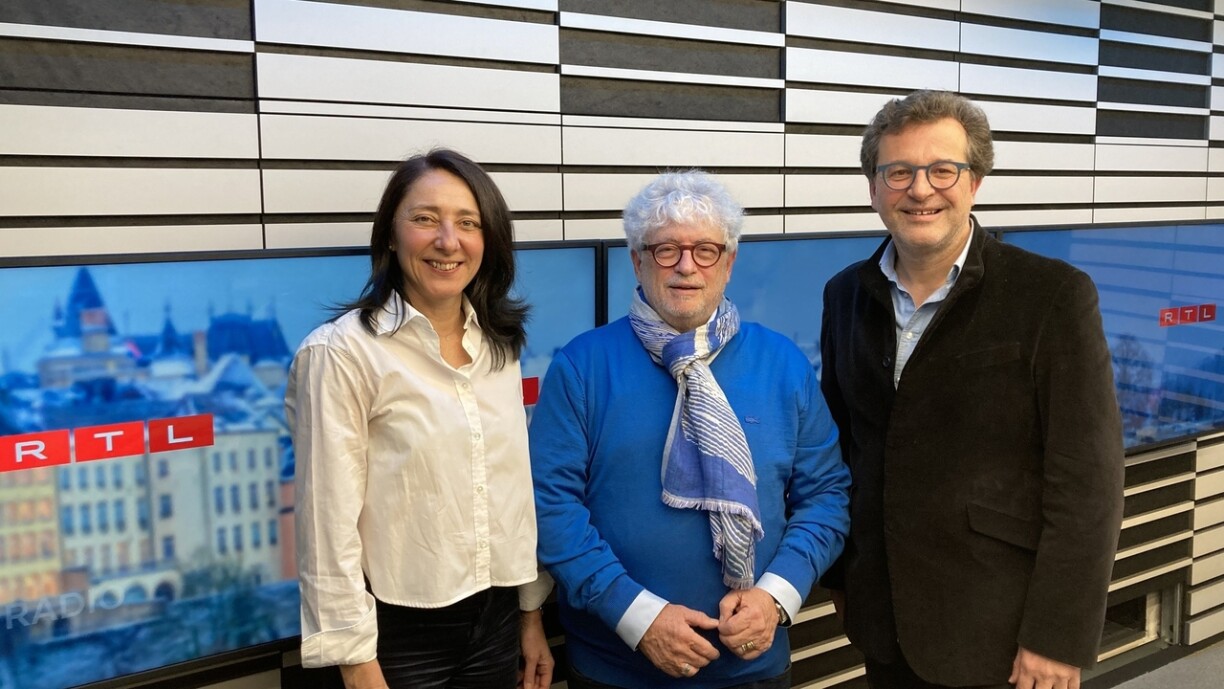
President of the Human Rights Commission, Gilbert Pregno, expressed his shock over the actions of Hamas. However, he would have been "just as shocked" by the consequences and Israel's reaction. Pregno warned of the potential threat and the risk of such situations spreading to other countries, emphasising the importance of preventing such escalation.
Reflecting on the 75th anniversary of the Universal Declaration of Human Rights, Pregno noted a lack of substantial progress in human rights awareness over the years. Joëlle Christen, President of ATD Quart Monde, concurred with Pregno on this observation.
Jean-Louis Zeien, representing the "Devoire de vigilance" initiative, stressed the necessity of prioritising the protection of civilian populations in any conflict. He raised concerns about the ambivalence of European companies that supply products to nations at war, potentially contributing to adverse effects on the population. Companies like SES face challenges in this regard, and Zeien suggested the importance of implementing obligations for companies to ensure their products are not used in warfare.
Christen underscored the need for a clear political message from all countries, emphasising the universal importance of respecting human rights even in extreme situations. Addressing the complexities of the Middle East conflict, she stressed the difficulty of passing judgment due to historical tensions. Christen advocated for efforts to alleviate suffering on both sides, underscoring that fuelling hatred is not a solution. The guests collectively agreed that the Gaza Strip conflict is counterproductive to peace, but added that imposing a solution, as has been attempted before, also does not work.
Gilbert Pregno expressed disappointment in the prolonged delay of the youth protection and juvenile criminal law reform in Luxembourg. While acknowledging the government's commitment to continuing the initiated reform, Pregno criticised the judiciary, particularly the magistracy, for slowing down the process due to disagreements on certain points.
Addressing gender equality, Pregno highlighted the need for improvement, noting that despite the government's stated commitment, only five out of 15 ministers are women. Pregno suggested that conditions offered by political parties or companies could contribute to a more gender-diverse representation.
Regarding the coalition agreement, Joëlle Christen welcomed efforts to simplify procedures, emphasising the impracticality of individuals having to resubmit their data. She maintained a positive outlook, acknowledging the recognition of poverty as a pressing issue, with efforts being made to address it. Christen stressed the importance of not only streamlining administration but also ensuring that specialised personnel receive adequate resources to assist those affected by poverty. While Gilbert Pregno and Jean-Louis Zeien expressed reservations, they expressed openness to being proven wrong on the effectiveness of these measures.
Pregno voiced concerns about the coalition agreement's overreliance on promoting Luxembourg's growth as a panacea for all problems. He cautioned that if such growth were achieved at the expense of people and the environment, it would be unsustainable.
Zeien drew attention to the absence of a passed supply chain law, underscoring an outstanding legislative gap in Luxembourg's human rights framework.
The President of the Human Rights Commission stressed the importance of adopting a compassionate approach to refugee policies rather than one characterised by severity. He highlighted a point in the coalition agreement that focuses on strengthening Frontex for European border security, a move that worries him.
Pregno underscored the plight of refugees in Luxembourg, particularly children, emphasising that basic necessities like food and shelter are not the only requirements. He stressed the critical need to provide these children with a sense of a future perspective, which he feels is currently lacking.
Joëlle Christen echoed these sentiments, asserting that fundamental principles are being undermined, especially regarding access to housing. Discrimination in housing access is prevalent, particularly affecting those with low incomes, including refugees.
Christen highlighted the challenges posed by complex bureaucratic procedures and the struggle individuals face in keeping up with Luxembourg's consumer-driven society. She outlined a project by ATD Quart Monde aimed at ensuring access to culture, offering a sense of visibility and voice to those marginalised. Christen highlighted the significance of empowering people to voice their concerns, averting potential discontentment, particularly among children whose present struggles might impede their future prospects.
While acknowledging progress made in Luxembourg, the guests collectively emphasised the need to broaden perspectives and consider the ramifications of actions both locally and in economically disadvantaged nations. They urged the new government to take proactive steps in prioritising human rights issues.





