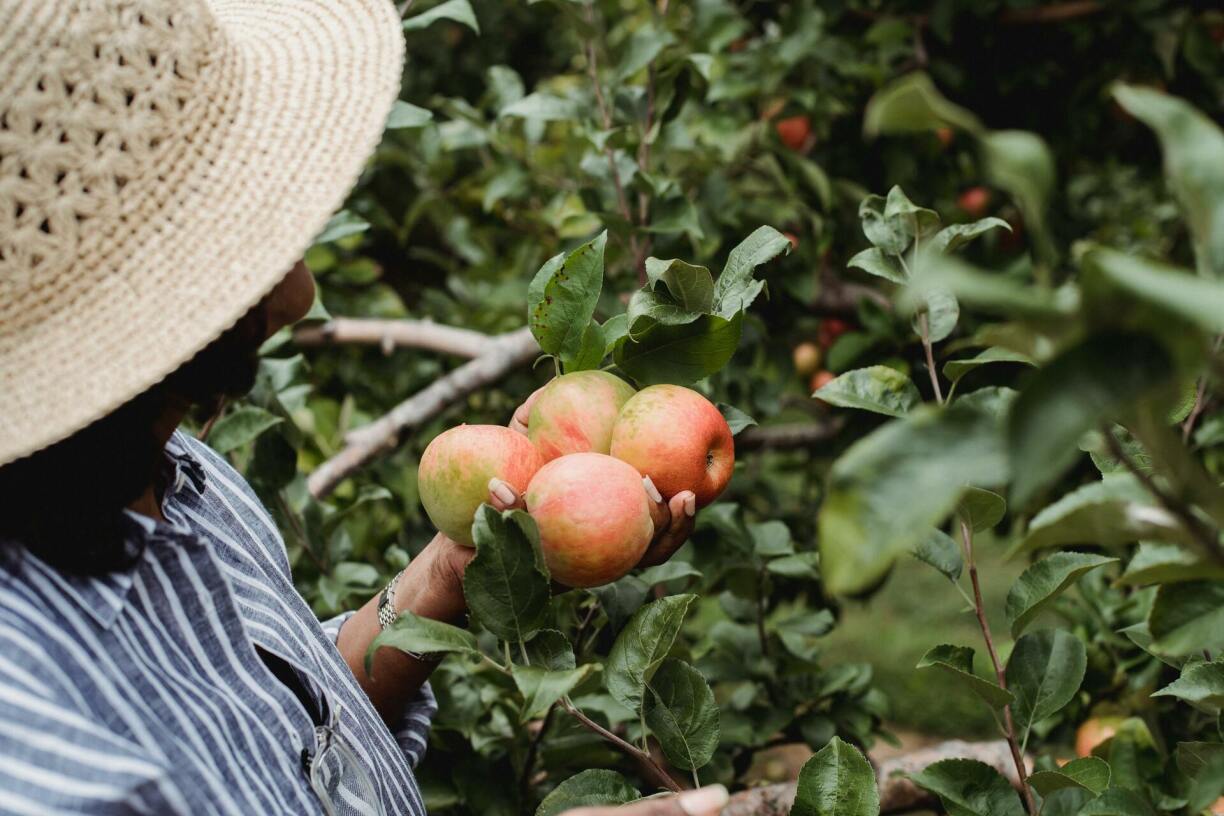
A new European study has detected significant pesticide traces in conventionally grown apples, including all three samples tested from Luxembourg.
For decades, the apple has been a symbol of healthy eating. But a new European study by the Pesticide Action Network Europe (PAN Europe) is now strongly challenging this image. According to analyses commissioned by the NGO, 90% of conventionally grown apples in Europe contain pesticide residues. In total, 59 samples from 13 countries were analysed. All three Luxembourgish samples – consisting of about half a dozen apples – tested positive.
For Claire Wolff of the Ecological Movement (MouvÉco), the results are alarming. "What shocked me most was that PAN Europe concludes that conventional fresh apples are actually not suitable for young children", she stated.
Wolff condemned a regulatory double standard, noting that processed foods for children must adhere to a zero-tolerance policy for pesticides, while fresh fruit is permitted to contain the same substances. She advises parents to choose untreated or organic apples for young children.

The report highlights particular concern over the "pesticide cocktail" effect. Most samples, including those from Luxembourg, contained residues of multiple pesticides. Wolff emphasised that while individual substances may fall below legal limits, the combined effects of these chemical mixtures are not sufficiently studied.
This is especially worrying for young children, whose developing immune, hormonal, and nervous systems are more vulnerable. Several of the pesticides detected are suspected carcinogens or endocrine disruptors.
Blanche Weber, president of MouvÉco, was unequivocal: "We debated for a long time whether we should say that young children should no longer eat conventional apples. But at some point, enough is enough."
She noted that the issue extends beyond this study, referencing past detections of pesticides in Luxembourg's drinking water and in children's hair samples. Weber criticised the lack of concrete political action despite ongoing evidence and discussion.
In response, MouvÉco is advocating for a significant increase in organic food procurement for public institutions such as nurseries, hospitals, and care homes.

Jean-Claude Müller, president of the Luxembourg Fruit Growers’ Association, sought to put the report's conclusions into perspective. He stressed that apples grown in Luxembourg comply with all legal standards. "All products used are authorised and assessed by European authorities", he stated.
The Luxembourg Veterinary and Food Administration (ALVA) conducts regular monitoring. According to the Ministry of Agriculture, 182 apple samples were analysed between 2009 and 2025, with 97 originating domestically, and none exceeded authorised residue limits. The ministry confirmed that "Luxembourgish apples are safe to eat".
Müller added that local growers are actively investing in expert advice, alternative methods, and newer strategies like integrated pest management. The Ministry of Agriculture supported this, noting a reduction of more than 50% in the use of plant protection products since 2016. In 2024, it reported that 89 out of 198 hectares of apple orchards were cultivated without the use of fungicides or insecticides.





