
Luxembourg’s latest pension reform, which came into effect on 1 January 2026, has already proven unpopular by increasing employee social contributions from 24% to 25.5% and introducing a gradual extension of working life.
This includes an additional month of contributions required in 2026, eventually rising to eight extra months from 2030. In a report published at the start of the summer, the European Council has deemed the reforms too mild to address looming financial challenges.
The Council’s assessment comes amid growing concern over the viability of Luxembourg’s pension system. Official projections show that without sustained employment growth of between 2% and 3%, the primary pension fund could fall into deficit as early as 2029, according to the Council’s estimates, or by 2031, according to the Idea Foundation.
The core issue is demographic: as the population ages, there will be fewer workers supporting a rapidly growing number of retirees, which would threaten the long-term financial health of the scheme.
In its recommendations to Luxembourg, the European Council specifically highlights the need for more ambitious changes to ensure adequate funding for pensions.
The Council criticises the current reform for failing to address structural weaknesses, particularly the low labour force participation rate among older workers aged 55 to 64. Only about half of this age group in Luxembourg is employed (51.9%), compared to 69.5% across the European Union, making the Grand Duchy one of Europe’s laggards in this category.
The Council also notes that Luxembourg workers tend to retire earlier than their European counterparts and spend longer in retirement – an average of 25.2 years, compared with the EU’s 21.3 years.
Combined with relatively generous pension benefits, this dynamic further increases the financial strain on the system. The report stresses that without more people working longer, Luxembourg’s model will struggle to remain viable.
The Council therefore urges Luxembourg to restrict early retirement options and boost employment rates among older workers in order to improve the long-term sustainability of its pension system.
Despite the recent reforms, Luxembourg faces a fundamental challenge: the number of retirees is rising faster than the number of contributors, and no demographic or economic boom is expected to ease the burden in the years ahead.
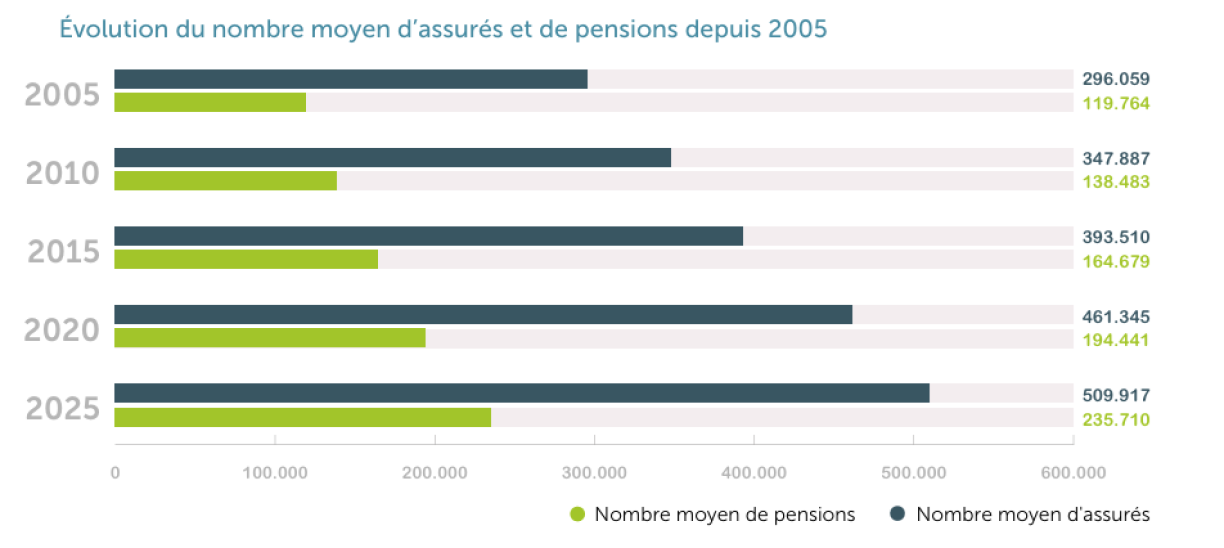
Luxembourg’s policymakers will need to make difficult choices in the future about how to fund pensions for both residents and cross-border workers. Options include increasing revenues through higher taxes, greater contributions, or longer working lives, or reducing spending.
The government’s recent approach, concluded after lengthy debate in 2025, focused on increasing contributions rather than cutting benefits. However, with further demographic pressures expected, the issue is set to resurface in the early 2030s, likely forcing a new government after the 2028 elections to revisit the question of pension reform once again.





