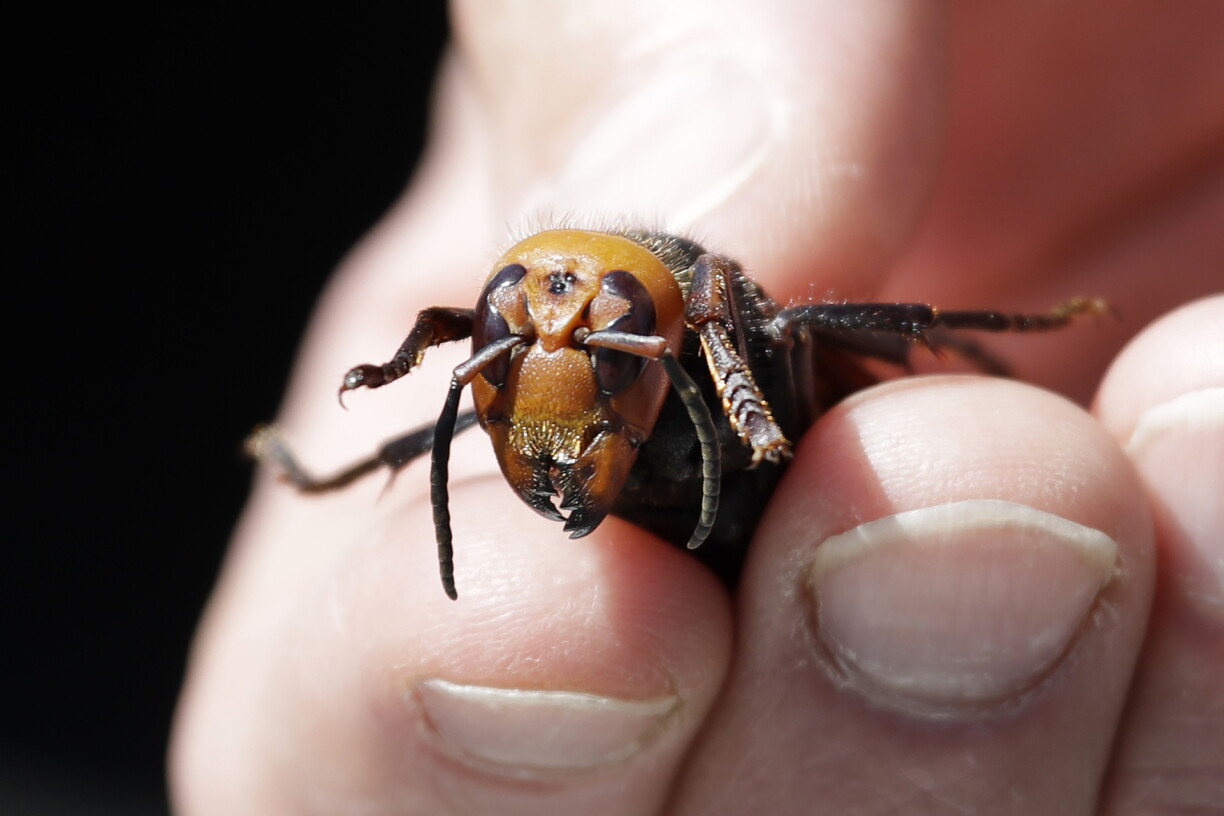
Asian hornets were first identified as an invasive species in France in 2004 and have since also spread to Luxembourg. These hornets are particularly problematic because they prey on native honeybees and bumblebees, placing them high on their menu.
According to Nick Heiter, who works at the biological station of the Environmental and Nature Protection Syndicate (SIAS), the predators thereby disrupt the balance of local biodiversity and could become a serious problem for both nature and people in the long term.
In conversation with RTL, Heiter explains that the primary danger posed by the Asian hornet lies in its appetite for native pollinators, especially honeybees and other insects, which it feeds to its larvae. The threat intensifies in late summer when hornet colonies reach their peak size and their need for food increases, leading them to attack honeybees and other pollinators more frequently.
"Native pollinators, already under pressure from pesticides and habitat loss, are now facing additional stress from this invasive hornet species", Heiter warns.
The Asian hornet made its way to Europe by hitching rides in shipping containers from Asia. Due to increasingly warm temperatures, the species is now able to establish itself in regions like Luxembourg.
Slightly smaller than the native European hornet, the Asian hornet can be distinguished primarily by its yellow legs, Heiter elucidates. They have a yellow-orange face and their bodies tend to be dark brown to black, with an orange band on the abdomen. The yellow legs are a key feature, which helps to set them apart from native hornet species, which are more yellow-brown rather than black-orange.
While Asian hornets are capable of stinging humans, they are not considered more aggressive than native hornet species. However, caution is advised around their nests, as they will vigorously defend them if disturbed.
Anyone who believes they have discovered an Asian hornet nest is encouraged to contact SIAS or other relevant local authorities. Those who hire a specialised company to remove a nest can also apply for a subsidy through the MyGuichet platform.





