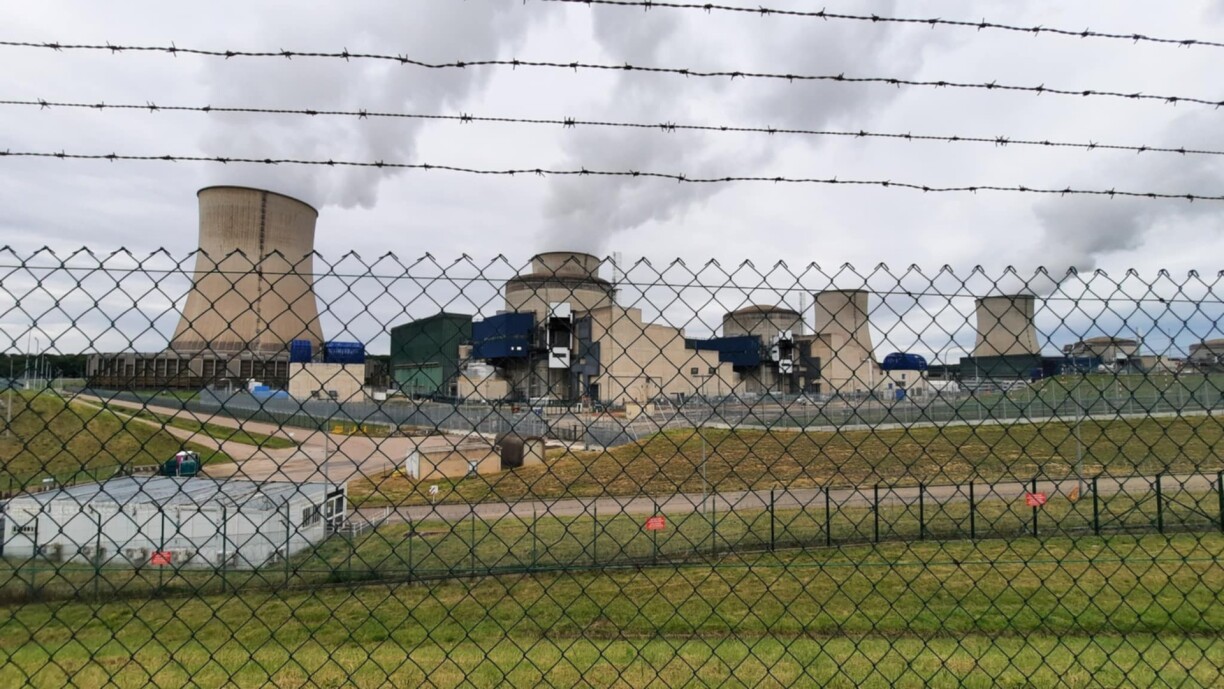
In August, municipalities including Bettembourg, Dudelange, Esch-sur-Alzette, Roeser, Schifflange, Walferdange, and Wiltz revived their collective opposition to nuclear energy. Their concerns focus on Cattenom, located just across the border in France's Moselle region, and Belgium's Tihange plant.
The move comes after the French Authority for Nuclear Safety and Radiation Protection (ASNR) authorised the generic requirements for Cattenom to continue operations beyond 2026 – ten years longer than initially planned. The former anti-nuclear alliance of municipalities, first launched in 2011 by Henri Kox, then mayor of Remich, has now been reactivated at the initiative of Roeser's mayor, Tom Jungen, whose commune lies only a few kilometres from Cattenom.
Jungen explained that the renewed mobilisation stems both from the planned extension of Cattenom's operational lifespan and from Belgium's federal government reversing its nuclear phase-out by prolonging Tihange and planning new reactors.
The alliance has created a provisional coordination group and agreed on a firm stance: outright rejection of nuclear energy and a strong commitment to renewable alternatives to accelerate the energy transition. The municipalities have also requested a meeting with Energy Minister Lex Delles to clarify the government’s position and to learn what measures it intends to take regarding the future of Cattenom and Tihange.
Although Cattenom's director, Jérôme Le Saint, recently insisted the plant had never been safer, the Luxembourgish municipalities take the opposite view. They argue that nuclear power is neither sustainable nor viable for the future, citing its dangers, high costs, and the ecological risks posed by potential major accidents. They stress that the phase-out decided in several countries after Fukushima must remain in place and that no new plants should be built.
Specific safety concerns about Cattenom are also highlighted. The alliance notes that years after cracks linked to stress corrosion were discovered, no final answer has been provided on their causes or on how they will be repaired or prevented from spreading.
While no final decision has yet been taken on Cattenom's long-term future, the alliance says it is determined to mobilise alongside citizens and civil society to ensure that nuclear energy has no place in the region's future.





