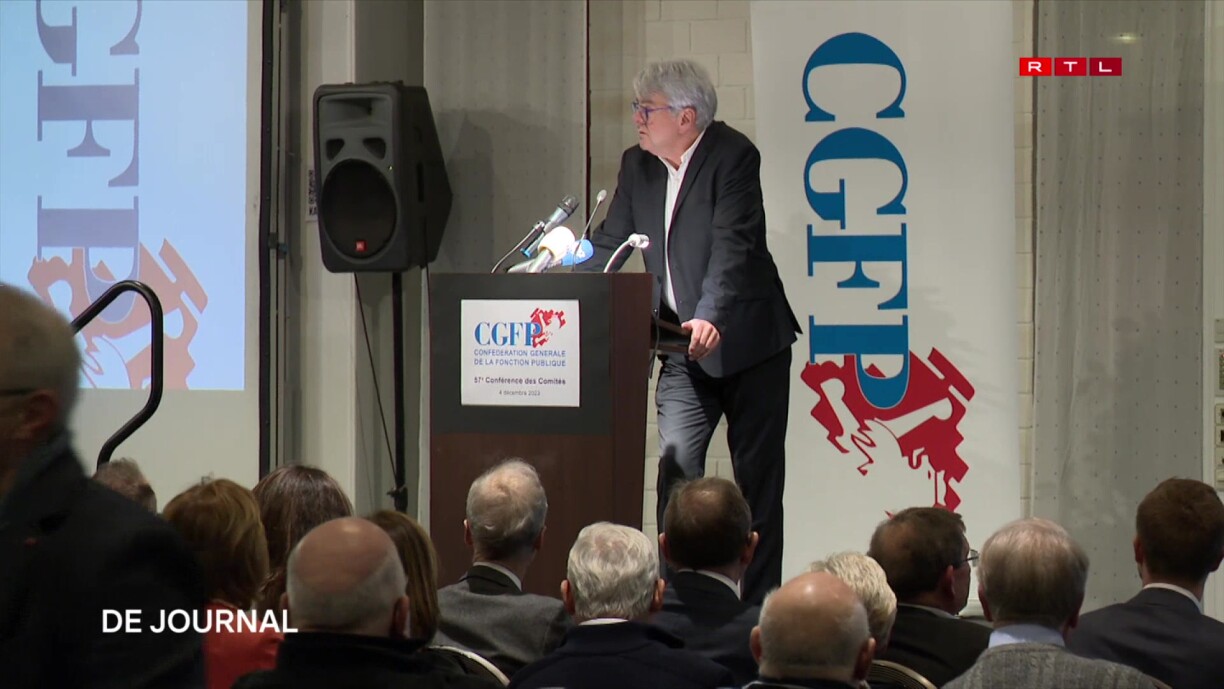
Somewhat unusual for an event of this nature was the fact that members of the press received a glass of sparkling wine. Rather typical was on the other hand the substantial number of demands and criticism directed at government policies.
For one, the CGFP showed little understanding for why only two of the more than 200 pages of the coalition agreement explicitly mention public service. The majority of the section in question is dedicated to digitalisation and although CGFP secretary general Steve Heiliger underlined that the Confederation does not stand in the way of digital practices, he drew attention to potential dangers.
Heiliger stated, "A public service that solely relies on chatbots, devoid of any human involvement, which will inevitably lead to job cutbacks, that my dear colleagues, is out of question for the CGFP. Not today, and not tomorrow."
Addressing tax policy, the CGFP called for indexing the tax table to counter inflation. Criticism was also directed at the apparent abandonment of tax relief for all, as promised by the Christian Social People's Party (CSV) during the election campaign. The CGFP stressed the need for a comprehensive tax reform that does not burden households.
Heiliger argued, "A partial tax reform is not enough this time. It is unacceptable that households currently contribute almost three-quarters of direct tax revenue, while companies contribute only a quarter. Years ago, both sides shared this tax burden equally. This balance needs to be restored."
Concerning negotiations for a new salary agreement in the public sector, Heiliger emphasised the CGFP's rejection of participation by any other trade union. He pointed to the last social elections in the public sector, highlighting that only the CGFP was nationally representative. Those challenging this view, he argued, failed to respect the democratic will of the voters, and demonstrate "a strange understanding of democracy."
Read also: Romain Wolff criticises tax reform timeline
Full report by RTL Télé (in Luxembourgish)





