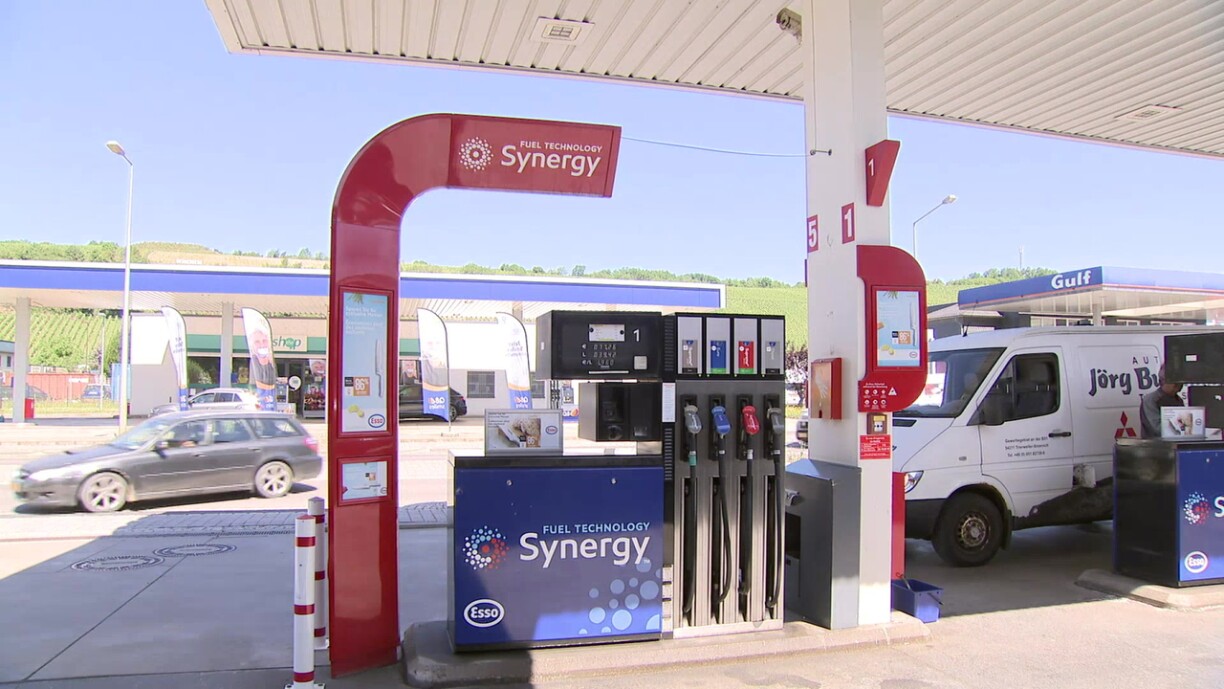
The last time this happened dates back 36 years: thanks to petrol subsidies from the German government, it can be cheaper to fill your car beyond our borders than in Luxembourg, or the price difference is so small it is no longer worth the extra miles. This is terrible news for the countless petrol stations dotting our borders.
The reverse trend is confirmed by Michael Weber from Roth Energie, who manages a few petrol stations in Germany. He has seen a revenue increase of up to 25%. "I think people who are coming to Germany to shop do take the opportunity to fill up. But Luxembourgers don't come only for petrol. But now that Germans are getting their petrol here, we definitely notice it our revenue."
On this side of the border in Wasserbillig, it is much quieter, even if people with company cars still stop here, mostly out of habit. "Yes, we always will up here on the way. It is easier for us to fill up in Luxembourg.", says one customer.
An operator of 24 Esso stations confirms there's a 40 percent drop in revenue for the stations close to the German border. The constantly rising prices also affect the distributors. "Our purchase prices have exploded and it takes a few days until we can adjust the price at the pump. When this happens a few times, the impact is so huge, it was a multiple of our usual margins. The entire sector has made millions in losses in March," says Paul Kaiser from Petro-Center SA.
Petrol subsidies vary per country: in France, it is 18 cent per litre, in Germany, 35 cent for petrol and 17 for Diesel. Both higher than the 7.5 cent in Luxembourg. The German measures last until the end of August, while the Luxembourgish ones are set to expire in July. Unless this changes, August will be another difficult month for operators, who argue that the Luxembourgish subsidy should be increased.
The Ministry of Finance responds that the current 7.5 cent subsidy is a good compromise between helping customers maintain their purchasing power and not forgetting our goals for climate and energy transition. They confirm they are keeping an eye on the situation, but remind people that the fluctuations are mainly caused by evolution on the world market and not taxation.





