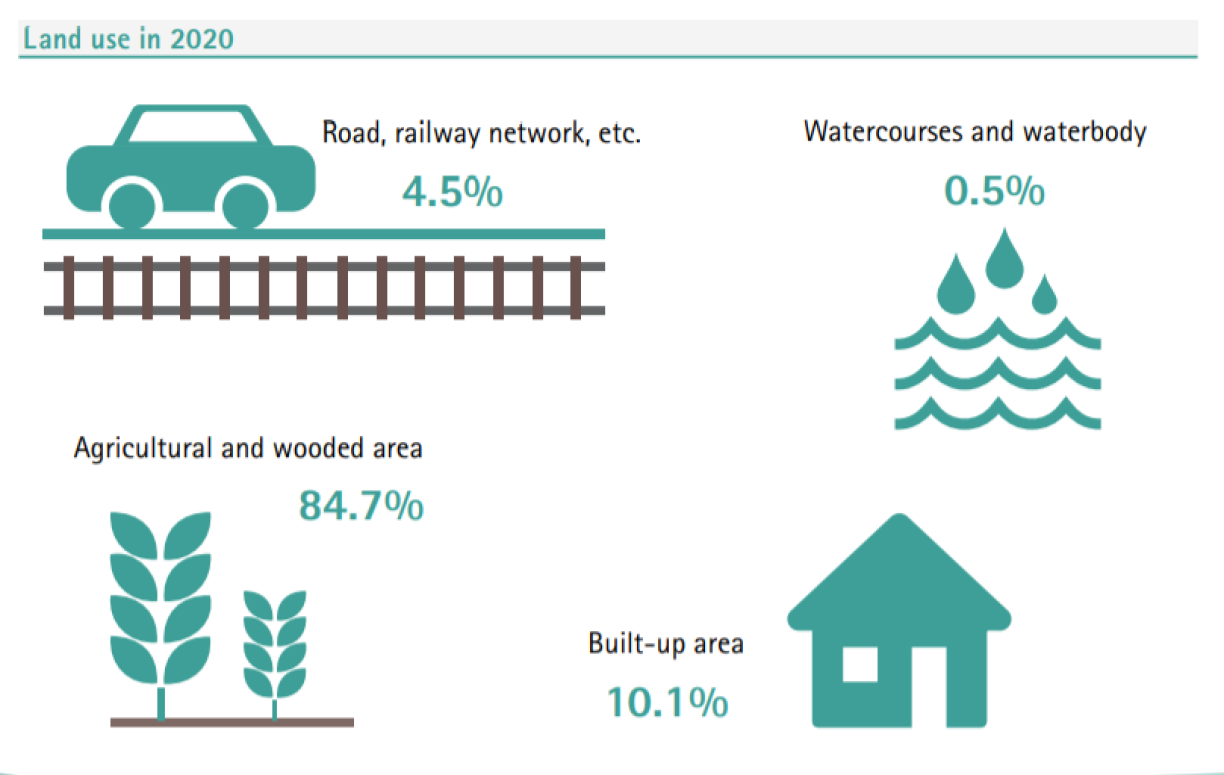
In 2020, 84.7% of Luxembourg's territory was used for agriculture or forests, while 10.1% consisted of built up areas. 4.5% of the land is used for roads or railways.
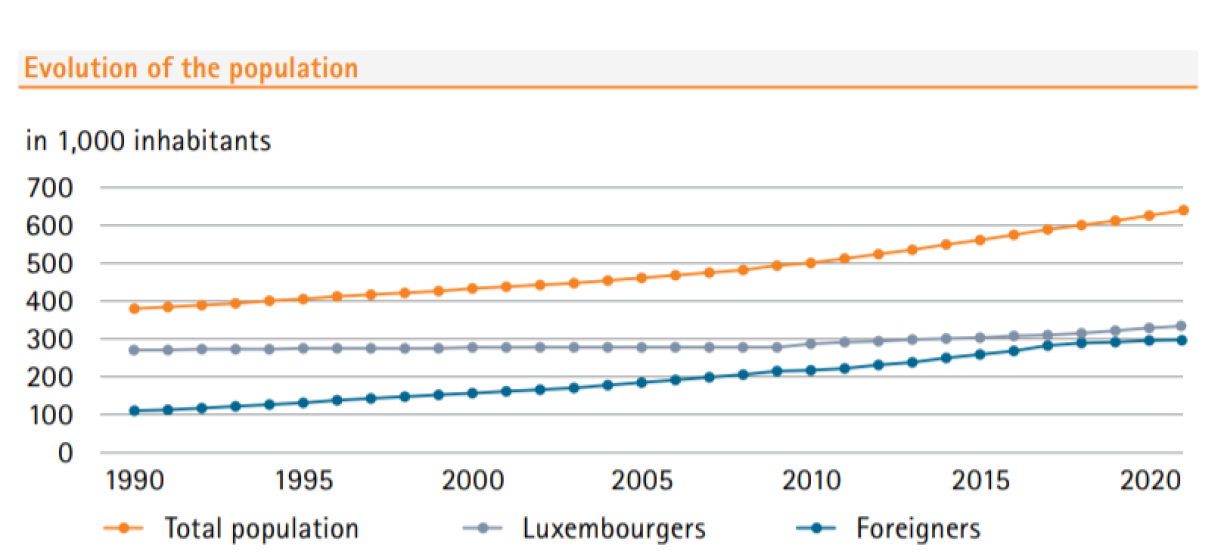
As of 1 January 2021, 634,700 people were resident in the Grand Duchy, 47.2% of whom are not Luxembourgish by birth. In 2011, this figure was 43%; in 2001, it was 36.9%.
The difference in life expectancy for women and men has shrunk somewhat over the last year, according to the report. Women still have a higher life expectancy of 84.6 years, compared to 80.1 for men. The difference was somewhat bigger 30 years ago, with women living on average to 79.1 years, compared to 72.6 years for men.
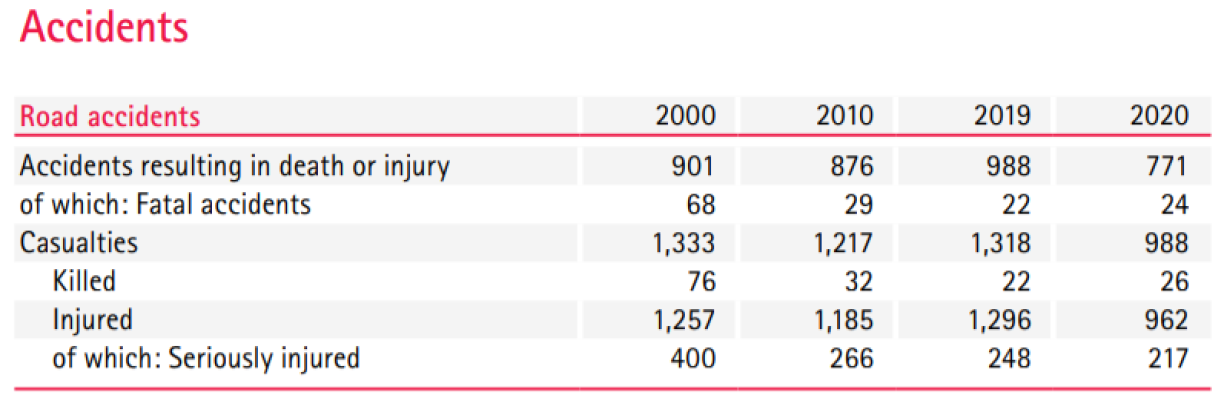
The number of people injured in accidents dropped significantly from 988 to 771 from 2019 to 2020. However, four more people lost their lives in an accident in 2020, compared to the 2019 figures.
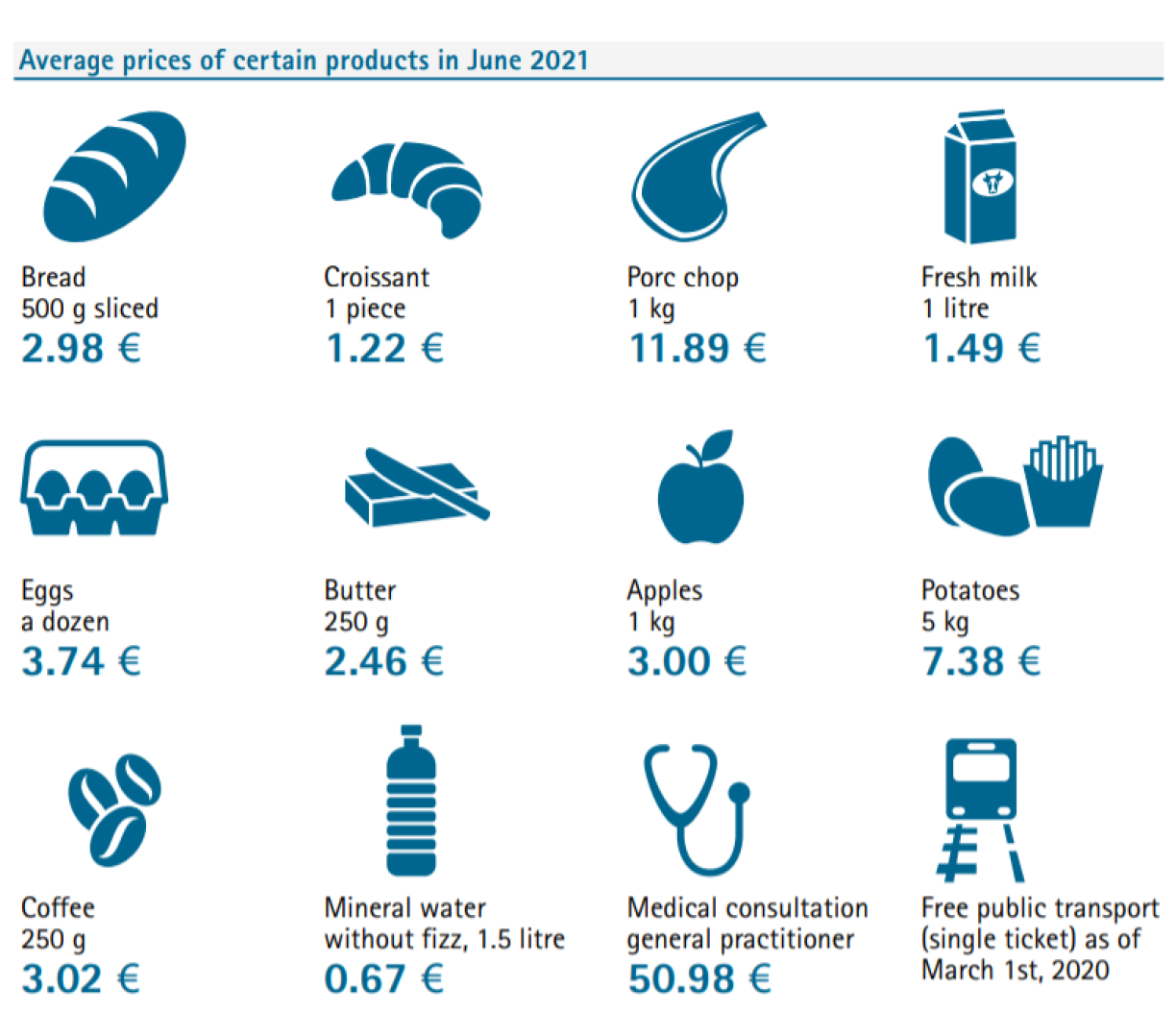
In June 2021, a loaf of bread cost around €2.98 on average, while a kilo of apples cost €3, and a litre of fresh milk €1.49.
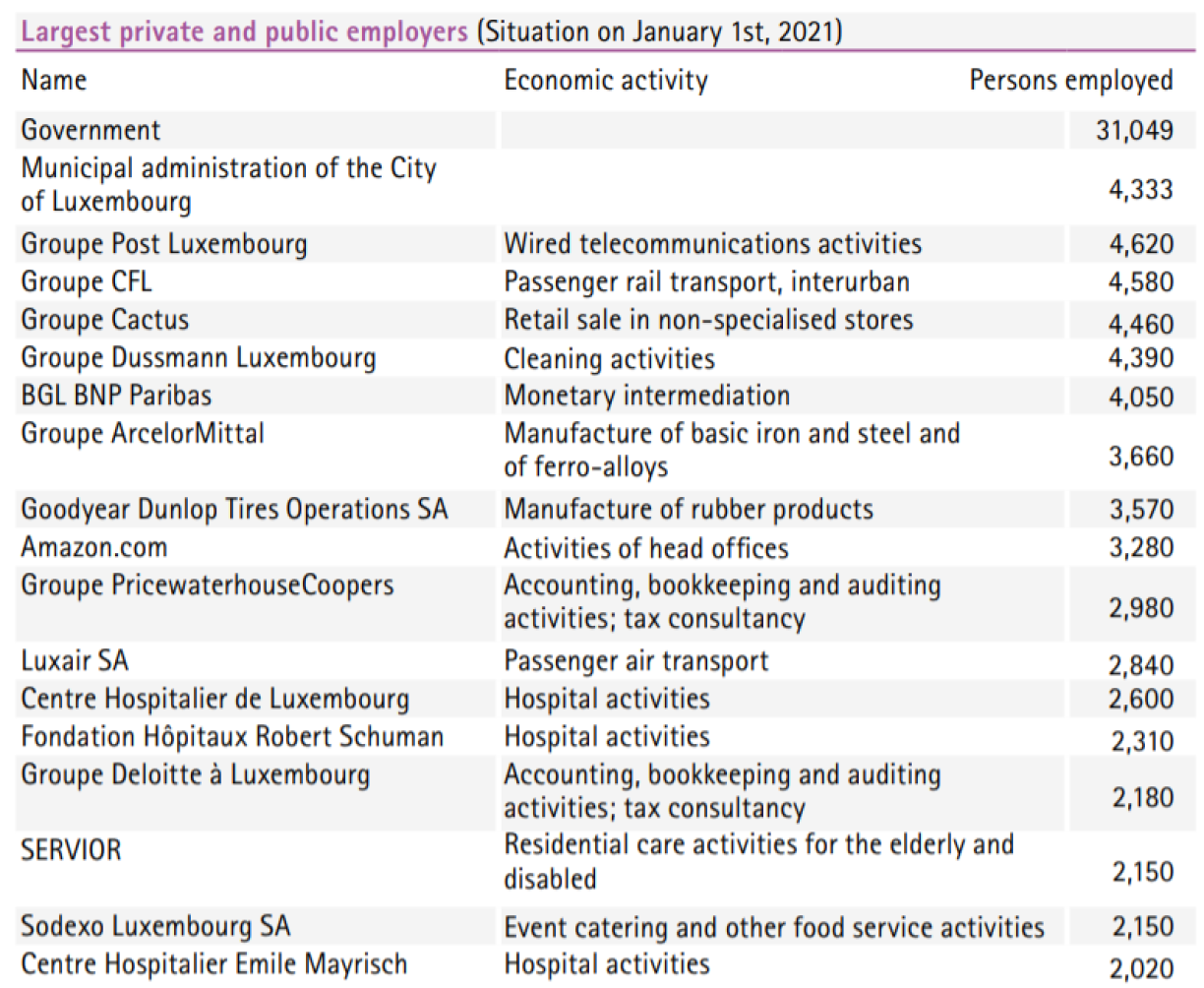
The government and civil service still represent the largest employer in the country, with 31,049 employees. Post Luxembourg has 4,620 employees, CFL has 4,580 and Cactus supermarkets employ around 4,460 people. They're followed by Dussmann with 4,390 and BGL BNP Paribas with 4,050 employees.
The number of people granted Luxembourg citizenship dropped by over 2,000 from 2019 to 2020. In 2019 the number reached 11,451; in 2020, it was just 9,387.
1,803 people got married in 2020, compared to 2,143 the year before. The number of same-sex marriages also dropped from 59 to 39. In contrast, 2020 saw an increase in divorces, with 1,906 compared to 1,447 in 2019.
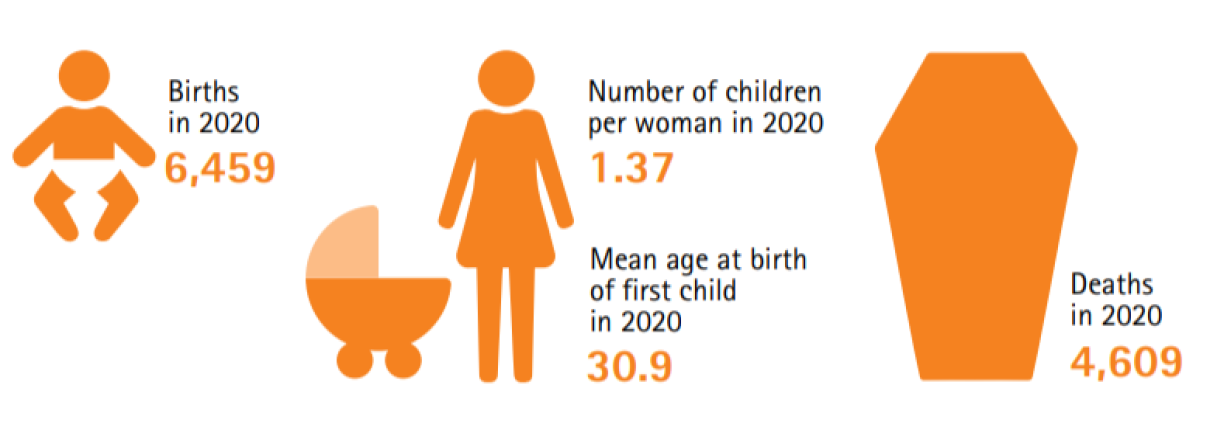
6,459 babies were born in Luxembourg in 2020. The average age for mothers birthing their first child was 30.9 years.
The average household income in 2019 was €6,475 per month, compared to €6,112 in 2018 and 5,118 in 2010.
There was an 18% drop in new cars registered in 2020, compared to the previous year. 52,279 new cars were registered, down from 62,982 in 2019.
14% more motorbikes were registered in the same time period.
Volkswagen remains the most popular car make in Luxembourg, with a market share of 14%. It's followed by BMW with 10.3% and Audi with 8.7%.
In 2010, the average home cost around €322,336. This rose to €472,656 in 2018, climbing to €591,661 in 2020. The price per square metre has jumped up from €3,937 in 2010 to €7,415 a decade later.
Due to the pandemic, the last year saw a sharp drop in travel. Luxembourg airport accommodated nearly 3,000 fewer passengers in 2020 compared to 2019, with 2,969 fewer people passing through Findel.
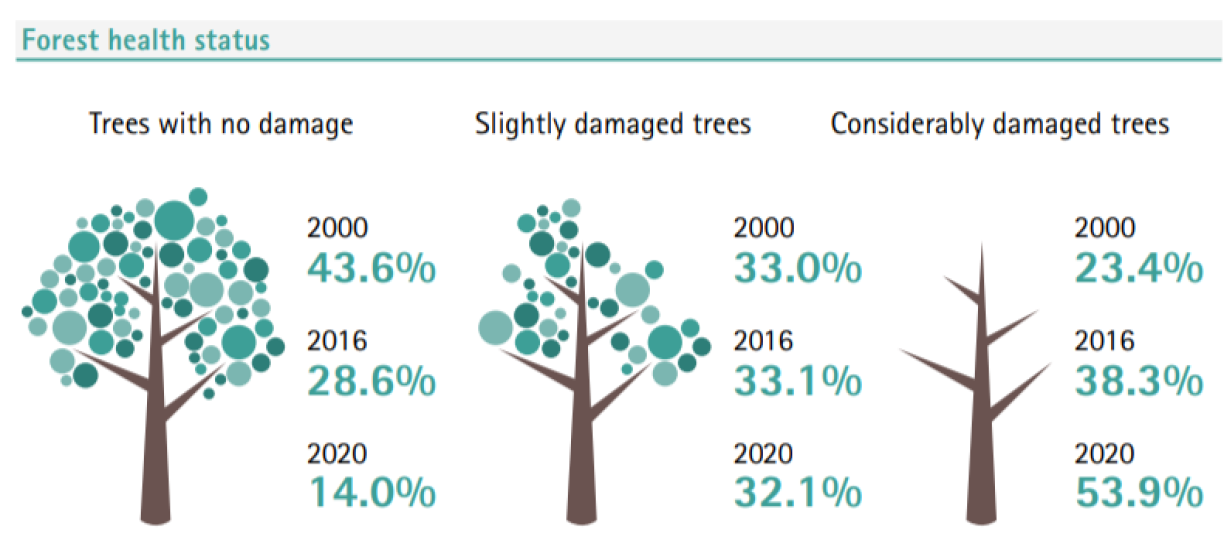
Luxembourg's forests are under threat, according to the report. 53.9% of trees are considerably damaged, compared to 23.4% in 2000. Just 14% of the Grand Duchy's trees are said to be in good condition.