The 26-year-old researcher has published a study highlighting the critical importance of not exceeding the 1.5-degree Celsius limit established by the 2015 Paris Agreement.
Möller's study focuses on four key "climate tipping elements"—large subsystems of the Earth that have maintained stability for thousands of years. These elements include the ice masses in Greenland and West Antarctica, the Amazon rainforest, and the Atlantic circulation system.
Currently, global temperatures have risen by 1.2 degrees Celsius. Möller warns that surpassing the 1.5-degree threshold could have profound consequences.
"Every 0.1-degree increase in warming significantly raises the risk of these elements tipping, leading to major changes in our Earth system," she explained. "We've also found […] that if temperatures exceed 2 degrees, the risk of tipping increases even more sharply."
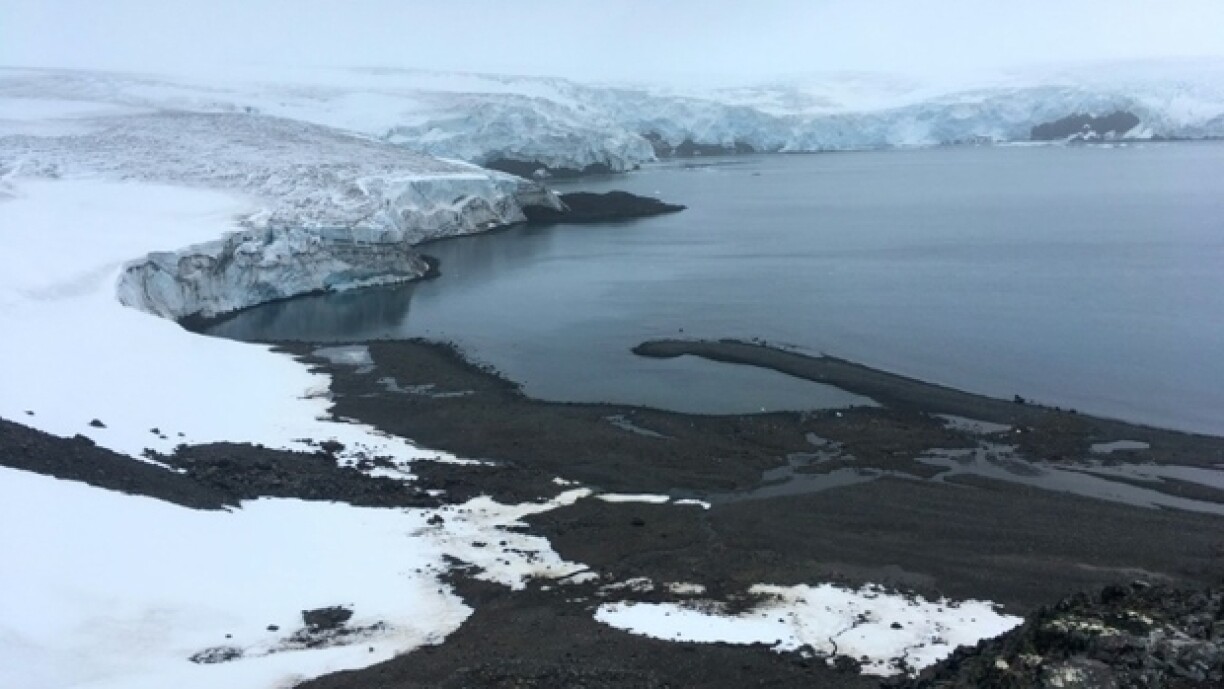
Möller particularly emphasises the potential impact on sea levels if tipping points are reached in Greenland or West Antarctica. "It's not that sea levels would suddenly rise by three metres in a single day if West Antarctica tips," she noted.
"Current projections suggest a rise of less than one metre by 2100. However, if our calculations are incorrect and tipping points are reached, we could see sea levels rise by more than one metre by 2100."
In the long term, this could lead to the disappearance of inhabited areas. To prevent such outcomes, the goal is to achieve climate neutrality by 2100, limiting global warming and avoiding the disruption of critical climate tipping elements. According to Möller, the necessary technologies to achieve this already exist.
"It's a matter of scaling up and making these technologies more widely used," Möller explained. "This includes expanding renewable energy sources like wind and solar, as well as restoring and protecting our current ecosystems."
However, Möller pointed out that the primary obstacle is the lack of political will to implement these essential technologies.





