
Luxembourg's sick-leave system is designed to protect workers while establishing clear procedures for employers. By respecting notification deadlines, understanding the rules on authorised absences, and knowing when job protection applies, employees can navigate illness with confidence. Employers, for their part, benefit from a legal framework that provides clarity on rights and responsibilities throughout the absence.
Sick leave in Luxembourg is shaped by two main legal pillars: the Labour Code and the Social Security Code. These define how employees must report illness, how employers must handle absences, and who pays during different phases of sick leave.
Practical guidance is available through:
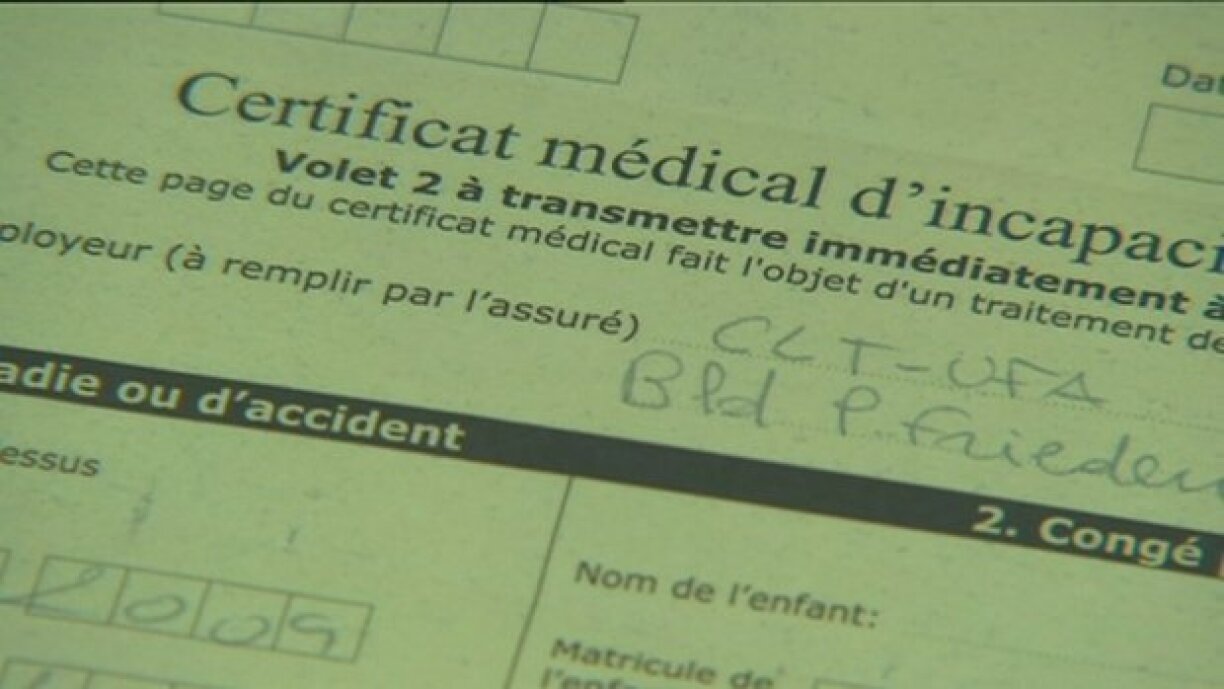
When a worker becomes ill, the first obligation is to inform the employer immediately, ideally on the same day. Luxembourg law requires a medical certificate confirming the incapacity for work. The certificate must be sent to the CNS by the end of the third working day of absence. The CNS explains the process here.
Certificates may be submitted by post, with the postmark serving as proof, or via the CNS online declaration tool. The certificate must include the patient’s identity, the date the incapacity begins, its expected duration, and the doctor’s signature and stamp.
Failing to notify the employer or failing to send the certificate on time can result in the absence being treated as unjustified. This may lead to disciplinary measures or loss of protection from dismissal.
Employers must comply with several obligations set out in labour and social-security law. They must register as employers with the CCSS and file a declaration of the start of employment for each new worker within eight days, as explained here.
During sick leave, employers have specific rights. They may request the medical certificate, contact the employee on essential matters, and request an authorised medical control to verify the incapacity for work. They may also ask the CNS to carry out an administrative inspection to ensure that the employee is at home during permitted hours.
Employers must respect medical confidentiality. They may be informed only whether an employee is capable or incapable of working, not the nature of the medical condition.
CNS link on leaving home during illness found here.
Luxembourg applies strict rules on what employees may do while on sick leave. The CNS sets these out in detail on its authorised-absences page, and they apply from the first day of incapacity. Employees must remain reachable at all times by their employer, the CNS, and the CCSS.
In general, outings from the home are prohibited during the early days of sick leave, except for medical appointments or essential reasons compatible with the incapacity. After this initial period, outings are permitted only during specific time slots defined by the CNS, unless the doctor has explicitly forbidden them. These time slots are set out on the CNS website.
Meals outside the home are allowed from the first day of sick leave, but they must be declared in advance to the CNS using the appropriate form.
If the incapacity extends beyond six consecutive weeks, employees may request a waiver of standard exit-time restrictions. This allows more flexible outings for justified reasons. The CNS evaluates such requests individually and provides the application form.
Employees may not work for another employer or carry out any self-employed activity while on sick leave. Doing so can lead to the suspension of sickness benefits and further sanctions.
Luxembourg uses a dual payment scheme that protects workers while setting clear limits for employers.
For the first 77 calendar days of sick leave within an 18-month reference period, the employer must continue to pay the employee’s salary. If the 77th day falls in the middle of a month, the employer continues to pay until the end of that month.
Once this threshold is reached, the CNS takes over payment of sickness benefits. This ensures continuity of income during extended illness.
Long-term illness is regulated by the Social Security Code and CNS statutes. An employee who remains unable to work for an extended period may be asked to undergo additional medical assessments.
Employees have up to 26 weeks of protection from dismissal during continuous certified sick leave, provided all reporting obligations are met. The protection begins once the employer has been informed and the medical certificate delivered.
Luxembourg provides a progressive return-to-work scheme for employees whose health allows them to resume activity gradually. This measure must be approved by the CNS, recommended by a doctor, and agreed by the employer. The employee works reduced hours while continuing to receive part of their sickness benefits.
If an employee can no longer perform the duties of their previous position, the medical board of social security may recommend reassignment, requalification, or occupational rehabilitation.
CNS link outlining information found here.
Termination rules during and after sick leave are derived from the Labour Code and clarified by the CSL, ITM, and Guichet.lu.
Employees who have properly notified their employer and provided a timely medical certificate are protected from dismissal during the certified sick-leave period. Any dismissal issued during this period is considered null and void.
Once the protected period ends, typically after 26 weeks, employers may dismiss the employee, but only on real and serious grounds that do not relate to the illness itself. Employers must follow formal procedures, including notice periods when applicable.
Employees who believe they were unfairly dismissed may seek assistance from the ITM or the CSL.





