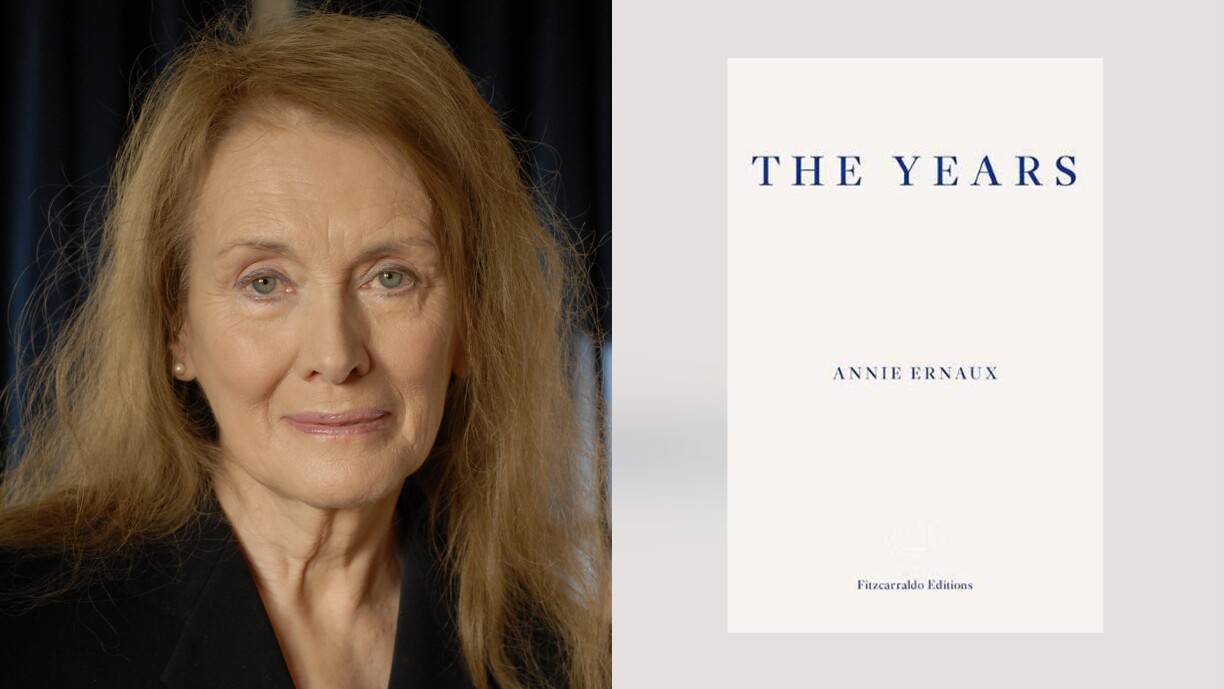
Annie Ernaux, winner of the 2022 Nobel Prize in Literature, does not write memoirs in the classical sense. In The Years, she does something else entirely.
I first read her through Happening, her 90-page account of undergoing an illegal abortion in 1960s France, when contraception was not available. She writes about doctor visits, knitting needles, an ominous backroom, and eventually a hospital stay.
She tells it with emotional distance, yet with striking candour. There is no melodrama, no self-pity. Just precision. That restraint is what makes it powerful.
The Years is very different.
Instead of writing in the first person, Ernaux removes the 'I'. She writes about herself in the third person and adds a collective 'we', which stands not only for her, but for France.
What unfolds is not simply her life story, but a collective memory of life in France stretching from the 1940s to the early 2000s.
She moves through photographs, cultural references, political moments, and private scenes. Wars, the AIDS epidemic, French presidents, 11 September. Fashion, supermarkets, radio, television. Her children, love stories, divorce, ageing. It is all there, compressed into just over 200 fragmented pages.
The structure mirrors memory itself. She jumps from image to image, yet the book moves forward in time. It feels fragmented, but deliberate. Personal memory blends with national memory. The individual dissolves into the collective.
What makes this approach so striking is that it refuses the traditional confessional tone of memoir. By removing the 'I', Ernaux avoids centering herself as exceptional.
Instead, she becomes part of a generation shaped by post-war France, consumer culture, political change, and shifting ideas of womanhood.
Despite being born decades before me, the world she describes feels close. References to Radio Luxembourg, RTL, Carrefour, and holidays in Spain anchor the book in a recognisable European landscape.
As a European reader, that proximity matters. It collapses distance. Her France does not feel distant or historical. It feels lived.
While much has changed over those sixty years, the underlying experience of being a woman has not shifted as dramatically as we might like to believe. That quiet continuity runs through the book.
Ernaux methodically dissects memory, time and emotion, writing without softening her words. The Nobel Prize is not surprising. In The Years, she turns one life into a record of collective experience.
It is rare to read a memoir that feels both personal and impersonal at once. The Years manages exactly that.
I do not think I will read another memoir constructed quite like this any time soon.





